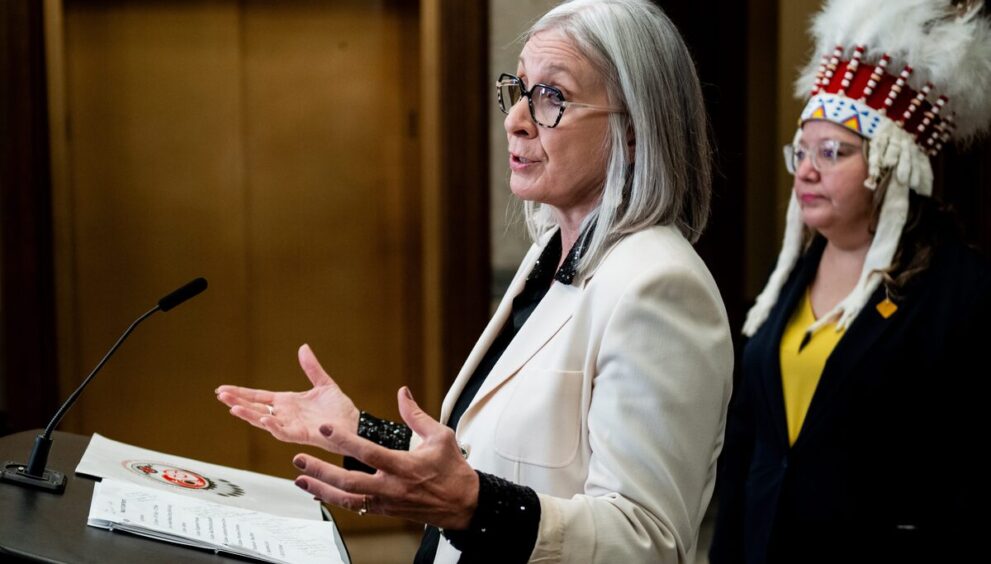
The federal Minister of Indigenous Services has announced plans to reintroduce legislation aimed at guaranteeing First Nations’ rights to clean drinking water, despite opposition from Alberta and Ontario, which have urged the government to abandon the bill.
Earlier this week, the environment ministers of Alberta and Ontario sent a joint letter to the federal Environment Minister, expressing concerns that the legislation could hinder competitiveness and delay project development. In their letter dated June 30, Alberta’s Environment Minister Rebecca Schulz and Ontario’s Environment Minister Todd McCarthy called on Prime Minister Mark Carney’s government to reconsider the proposed policies.
They stated their hope that the federal government would avoid policies and laws that, in their view, disproportionately impact certain provinces and territories without delivering measurable environmental benefits.
The legislation in question includes Bill C-61, introduced in the previous Parliament, which aimed to ensure First Nations communities have access to clean drinking water and the ability to protect freshwater sources on their lands. Although the bill underwent extensive committee review, it did not become law before Parliament was prorogued.
A spokesperson for Indigenous Services Minister Mandy Gull-Masty emphasized the government’s commitment to clean water access for all Canadians. In a statement, Livi McElrea noted that the government intends to introduce legislation this fall to affirm the human right of First Nations to safe drinking water.
The statement also highlighted that reconciliation with Indigenous Peoples is a shared responsibility among federal, provincial, and territorial governments. It called on all Parliamentarians and regional governments to support the legislation to ensure clean water access for First Nations.
Data from Indigenous Services Canada indicates that 37 long-term drinking water advisories remain active across the country, with the majority located in Ontario.