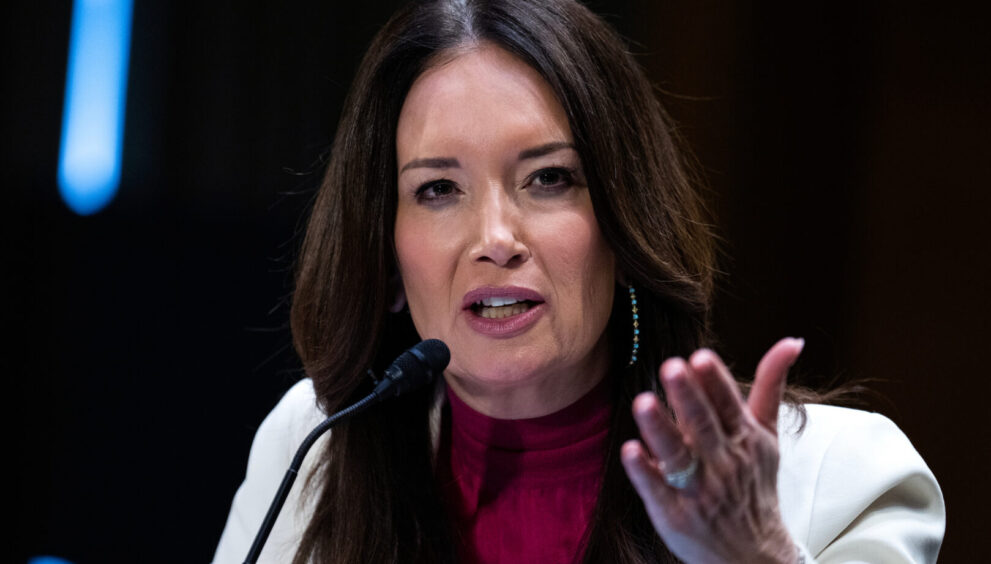
U.S. Agriculture Secretary Brooke Rollins stated on Tuesday that undocumented agricultural workers will not be granted protection from deportation, as the current administration pushes forward with its immigration enforcement agenda. Rollins emphasised that the goal is a fully American workforce and suggested that people currently receiving government assistance could potentially step into roles currently held by immigrants.
“Ultimately, the solution involves automation, structural reforms, and tapping into the millions of able-bodied adults enrolled in Medicaid,” Rollins said during a press conference outside the Department of Agriculture. While she referenced 34 million able-bodied adults on Medicaid, many in this group are either employed, unable to work due to health reasons, or involved in caregiving or education, according to a recent analysis from a health policy research organisation.
Agricultural leaders have warned that removing large numbers of immigrant labourers could destabilise the nation’s food production and distribution systems. While the administration had previously considered halting enforcement actions at agricultural sites, it has since changed course.
The administration’s recently passed tax and spending bill, signed into law on July 3, includes new work requirements for Medicaid recipients. The Congressional Budget Office projects that this change could result in nearly 12 million people losing health coverage.
Later that day, Labor Secretary Lori Chavez-DeRemer announced at a cabinet meeting that a new division had been created within the Labor Department to assist farmers and ranchers, though she did not provide specific details. The department also manages the H-2A program, which issues seasonal work visas for farm laborers.
In addition to immigration policies, Rollins addressed concerns about foreign ownership of U.S. farmland. She said the USDA would begin limiting land purchases by governments and entities considered national security threats, specifically naming China. Existing contracts and agreements with individuals or organisations linked to such countries would also be reviewed and potentially terminated.
When asked about land owned by Chinese-controlled companies such as Syngenta and Smithfield Foods, Rollins said that options are being reviewed and an executive order is expected soon to address the issue. She mentioned that federal agencies will use all available tools to reclaim such properties if necessary.
In one instance last year, Arkansas ordered Syngenta to divest 160 acres of farmland under a state law restricting foreign land ownership. Currently, 26 states have laws that limit or prohibit foreign entities from owning agricultural land, although some of these laws are being challenged in court.
According to USDA data, foreign ownership accounts for about 3.4% of U.S. farmland, with Canada holding the largest portion—approximately 30%.
Rollins also confirmed she is joining the Committee on Foreign Investment in the United States (CFIUS), a multi-agency group that reviews foreign investments for national security implications. Lawmakers from both parties have supported more stringent restrictions on foreign farmland ownership, citing potential threats to national security.