The Bulgarian lev, a cornerstone of national identity since the post-Ottoman era, faces its end as Bulgaria gears up for euro adoption in January 2026. Promised economic benefits—investor confidence, lower transaction costs, and eurozone stability — clash with fears of price hikes, lost sovereignty, and deeper EU dependence.
The History of the Bulgarian Lev: A Hard-Fought Symbol of Stability
The Bulgarian lev, meaning “lion” in old Bulgarian, was established in 1880, shortly after Bulgaria’s liberation from Ottoman rule, and first introduced as legal tender in 1881. It has been a cornerstone of national identity, enduring through wars, regime changes, and economic upheavals. The lev’s history is marked by four incarnations, with significant redenominations in 1952, 1962, and 1999, when 1 new lev replaced 1,000 old leva to combat hyperinflation’s lingering scars. Each iteration reflects Bulgaria’s struggle to maintain monetary stability in the face of adversity. The lev’s most defining moment came in 1997, following a devastating financial crisis. In the early 1990s, post-communist Bulgaria faced rampant inflation, peaking at over 1,000% in 1996-97, as mismanaged economic reforms and banking sector failures eroded public trust. The crisis wiped out savings, crippled businesses, and fuelled social unrest. To restore stability, Bulgaria implemented a currency board in 1997, pegging the lev first to the Deutsche Mark and, from 1999, to the euro at a fixed rate of 1 EUR = 1.95583 BGN. This drastic measure curbed inflation and restored confidence but at a steep cost: Bulgaria relinquished independent monetary policy, tying its economy to the European Central Bank’s (ECB) decisions without a voice in Frankfurt.
Economic Crises and the Push for Monetary Reform
The 1997 currency board was a response to a crisis rooted in Bulgaria’s chaotic transition from communism. The collapse of state-controlled industries, coupled with poorly regulated banks, led to a banking crisis in 1996 that saw 14 financial institutions fail. The lev plummeted, and Bulgarians lost faith in their currency. The currency board, imposed under pressure from the International Monetary Fund (IMF), was a straitjacket that stabilized the economy but locked Bulgaria into a de facto eurozone dependency. Unable to devalue the lev to boost exports or adjust interest rates, Bulgaria’s economic flexibility was sacrificed for stability—a trade-off that euroskeptics like myself see as a prelude to deeper subjugation. The 2008 global financial crisis further tested Bulgaria’s economy. High inflation and external shocks delayed eurozone ambitions, with a 2008 analysis suggesting Bulgaria couldn’t join before 2015 due to persistent price pressures. The COVID-19 pandemic added another hurdle, with the Bulgarian National Bank in March 2020 deeming euro adoption unrealistic amid economic uncertainty. Yet, by April 2020, then-Prime Minister Boyko Borisov pivoted, eyeing a €500 billion eurozone rescue package as a carrot for integration. This opportunism highlights a recurring theme: Bulgaria’s elites often prioritize EU incentives over national interests, a pattern that fuels skepticism.
Bulgaria’s Euro Gamble: Trading the Lev for a Risky Bet on Brussels
As Bulgaria barrels toward adopting the euro on January 1, 2026, replacing its longstanding national currency, the lev, the move is sold as a step toward European integration and economic stability. But scratch the surface, and this shift reveals a cauldron of social unrest, political division, and deep-seated scepticism about surrendering national sovereignty to the European Union’s technocratic machine. This transition is less a triumph of progress than a reckless wager that threatens Bulgaria’s identity, economic autonomy, and the trust of its people.
From Lev to Euro: How Bulgaria Lost Control of Its Economy
Proponents of euro adoption argue it will streamline trade, lower borrowing costs, and attract foreign investment. Bulgaria’s lev has been pegged to the euro since 1999 at a fixed rate of 1.95583 lev per euro, so the switch might seem like a formality. The Bulgarian National Bank (BNB) can’t set interest rates independently due to the currency board, and joining the eurozone would give Bulgaria a seat at the European Central Bank’s (ECB) table. Sounds promising, right? Not so fast. The lev’s peg has kept inflation in check and provided stability, a hard-won achievement after the 1996–1997 financial crisis when hyperinflation topped 300% and banks collapsed. Why fix what isn’t broken? The currency board has worked for over two decades, shielding Bulgaria from the kind of fiscal recklessness that plagued Greece during the eurozone crisis. Speaking of Greece, its entry into the eurozone in 1999, with hidden debt and cooked books, triggered a near-collapse of the currency union. Bulgaria, with its history of corruption and a spot on the Financial Action Task Force’s money-laundering “gray list,” isn’t exactly a poster child for fiscal rectitude.
Economists claim the euro will bring lower transaction costs and price transparency, but the data suggests otherwise. Countries like Slovakia and Estonia saw inflation spikes post-euro adoption, often hitting the poorest hardest as businesses rounded up prices. Bulgaria, the EU’s poorest member with 30% of its population below the poverty line, faces a real risk of price hikes on essentials like food and vegetables, especially in rural areas where consumers have fewer options. A one-time inflation bump of 1–2% might sound minor to Brussels bureaucrats, but for a pensioner in Pernik counting stotinki, it’s a gut punch.
From Lev to Euro: How Bulgaria Lost Control of Its Economy
Then there’s the loss of monetary autonomy. By joining the eurozone, Bulgaria surrenders any ability to tailor fiscal policy to its unique needs. The ECB’s one-size-fits-all interest rates, designed for powerhouses like Germany, could choke Bulgaria’s small, export-weak economy. The 2023 euro adoption in Croatia, a comparable low-export economy, led to 4.5% inflation and supermarket boycotts. Bulgaria’s GDP per capita, at €24,200, lags far behind the EU average of €37,600. Handing over control to Frankfurt risks deepening this gap, as the ECB prioritizes the eurozone’s core over its periphery. The real question becomes, who stands to benefit from this. Who are the winner and who are the losers?
Bulgaria Social Tensions: A Nation Divided
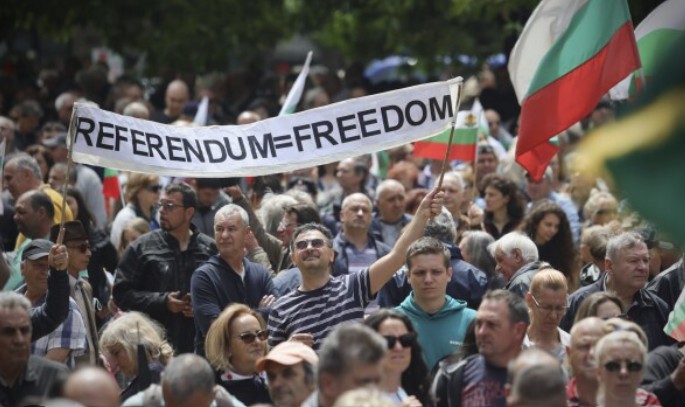
The euro debate has split Bulgaria along urban-rural and class lines. In Sofia, wealthier, younger, and better-educated citizens see the euro as a ticket to European integration. But in rural areas, where many have never dealt with foreign currencies, the lev is a symbol of stability and national pride. A Eurobarometer poll shows 50% of Bulgarians oppose the euro, with only 43% in favour—a stark contrast to growing trust in the euro across the EU. This isn’t just about economics; it’s about identity. The lev, introduced in 1879, is more than currency—it’s a tangible Hawkins of Bulgarian history. Replacing it with the euro feels like a betrayal to many, resonating with nationalist and pro-Russian parties like Vazrazhdane. Their rhetoric—“No lev, no Bulgaria”—resonates with a populace scarred by decades of political instability and corruption. Protests in Sofia, some drawing thousands, have seen Bulgarian and even Russian flags waved, with slogans like “Preserve Bulgarian Lev!” and demands for a referendum. President Rumen Radev’s call for a referendum, dismissed by the pro-European parliament as Kremlin-backed sabotage, only deepened the divide.
Bulgaria Political Tensions: Trust in Tatters
Bulgaria’s political landscape, marred by seven governments in four years and widespread corruption, fuels euroskepticism. The public’s distrust of institutions is palpable—50% don’t trust the euro process, fearing it’s a top-down imposition by a corrupt elite. Disinformation, some tied to pro-Russian groups, has amplified fears with false claims about savings being confiscated or digital euros enabling surveillance. When you’ve lived through a financial crisis like 1996–1997, these fears aren’t easily dismissed. The government’s handling of the process hasn’t helped. Allegations of manipulated inflation data—particularly an 82.8% cut in state-set hospital fees—raise suspicions of statistical sleight-of-hand to meet eurozone criteria. Steve Hanke, architect of Bulgaria’s currency board, called the inflation numbers untrustworthy, accusing officials of “cooking the books” to rush entry. For a nation where one in three risks poverty, this smells like another elite-driven scheme that benefits Sofia’s urban class while leaving rural Bulgarians to foot the bill.
Euro adoption risks inflation, eroded purchasing power, and a loss of sovereignty
The lev isn’t just money; it’s a link to Bulgaria’s hard-fought independence. The Madara Rider, chosen by public vote in 2008 for Bulgaria’s euro coins, symbolizes national pride, but even that feels like a hollow gesture when the currency itself is being erased. Critics argue that adopting the euro cedes sovereignty to the ECB, with the Bulgarian budget effectively needing Brussels’ approval. For a country that joined the EU in 2007 and remains its poorest member, the euro feels less like integration and more like capitulation to a distant, unaccountable authority. From a conservative finance perspective, Bulgaria’s rush to the euro is a high-stakes gamble with dubious payoffs. The lev’s peg has delivered stability without sacrificing national control. Euro adoption risks inflation, eroded purchasing power, and a loss of sovereignty, all while public trust is undermined by corruption and disinformation. The protests—complete with Russian flags and cries of “treason”—signal a nation unconvinced by Brussels’ promises. Bulgaria’s leaders should heed the warning: forcing the euro on a divided populace could destabilize not just the economy but the fragile social contract. The lev isn’t perfect, but it’s Bulgaria’s. Trading it for a currency controlled by Frankfurt is a bet that could cost more than it gains.
Written By tatenda Belle Panashe