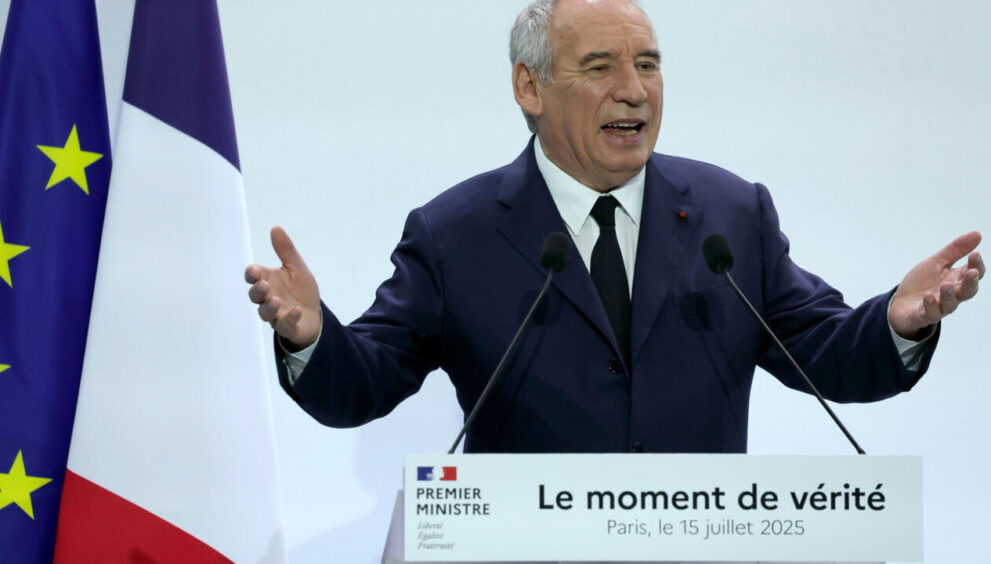
France’s Prime Minister, Francois Bayrou, has unveiled a plan to eliminate two public holidays and freeze most government spending in an effort to close a significant budget gap. The measures are part of a wider initiative to trim public finances by €43.8 billion ($50.88 billion).
Under the proposal, welfare payments and tax brackets would remain at 2025 levels in 2026, without adjustments for inflation. While defence spending is set to rise, nearly all other areas face strict limits. The plan drew swift backlash from both left- and right-wing politicians.
Last year, France’s budget shortfall reached 5.8% of GDP—nearly double the 3% threshold set by the European Union. This came amid political instability, with four governments in succession failing to respond effectively to a sharp drop in tax revenue and rising expenses for a second consecutive year.
“Everyone will need to play a part,” Bayrou said during a two-hour press briefing, calling public debt an existential threat to the country. He warned that tough action is unavoidable.
The suggestion to scrap two holidays—likely Easter Monday and May 8, which marks the end of World War II in Europe—is expected to be unpopular. Bayrou argued that May, crowded with days off, needs to be more productive. He claimed the change would generate several billion euros in extra output and tax revenue.
Critics on both ends of the political spectrum slammed the proposal. Marine Le Pen of the National Rally accused the government of targeting ordinary citizens and pensioners instead of addressing inefficiencies in public spending. She threatened a motion of no confidence unless Bayrou revises his approach.
Left-leaning figures were equally critical. Olivier Faure, leader of the Socialist Party, which had previously backed the 2025 budget, dismissed the plan as a direct assault on France’s social model rather than a genuine economic recovery strategy.
Bayrou, a centrist with a long political career, now faces the challenge of navigating his plan through a fragmented parliament. If opposition parties band together, he could face the same fate as his predecessor, who was forced out in December over the previous budget.
The risk of a no-confidence vote is likely to increase once the detailed budget legislation is introduced in October.
President Emmanuel Macron has left it to Bayrou to restore fiscal order through the 2026 budget, after calling a snap legislative election last year that resulted in a divided and gridlocked parliament. If the plan fails, France may face a fresh political crisis, credit rating downgrades, and even higher borrowing costs, with debt interest already projected to exceed €60 billion—making it the biggest single expense in the national budget.
As Macron approaches the final stretch of his presidency, the worsening fiscal picture threatens to overshadow his legacy. Initially elected in 2017 with promises to reform and modernise France’s economy, Macron has struggled to rein in spending amid multiple crises, from nationwide protests to the pandemic and inflation surges.
Bayrou’s goal is to bring the deficit down from 5.4% of GDP in 2025 to 4.6% in 2026, with the longer-term aim of meeting the EU’s 3% target by 2029.
“This is the final warning before the edge,” Bayrou said. “If we don’t act now, we’ll be overwhelmed by debt.”