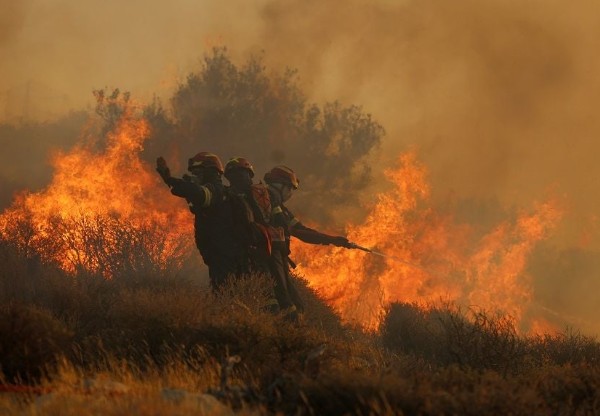
Greece is facing one of its most severe wildfire outbreaks in recent memory as the third heatwave of the summer scorches the country. Across multiple regions, blazes have erupted under scorching temperatures reaching 44 °C (111 °F), forcing evacuations, stretching emergency services, and threatening both lives and infrastructure.
Drosopigi Incident: Explosions and Evacuations
In Drosopigi, a village about 25 kilometers north of Athens, factories storing flammable materials were engulfed in flames. Explosions echoed through thick smoke clouds as firefighters battled the inferno. Roughly 65 firefighters, supported by 26 vehicles, two aircraft, and water dropping helicopters, joined efforts to contain the fire. Two houses were destroyed, and officials ordered residents of nearby Krioneri to evacuate toward Athens.
National Wildfire Fronts: Evacuation and Damage
Outside of Athens, fires raged across Greece:
-
On the island of Evia, some 115 firefighters and 24 vehicles, aided by six aircraft and seven helicopters, combated fires fueled by high winds and dry vegetation. Residents in Triada were placed on standby for possible evacuation.
-
On Kythera Island, settlements including Aroniadika, Pitsinades, and Aryoii were evacuated as fast spreading flames endangered homes and forests. Local evacuations were coordinated by both authorities and Coast Guard vessels.
-
Fires also affected Messinia in the Peloponnese and northern Greece near Thessaloniki, prompting additional alerts and precautionary evacuations across several towns.
Climate Crisis Intensifies Fire Season
The wildfires coincide with Greece’s third major heatwave this summer, with national forecasts warning of continued extreme heat and dry winds. Temperatures up to 45 °C have heightened fire risks nationwide. These intense heatwaves and shifting weather patterns are increasingly tied to climate change. Scientists warn that the Eastern Mediterranean is now a “wildfire hotspot,” where blazes strike more frequently and with greater ferocity.
Emergency Response and Regional Strain
Emergency services, now under immense pressure, are battling the blazes with limited resources some fire units have been overtaken by the flames. The government has requested six firefighting aircraft from the EU Civil Protection Mechanism, and international support is underway.
Tourism and National Alert
The fires have coincided with the peak of Greece’s summer tourist season. Authorities have issued safety advisories to travelers, and some landmarks, notably the Acropolis, were temporarily closed to reduce heat related risks. Officials have also restricted outdoor work during peak hours to mitigate casualties.
Looking Ahead
As Greece continues to battle the flames, the government and fire services remain on high alert. Strong winds and ongoing heat threaten to prolong the crisis. With climate projections showing more extreme summers ahead, experts call for new strategies in wildfire preparedness and long-term environmental resilience.