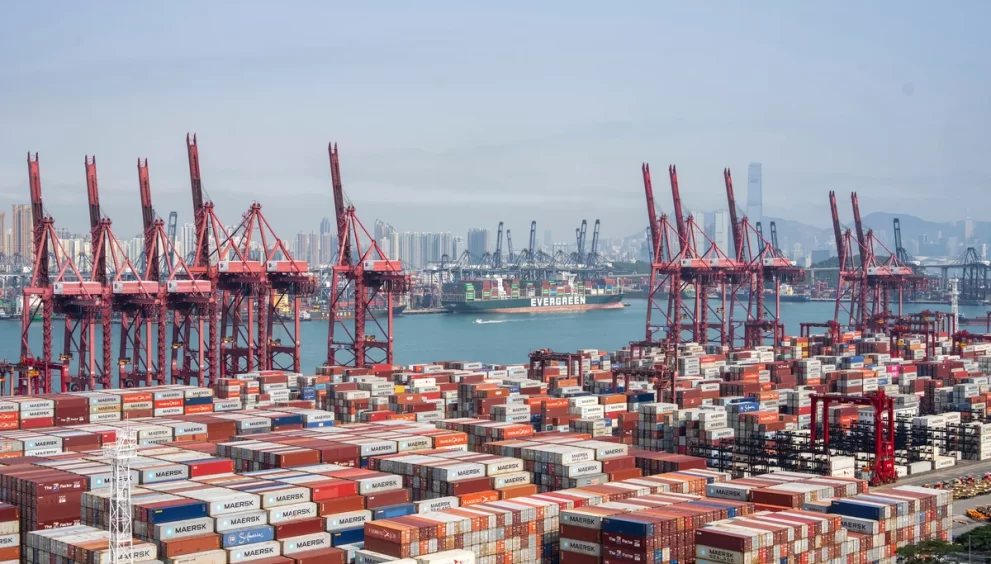
President Donald Trump has granted Mexico a 90-day delay from increased tariffs, giving both countries more time to negotiate a broader trade agreement. However, higher duties are still expected for other nations that haven’t secured trade deals before the upcoming deadline.
The delay spares Mexico from a planned 30% tariff on most non-automotive and non-metal goods that meet the standards set by the U.S.-Mexico-Canada Agreement (USMCA). The decision followed a phone call Thursday morning between Trump and Mexican President Claudia Sheinbaum.
“We avoided the tariff hike that was scheduled for tomorrow,” Sheinbaum said in a social media post, describing the call as “very good.”
According to Mexico’s economy ministry, around 85% of Mexican exports qualify under USMCA’s rules of origin, which protects them from additional tariffs tied to anti-fentanyl measures.
Despite the reprieve, the U.S. will continue imposing a 50% tariff on Mexican steel, aluminium, and copper, as well as a 25% duty on autos and other goods that don’t comply with USMCA rules. These actions are being taken under an emergency declaration related to the fentanyl crisis.
Trump also said Mexico agreed to immediately eliminate several non-tariff trade barriers, though he did not specify which ones.
Tariff announcements for countries without finalised deals are expected later Thursday, ahead of a 12:01 a.m. EDT deadline.
South Korea recently agreed to a 15% tariff—reduced from a threatened 25%—as part of a broader agreement that includes a $350 billion investment commitment for U.S.-approved projects.
In contrast, talks with India have stalled, with its goods now facing a likely 25% tariff. The disagreement centres on India’s agricultural market access. India has pledged to protect its farm sector, triggering criticism from opposition lawmakers and causing the rupee to drop.
Brazil was hit with a 50% tariff earlier this week in response to ongoing political tensions, but the U.S. excluded key sectors like aircraft, energy, and citrus products from the steepest tariffs.
These trade decisions come under legal scrutiny, as judges in a federal appeals court questioned Trump’s use of emergency powers to justify broad tariff measures. He invoked the 1977 International Emergency Economic Powers Act to declare national emergencies related to trade deficits and fentanyl, allowing him to impose “reciprocal” tariffs.
A trade court ruled in May that these actions exceeded presidential authority, and appeals court judges appeared skeptical during recent oral arguments. “IEEPA doesn’t even mention tariffs,” one judge noted.
Meanwhile, U.S. Treasury Secretary Scott Bessent said a trade agreement with China is close but not finalised. In an interview, he explained that American negotiators pushed back on several points during two days of talks in Stockholm. The deal still requires Trump’s approval.
China faces an August 12 deadline to reach a formal agreement. While preliminary deals were made in May and June to ease escalating tariffs and secure access to rare earth minerals, a final resolution remains pending.