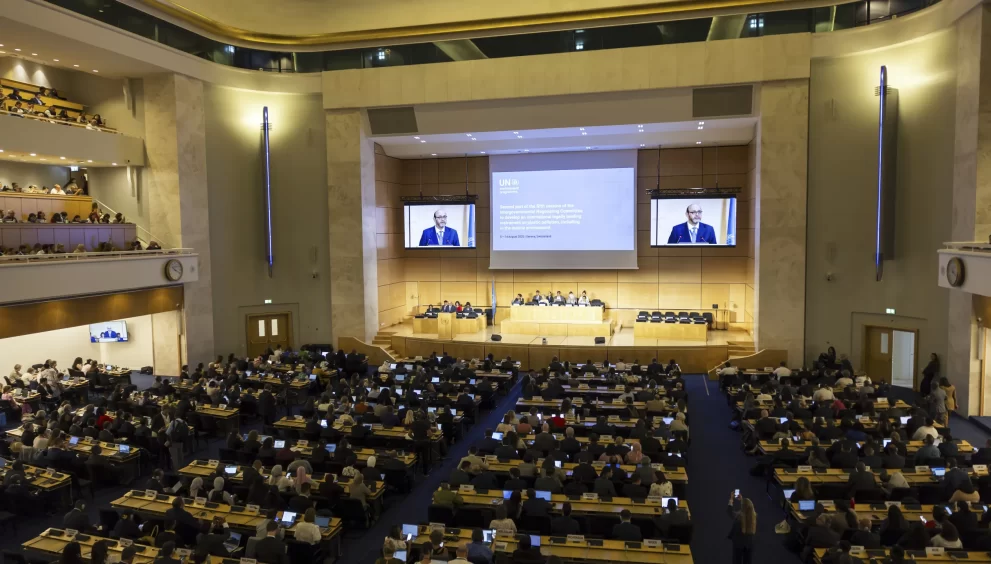
Negotiations on a global treaty to address plastic pollution ended in Geneva without reaching an agreement, according to diplomats, who expressed frustration and disappointment after ten days of talks.
Participants had hoped to make significant progress in the United Nations-led discussions, but those advocating for a strong and ambitious treaty said the latest draft released overnight fell short of expectations.
The chair of the talks, Luis Vayas Valdivieso from Ecuador, concluded the session with a commitment to resume negotiations at an unspecified future date, receiving only muted applause from tired delegates who had been working into the early morning hours.
French Environment Minister Agnes Pannier-Runacher expressed her anger during the closing session, stating that despite genuine efforts and meaningful discussions, no concrete results were achieved.
Colombia’s representative, Haendel Rodriguez, suggested that the failure was due to a small group of countries—likely those with oil interests—blocking progress.
Earlier in the month, diplomats and environmental advocates had warned that efforts led by the European Union and small island nations to limit the production of virgin plastics—derived from fossil fuels like petroleum, coal, and gas—were being opposed by petrochemical-producing nations and the United States under the Trump administration.
The U.S. delegate, John Thompson, declined to comment as he left the negotiations.
The future of the talks remains uncertain. While some officials and countries, including the UK, support continuing the negotiations, others believe the process is broken.
South Africa’s delegate expressed doubts, saying, “It is very clear that the current process will not work.”
More than 1,000 delegates gathered in Geneva for the sixth round of discussions after the previous meeting in South Korea last year also ended without a deal.
The talks went beyond their scheduled time as countries tried to reconcile major differences over how far restrictions should go. Many negotiators, including Danish Environment Minister Magnus Heunicke representing the EU, voiced disappointment that the final efforts failed to produce an agreement.
Heunicke told reporters, “It is tragic and deeply disappointing to see some countries trying to block a deal,” while reaffirming his commitment to continue pursuing a treaty to tackle one of the planet’s most serious pollution challenges.
Inger Andersen, head of the United Nations Environment Programme, also vowed to keep working toward a solution. “We did not get where we want, but the desire for a deal remains strong,” she said.
Key points of contention included limits on plastic production, regulation of plastic products and hazardous chemicals, and funding to assist developing nations in implementing the treaty.
Environmental campaigners expressed disappointment with the lack of progress but welcomed the rejection of a weak agreement that would have failed to restrict plastic production. Ana Rocha, Global Plastics Policy Director at the environmental organisation GAIA, remarked, “No treaty is better than a bad treaty.”