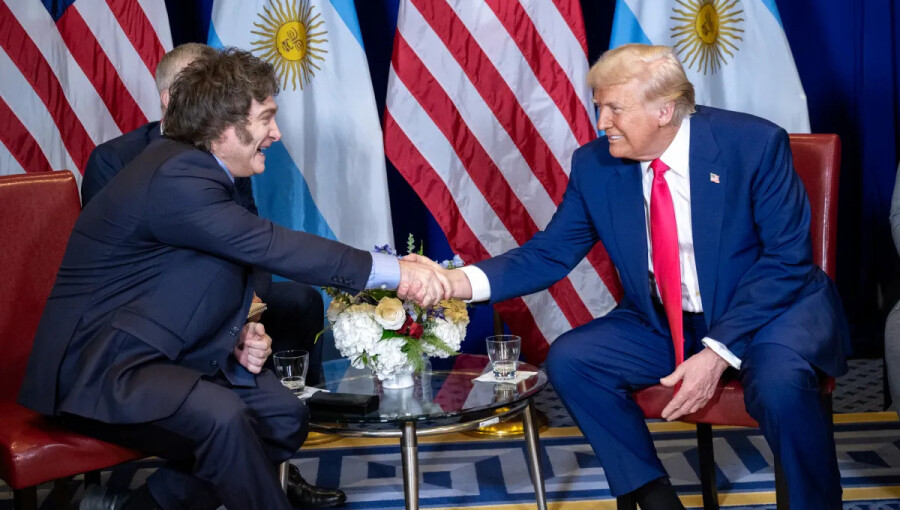
Argentina’s central bank announced that it has reached a $20 billion currency swap agreement with the U.S. Treasury Department, just days before an important midterm election. The agreement outlines terms for bilateral currency swap operations between the two countries but did not include specific details.
According to the central bank, this deal will enable it to broaden the tools available for managing monetary and exchange rate policies, as well as improve the liquidity of its international reserves. On the same day, the Argentine peso hit a record low, falling 1.7% to close at 1,475 per dollar.
The central bank described the arrangement as part of a broader strategy to strengthen its capacity to manage volatility in foreign exchange and capital markets.
The U.S. Treasury has not yet provided additional information or issued a formal statement about the swap agreement. However, the U.S. Treasury Secretary previously indicated that the deal would be supported by Special Drawing Rights from the International Monetary Fund, held within the Treasury’s Exchange Stabilisation Fund, which would be converted into dollars.
It was also noted that the U.S. would not impose extra conditions on Argentina beyond the current government’s commitment to fiscal austerity and economic reforms aimed at encouraging private sector growth. Recent weeks have seen several U.S. purchases of Argentine pesos, though details on those transactions have not been disclosed.
With Argentina’s midterm parliamentary elections scheduled for October 26, Economy Minister Luis Caputo expressed hope that the framework for the swap deal would be finalised before the vote. The election is significant for President Javier Milei’s party, which aims to increase its legislative presence.
Milei, who advocates for sharp government spending cuts and a smaller state to address the country’s economic challenges, has faced several recent political setbacks.
In related remarks, the former U.S. President warned that the U.S. might withdraw support if Milei’s party does not perform well in the elections, a statement that briefly unsettled local markets. However, the Treasury Secretary clarified that ongoing support would depend on the implementation of sound policies rather than election outcomes, adding that a good showing for Milei’s party could help prevent attempts to reverse current reforms.