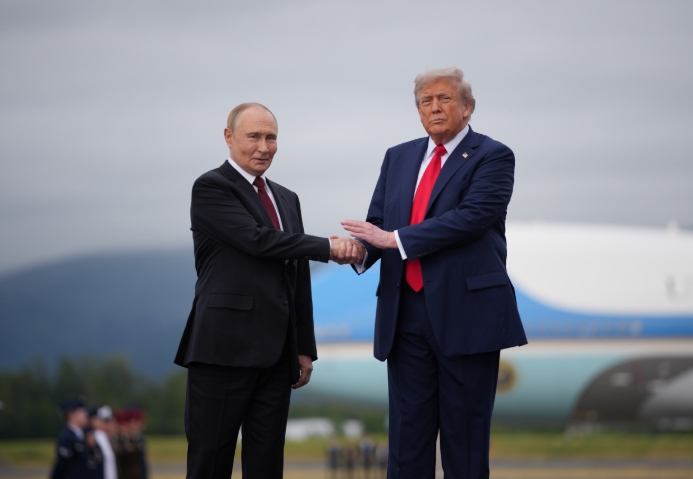
U.S. President Donald Trump said he had a “very productive” telephone conversation with Russian President Vladimir Putin, raising hopes that diplomatic efforts to ease tensions between Washington and Moscow and advance negotiations over the war in Ukraine may be gaining momentum.
The call, which lasted more than an hour according to officials familiar with the discussions, comes at a time of heightened geopolitical uncertainty and renewed international efforts to seek a path toward peace in Eastern Europe. While neither side disclosed the full details of the conversation, both leaders indicated that there had been progress on several key issues, including security concerns, economic relations, and the ongoing conflict in Ukraine.
Trump Highlights “Positive Momentum”
Speaking to reporters after the call, President Trump described the conversation as “constructive” and suggested that both sides were committed to keeping communication channels open.
“We had a very good conversation. We discussed many things, and there has been progress,” Trump said, adding that his administration remains focused on achieving stability and reducing global tensions.
The White House later released a statement confirming that the leaders had discussed the war in Ukraine, strategic security issues, and opportunities for further diplomatic engagement.
Officials said the conversation is part of a broader effort by the Trump administration to maintain direct communication with Moscow while working alongside European allies to encourage negotiations aimed at ending the conflict.
Kremlin Describes Talks as “Businesslike”
The Kremlin also characterized the call in positive terms, describing it as “frank and businesslike.” Russian officials said President Putin reiterated Moscow’s position on security guarantees and the need to address what Russia considers the root causes of the conflict in Ukraine.
According to Russian media reports, the leaders also discussed bilateral relations and the possibility of future meetings between senior officials from both countries.
The Kremlin statement did not indicate that any major breakthroughs had been achieved but said both sides agreed to continue dialogue on issues of mutual interest.
Ukraine Remains at the Center of Discussions
The war in Ukraine remains the dominant issue shaping U.S.-Russia relations. More than four years after Russia’s full-scale invasion of Ukraine in February 2022, the conflict continues to have far-reaching consequences for global security, energy markets, and international diplomacy.
President Trump has repeatedly said that he wants to broker an end to the war and has pledged to pursue diplomatic solutions aimed at bringing both sides to the negotiating table.
However, significant challenges remain. Kyiv has insisted that any peace agreement must respect Ukraine’s sovereignty and territorial integrity, while Russia continues to seek security arrangements that reflect its strategic interests.
Analysts say that while direct communication between Washington and Moscow is essential, expectations for an immediate breakthrough should remain cautious.
Global Markets and Allies Watching Closely
Financial markets and U.S. allies are closely monitoring developments in relations between Washington and Moscow. Any signs of progress in diplomatic efforts could influence global energy prices, international trade, and broader geopolitical stability.
European leaders have consistently supported diplomatic initiatives while emphasizing that any negotiations concerning Ukraine must involve Kyiv directly.
Several NATO members have also reiterated their commitment to supporting Ukraine’s defense and maintaining pressure on Russia through sanctions and other measures.
Potential for Future Engagement
The latest conversation between Trump and Putin has fueled speculation that additional high-level meetings could take place in the coming months. Officials in both Washington and Moscow have not ruled out the possibility of a face-to-face summit should diplomatic conditions permit.
Foreign policy experts say continued communication between the two leaders could help reduce misunderstandings and create opportunities for discussions on arms control, strategic stability, and regional security issues beyond Ukraine.
Despite deep divisions between the United States and Russia, the latest call suggests that both governments recognize the importance of maintaining diplomatic channels during one of the most complex periods in international relations in recent decades.
For now, President Trump’s assertion that progress has been made offers a cautiously optimistic signal, though observers stress that meaningful breakthroughs will depend on sustained negotiations and concrete actions from all parties involved in the months ahead.
________________________________________________________________________________________________________________