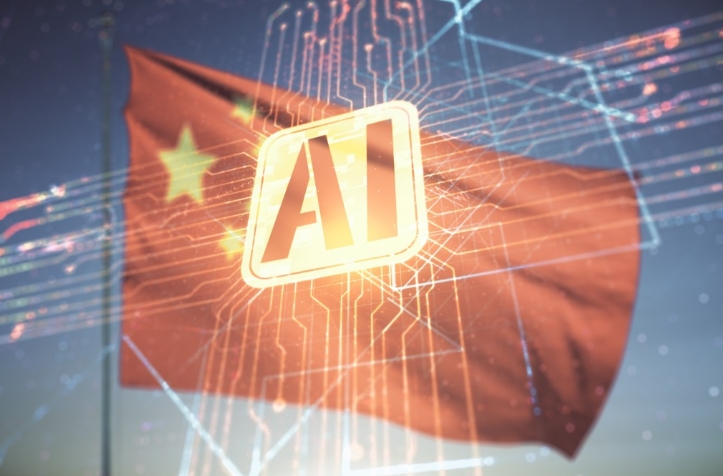
Chinese authorities are considering new measures that could limit overseas access to some of the country’s most advanced artificial intelligence models, marking the latest step in Beijing’s efforts to protect strategic technologies and tighten control over its rapidly expanding AI industry. The move could have far-reaching implications for global AI development and intensify the technological rivalry between China and the United States.
According to sources familiar with the discussions, Chinese regulators have held meetings in recent weeks with several of the country’s leading AI companies to discuss possible restrictions on foreign access to advanced Chinese large language models (LLMs). The deliberations are reportedly being driven by concerns over national security, intellectual property protection, and fears that overseas users could exploit Chinese AI systems to accelerate rival technological development.
Growing Concern Over China’s AI Advantages
The discussions come as Chinese AI firms have made significant advances in recent months, narrowing the performance gap with leading Western models developed by companies such as OpenAI and Anthropic.
One of the biggest breakthroughs has come from Beijing-based AI company Z.ai, formerly known as Zhipu AI, whose latest GLM-5.2 model has gained international attention for its advanced reasoning and coding capabilities at significantly lower operating costs than many Western competitors. Analysts have described the model as one of China’s strongest challengers to leading U.S. AI systems.
Chinese open-source AI models have also seen growing adoption among startups, developers, and businesses around the world due to their affordability and ease of deployment, increasing Beijing’s influence in the global AI ecosystem.
National Security Concerns Drive Policy Discussions
Sources say Chinese officials are increasingly worried that unrestricted overseas access to advanced domestic AI systems could allow foreign companies and governments to study, replicate, or distill Chinese technological innovations.
The concerns mirror similar debates taking place in the United States, where Washington has imposed export controls on advanced semiconductor technologies and temporarily restricted access to certain AI models over national security concerns.
Beijing has in recent months demonstrated a growing willingness to use national security arguments to protect strategic technologies, including stricter reviews of overseas investments and greater scrutiny of cross-border technology transactions.
Industry experts say Chinese policymakers increasingly view artificial intelligence as a critical strategic asset that must be safeguarded in the same way as semiconductors, quantum computing, and advanced manufacturing technologies.
Potential Measures Under Consideration
While no final decisions have been made, officials are reportedly considering several possible restrictions, including:
- Limiting access to certain high-performance AI models from overseas IP addresses;
- Requiring additional licensing or approval processes for foreign users;
- Imposing stricter identity verification requirements;
- Restricting access to specific application programming interfaces (APIs);
- Implementing export-style controls on the most advanced AI capabilities.
The proposals remain under discussion, and regulators have not publicly announced any formal policy changes.
A Shift in China’s AI Strategy
The potential restrictions would represent a notable shift in China’s approach to artificial intelligence.
In recent years, many Chinese AI firms have actively pursued international expansion, promoting open-source models and encouraging overseas adoption as a way to increase their global competitiveness and challenge the dominance of U.S. technology companies.
However, growing geopolitical tensions and increasing concerns over technology transfer have prompted Chinese policymakers to rethink the balance between international expansion and national security.
The move also comes as reports suggest Chinese authorities are tightening controls over AI-related knowledge and talent, including increased scrutiny of overseas travel by senior AI researchers and executives.
Global Implications
Any restrictions on access to Chinese AI models could have significant consequences for developers and businesses around the world that have increasingly relied on low-cost Chinese systems for coding, automation, and research applications.
Technology experts warn that tighter controls could accelerate the fragmentation of the global AI ecosystem, creating separate technological spheres dominated by Chinese and Western platforms.
The development also underscores the increasingly strategic nature of artificial intelligence in international competition, with both Beijing and Washington seeking to protect their technological advantages while limiting the ability of rivals to benefit from their innovations.
Intensifying the Global AI Race
The discussions in Beijing are the latest sign that artificial intelligence has become a central battleground in global geopolitics.
As countries race to develop more powerful AI systems and secure technological leadership, governments are increasingly treating advanced AI capabilities as matters of national security rather than purely commercial products.
Whether China ultimately proceeds with restrictions on overseas access remains uncertain. However, the mere consideration of such measures highlights how rapidly the global AI landscape is evolving and how the contest for technological supremacy is increasingly shaping international policy, trade and security strategies.
________________________________________________________________________________________________________________