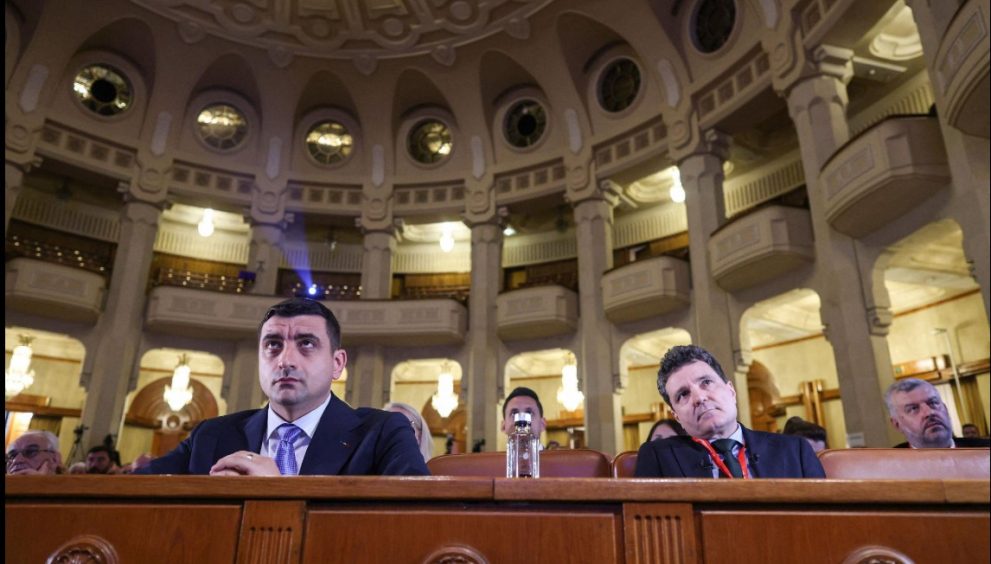
Romania’s minority pro-EU government has collapsed after parliament passed a no confidence motion, ousting Prime Minister Ilie Bolojan in a decisive 281–233 vote.
Coalition Breakdown Triggers Vote
The motion followed the withdrawal of the centre-left Social Democratic Party (Romania) from the ruling coalition. The party then aligned temporarily with the far-right Alliance for the Union of Romanians (AUR) to push the government out of power.
Calls for Snap Elections
AUR leader George Simion quickly called for snap elections, seeking to capitalize on the party’s growing popularity in recent polls.
Political Uncertainty Ahead
The collapse of the government signals a period of political instability in Romania, with key questions now including:
- Who will form the next government
- Whether early elections will be called
- How policy direction may shift amid rising populist support
Broader Implications
Romania’s political developments are being closely watched across Europe, particularly given:
- Its pro-European Union stance
- Ongoing regional security concerns
- Economic and governance reforms tied to EU alignment
What Comes Next
The president is expected to begin consultations with political parties to determine the next steps, which could include appointing an interim government or moving toward early elections.