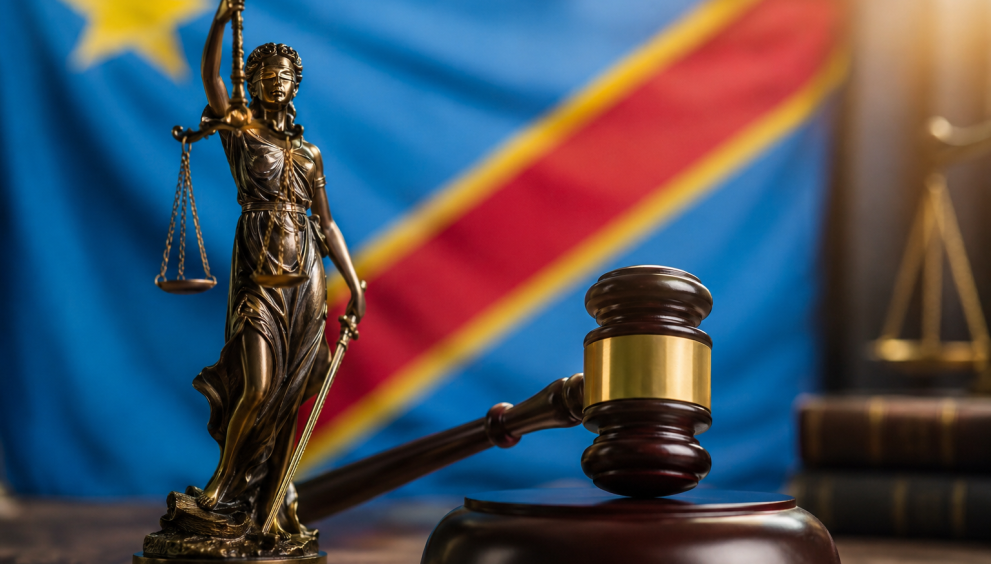
The Democratic Republic of Congo (DRC) has established a new advisory council of international legal experts in a significant move aimed at strengthening accountability for war crimes and crimes against humanity committed during decades of conflict in the country’s eastern provinces. The initiative marks one of the government’s most ambitious efforts yet to pursue justice for victims of violence and end the longstanding cycle of impunity.
New Council to Support Accountability
The newly created Council for the Examination of Atrocities in the DRC brings together prominent Congolese and international specialists in international criminal law, including experienced prosecutors, former judges, and human rights advocates from the United States and Europe.
The council’s primary role will be to advise Congolese authorities on investigating serious international crimes, documenting evidence, identifying perpetrators, and strengthening legal mechanisms to prosecute those responsible for atrocities committed during years of armed conflict.
Officials say the council will also work to improve recognition of victims’ rights and recommend pathways for reparations, ensuring survivors have a greater voice in future justice processes.
International Experts Join the Initiative
The advisory body is co-chaired by renowned Congolese human rights activist Julienne Lusenge and former International Criminal Court (ICC) judge Howard Morrison.
Among its members are former U.S. Ambassador-at-Large for Global Criminal Justice Stephen Rapp and former ICC official Pascal Turlan, both widely recognized for their work on international war crimes investigations.
Their expertise is expected to help Congolese institutions build stronger cases against those accused of orchestrating atrocities while reinforcing international legal standards in domestic investigations.
Decades of Conflict in Eastern Congo
Eastern Congo has endured decades of violence involving numerous armed groups competing for territory, natural resources, and political influence.
The conflict, rooted in the aftermath of the 1994 Rwandan genocide, has resulted in millions of deaths through violence, disease, and displacement. Civilians have frequently been subjected to massacres, sexual violence, forced recruitment of children, and widespread human rights abuses.
Fighting intensified again over the past year as the AFC/M23 rebel alliance captured significant areas in eastern Congo. The Congolese government, the United Nations, and several Western governments have accused neighboring Rwanda of supporting the M23 rebels an allegation Kigali has consistently denied.
Broader Push for International Justice
The formation of the advisory council forms part of President Félix Tshisekedi’s broader campaign to secure international recognition of atrocities committed in eastern Congo.
Last year, Tshisekedi described the violence as a “silent genocide” during his address to the United Nations General Assembly, calling for an international commission of inquiry to investigate the crimes and help dismantle what he described as a persistent culture of impunity.
More recently, the DRC filed a case before the International Court of Justice accusing Rwanda of violating international treaties related to genocide and torture in connection with the conflict. Rwanda has rejected the allegations.
Hope for Victims
Human rights organizations have welcomed the establishment of the council as an important step toward ensuring that victims receive justice after years of suffering.
While several militia leaders have previously faced prosecution before the International Criminal Court, many victims and advocacy groups have argued that accountability has remained limited and inconsistent.
The new advisory body is expected to help strengthen national judicial institutions, improve cooperation with international legal mechanisms, and increase the likelihood that future investigations lead to successful prosecutions.
Observers caution, however, that achieving lasting justice will require sustained political commitment, adequate funding, protection for witnesses, and continued international support.
Looking Ahead
The creation of the Council for the Examination of Atrocities signals the Congolese government’s renewed determination to confront one of Africa’s longest-running humanitarian and security crises through legal accountability.
As violence continues to affect communities across eastern Congo, many hope the initiative will not only help prosecute those responsible for grave crimes but also contribute to reconciliation, strengthen the rule of law, and provide long-awaited justice for thousands of victims.
_______________________________________________________________________________________________________________