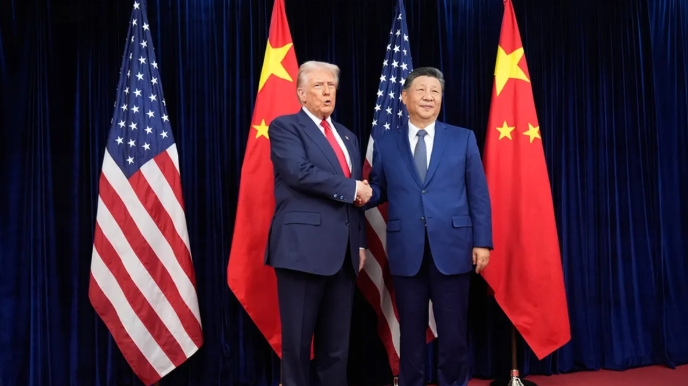
Chinese President Xi Jinping praised what he called “important progress” in trade negotiations with the United States on Thursday while simultaneously issuing a firm warning to Washington over Taiwan, underscoring the deep tensions that continue to define relations between the world’s two largest economies.
Xi made the remarks during high-level talks in Beijing with U.S. President Donald Trump, who is visiting China for a closely watched summit focused on trade, technology, security, and regional conflicts.
The meeting at Beijing’s Great Hall of the People marked one of the most consequential diplomatic engagements between Washington and Beijing in recent years, with both leaders attempting to stabilize a relationship strained by tariffs, geopolitical rivalry, and disputes over Taiwan and advanced technology.
Xi Praises Trade Negotiations
Speaking during the opening session of bilateral talks, Xi said both sides had made “constructive and meaningful progress” toward improving economic cooperation and reducing trade tensions.
According to Chinese state media, Xi stressed that China and the United States “gain from cooperation and lose from confrontation,” calling for a more stable and predictable economic partnership.
Officials familiar with the negotiations said the two countries are discussing expanded Chinese purchases of American agricultural products, increased access for U.S. companies in Chinese markets and mechanisms to prevent future tariff escalations.
Trump also expressed optimism about the talks, saying the two nations were “moving toward a fair and balanced relationship” after years of economic friction.
The White House has reportedly pushed for broader commitments from Beijing on market access, intellectual property protections, and semiconductor-related restrictions, while China is seeking relief from export controls affecting its technology sector.
Taiwan Emerges as Major Flashpoint
Despite the positive tone on trade, Xi delivered a pointed message regarding Taiwan, warning the United States against supporting what Beijing considers separatist activity on the island.
“The Taiwan issue concerns China’s sovereignty and territorial integrity and allows no external interference,” Xi reportedly told Trump during private discussions, according to Chinese officials.
Xi urged Washington to adhere strictly to the “One China” principle and avoid actions that could embolden pro-independence forces in Taiwan.
The warning comes amid growing Chinese military activity around the Taiwan Strait and continued U.S. support for Taipei through arms sales and diplomatic engagement.
Taiwan remains one of the most sensitive issues in U.S.-China relations, with Beijing viewing the self-governing island as part of its territory while the United States maintains unofficial but strong ties with Taipei.
Analysts say Xi’s remarks highlight how even improving trade relations may not ease broader strategic competition between the two powers.
Technology and AI Competition Also on Agenda
The summit also focused heavily on artificial intelligence, semiconductors and technology competition, areas that have become increasingly central to the rivalry between Washington and Beijing.
Trump traveled to China alongside several major American business leaders and technology executives, including Tesla and SpaceX CEO Elon Musk, Nvidia CEO Jensen Huang and Apple CEO Tim Cook.
Chinese officials are believed to have pressed for reduced U.S. restrictions on advanced AI chips and semiconductor exports, while Washington remains concerned about China’s technological and military ambitions.
Experts say both countries are attempting to balance economic cooperation with growing national security concerns surrounding advanced technology.
Iran Conflict Adds Urgency to Talks
The ongoing conflict involving Iran also loomed over the summit, with both leaders discussing stability in global energy markets and security concerns in the Middle East.
Washington is reportedly seeking China’s assistance in encouraging restraint from Tehran and ensuring uninterrupted oil shipments through the Strait of Hormuz, a critical global shipping route.
China, which maintains close economic ties with Iran, has continued to advocate for diplomatic solutions and opposition to wider regional escalation.
Symbolism and Strategic Messaging
Trump and Xi participated in a formal state ceremony before beginning closed-door talks, with both sides emphasizing cooperation while carefully defending their national interests.
The leaders later attended cultural events in Beijing, including a ceremonial visit to historical landmarks, in what analysts described as an effort to project stability and mutual respect despite underlying tensions.
Observers say the summit reflects a broader effort by both governments to prevent further deterioration in relations at a time of mounting global uncertainty.
However, analysts caution that major disagreements remain unresolved, particularly over Taiwan, military influence in the Indo-Pacific, technology controls and competing visions for the global order.
While neither side announced major breakthroughs Thursday, diplomats suggested negotiations would continue throughout the visit, with additional economic and security discussions scheduled for Friday.
Global markets and foreign governments are closely watching the Beijing summit for signs of whether the two superpowers can maintain cooperation despite intensifying strategic rivalry.
________________________________________________________________________________________________________________