Faith Gathering on National Mall Sparks Debate
A major faith gathering backed by the administration of U.S. President Donald Trump has ignited a fierce national debate over the separation of church and state, with critics accusing organizers of promoting Christian nationalism under the banner of America’s 250th anniversary celebrations.
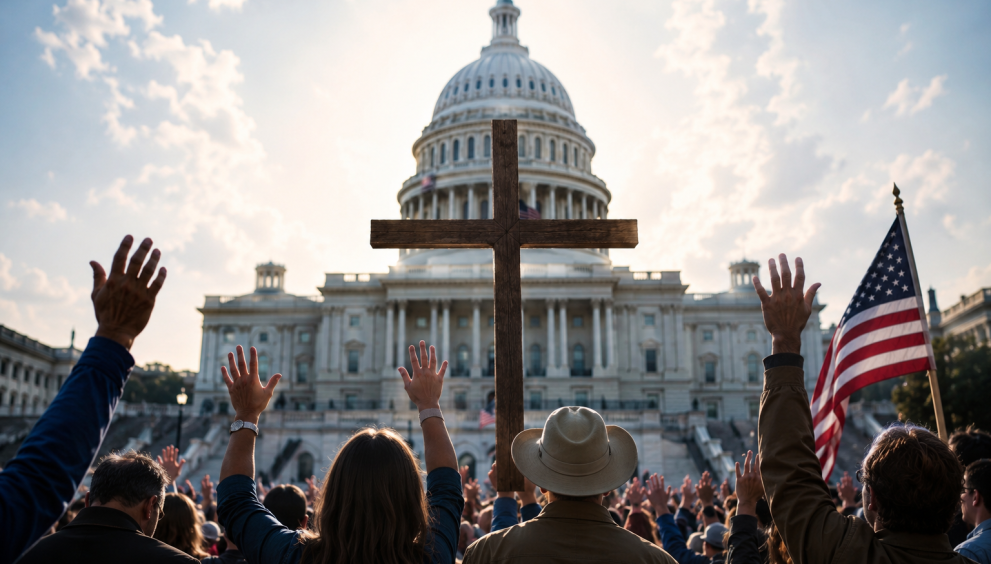
The event, titled “Rededicate 250: National Jubilee of Prayer, Praise & Thanksgiving,” took place Sunday on the National Mall in Washington, D.C., drawing thousands of conservative Christians, political figures and religious leaders for a nine-hour program centered on prayer, worship and patriotic messaging.
Trump Allies and Conservative Religious Leaders Attend
Organized by Freedom 250, a public-private initiative created alongside the White House to coordinate events marking the United States’ upcoming 250th birthday in 2026, the gathering featured speeches and appearances from prominent evangelical pastors, conservative Catholic leaders and senior Republican officials.
Trump delivered a recorded message to attendees, while Defense Secretary Pete Hegseth, House Speaker Mike Johnson and Senator Tim Scott were among the political figures participating in the event. Religious leaders included Jonathan Falwell, Catholic Bishop Robert Barron and Rabbi Meir Soloveichik.
Supporters described the gathering as a celebration of America’s religious heritage and a call for spiritual renewal ahead of the nation’s semiquincentennial anniversary.
Organizers Call for National ‘Rededication’
Event organizers said the rally aimed to “rededicate” the country as “One Nation Under God” through scripture readings, testimonies and public prayer sessions.
Many attendees waved American flags, sang worship songs and joined mass prayers focused on national unity, morality and the future of the country.
Backers of the initiative argued that faith has always played a central role in American history and should remain visible in public life.
Civil Liberties Groups Condemn the Event
However, civil liberties groups, interfaith organizations and constitutional scholars sharply criticized the gathering, arguing that direct government involvement in an overtly Christian event crossed constitutional boundaries.
The Freedom From Religion Foundation condemned the event as a violation of the constitutional principle separating church and state. Annie Laurie Gaylor, co-president of the organization, described the gathering as “a fusion not only of church and state, but also of our federal government with Christian nationalism.”
Critics argued that official participation by high-ranking government officials blurred the line between public office and religious advocacy.
Concerns Over Religious Representation
Several advocacy groups also questioned the lack of broad religious representation at the event.
Mainline Protestant denominations, Muslims, Hindus, Buddhists, members of The Church of Jesus Christ of Latter-day Saints and other faith communities were largely absent from the featured speaker lineup.
The Council on American-Islamic Relations urged organizers to include broader representation, saying the event failed to reflect the country’s religious diversity.
Christian Nationalism Debate Reignites
The gathering has renewed debate surrounding the growing influence of Christian nationalism within American politics, particularly during Trump’s second presidency.
Analysts say the administration has embraced closer ties with conservative Christian movements through initiatives such as the White House Faith Office and religious liberty commissions.
Critics warn that intertwining government and religion could alienate minority faith groups and weaken constitutional neutrality, while supporters insist America’s founding principles were deeply connected to religious values.
Protesters Challenge the Event’s Message
The event also drew protesters to the National Mall, with demonstrators accusing organizers of rewriting American history and marginalizing minority communities.
Some protesters argued that patriotic celebrations tied to religion often overlook painful chapters of U.S. history, including slavery, racial segregation and the treatment of Indigenous peoples.
Others carried signs defending secular governance and religious pluralism.
Supporters Defend America’s Religious Heritage
Supporters of the rally rejected accusations of extremism and defended the overwhelmingly Christian tone of the event.
Reverend Samuel Rodriguez said the lineup reflected the historical role Christianity played during the founding era and the Great Awakening movements that shaped early American society.
Attendees interviewed at the gathering described the event as peaceful, patriotic and spiritually uplifting.
More Anniversary Events Planned Across the US
The “Rededicate 250” gathering is expected to be the first in a broader series of events planned throughout 2026 as the United States commemorates 250 years since the signing of the Declaration of Independence.
Still, the controversy surrounding Sunday’s rally underscores the growing divide in American public life over the role religion should play in government and politics.
While supporters see the movement as a restoration of traditional values, opponents warn it risks undermining the country’s longstanding commitment to religious pluralism and constitutional separation between church and state.
________________________________________________________________________________________________________________