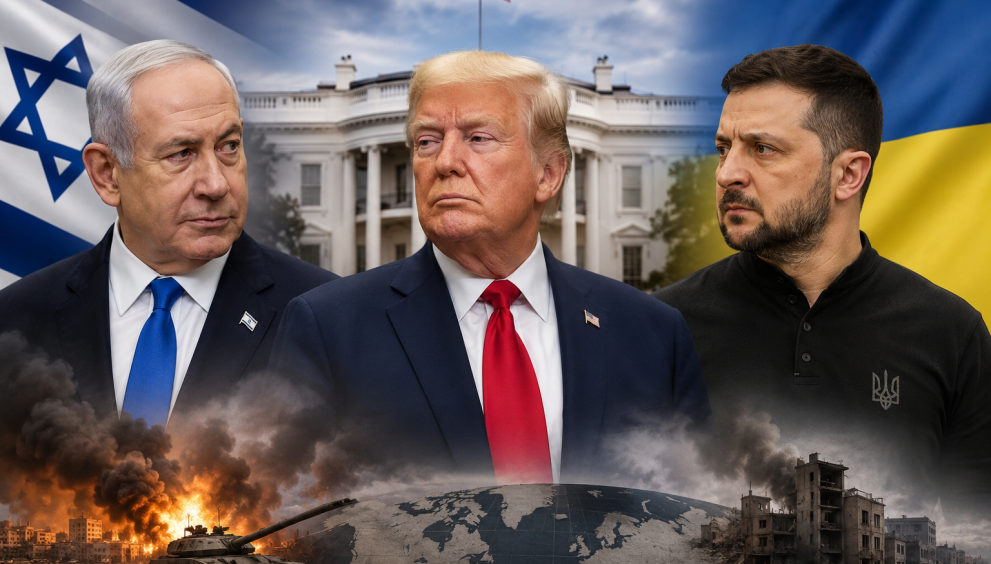
U.S. President Donald Trump is set to hold back-to-back White House meetings with Israeli Prime Minister Benjamin Netanyahu and Ukrainian President Volodymyr Zelenskiy on Tuesday, as the wars involving Iran and Ukraine enter what officials describe as a decisive and highly sensitive phase.
The meetings come amid growing international concern over the direction of both conflicts and the role Washington may play in shaping their next stage.
Zelenskiy Seeks Air Defense and Military Support
Zelenskiy is expected to press Trump for additional military assistance, particularly advanced air-defense systems, including Patriot missile capabilities, as Russia intensifies missile and drone attacks across Ukraine.
The Ukrainian leader is also scheduled to meet members of the U.S. Senate and House of Representatives to push for the faster delivery of previously approved American aid and to strengthen long-term strategic cooperation with Washington.
The White House has indicated that Trump will discuss the ongoing peace process between Russia and Ukraine, with the administration continuing efforts to explore a negotiated settlement to the more than four-year-old war.
Netanyahu Focuses on Iran and Regional Security
Netanyahu’s talks with Trump are expected to center on Iran’s nuclear program, regional security threats, and the future of the Abraham Accords.
The visit comes after recent reports of tension between the two leaders over how aggressively to confront Iran following weeks of military escalation in the Middle East. While Trump has recently emphasized diplomacy and paused further U.S. military action to allow negotiations to proceed, Israeli officials remain concerned about Iran’s nuclear ambitions and its support for armed groups across the region.
Analysts say Netanyahu is seeking to reaffirm U.S. security backing ahead of Israel’s upcoming October elections and to ensure continued coordination on any future action involving Iran.
Symbolic and Strategic Timing
Both Netanyahu and Zelenskiy are also in Washington to attend memorial events honoring the late Senator Lindsey Graham, a prominent advocate for strong U.S. support for both Israel and Ukraine.
The unusual convergence of the three leaders in Washington highlights the extent to which the Ukraine and Iran crises are increasingly shaping American foreign policy and global security calculations.
High-Stakes Diplomacy
Although no major agreements are expected to be announced immediately, the meetings are being closely watched by allies and adversaries alike.
For Ukraine, the outcome could influence the scale and speed of future U.S. military support. For Israel, the discussions may help determine whether Washington continues to prioritize diplomacy with Tehran or shifts toward a tougher strategy if negotiations fail.
With fighting continuing on both fronts and no clear resolution in sight, Trump’s meetings with Netanyahu and Zelenskiy are likely to be viewed as one of the most significant diplomatic moments of his second presidency so far.
________________________________________________________________________________________________________________