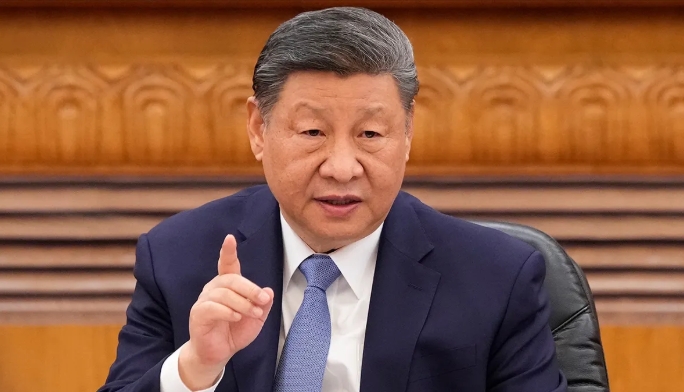
Chinese President Xi Jinping arrived in North Korea on Monday for a rare state visit and high-stakes summit with North Korean leader Kim Jong Un, underscoring the growing strategic importance of the relationship between the two neighboring countries amid shifting geopolitical tensions across East Asia.
The two-day visit marks Xi’s first trip to North Korea since 2019 and his first overseas journey of 2026. Analysts view the visit as a significant diplomatic move aimed at reinforcing Beijing’s influence in Pyongyang as North Korea deepens military and economic ties with Russia while tensions with the United States and its allies remain elevated.
Grand Welcome in Pyongyang
Xi was greeted at Pyongyang’s Sunan International Airport by Kim Jong Un and First Lady Ri Sol Ju in a ceremony featuring military honors, a red-carpet reception, a 21-gun salute and crowds waving Chinese and North Korean flags. Chinese First Lady Peng Liyuan accompanied Xi on the visit.
State media from both countries portrayed the visit as a celebration of the long-standing alliance between Beijing and Pyongyang. Xi described the relationship as an “invincible friendship,” while North Korean officials highlighted what they called the “unbreakable” bond between the two socialist neighbors.
Following the airport ceremony, Xi and Kim attended a welcoming event at Kim Il Sung Square, where thousands of participants gathered in a carefully choreographed display of unity between the two nations.
Strengthening a Strategic Partnership
During their talks, Xi and Kim are expected to discuss expanding cooperation in trade, agriculture, technology, infrastructure development, and regional security. Both sides have signaled their desire to deepen economic ties as North Korea seeks investment and support amid ongoing international sanctions.
China remains North Korea’s largest trading partner and most important economic lifeline. Despite years of sanctions imposed by the United Nations and Western countries over North Korea’s nuclear weapons program, Beijing has continued to provide critical diplomatic and economic support to Pyongyang.
The visit comes as cross-border exchanges between the two countries have increased following the easing of pandemic-era restrictions. Air links, trade routes, and diplomatic contacts have gradually resumed, helping restore a relationship that had cooled during years of border closures.
China Seeks to Reassert Influence
Experts believe one of Beijing’s key objectives is to maintain its influence over North Korea at a time when Kim Jong Un has expanded cooperation with Russian President Vladimir Putin.
North Korea has strengthened military ties with Moscow over the past two years, providing military support and expanding strategic cooperation. The growing relationship has raised concerns in Beijing that Pyongyang could become increasingly dependent on Russia, potentially reducing China’s traditional leverage over the isolated state.
By meeting Kim in person, Xi is signaling that North Korea remains an important component of China’s regional security strategy and a critical buffer state along its northeastern border. Analysts say Beijing wants to ensure that Pyongyang remains aligned with Chinese interests as competition with Washington intensifies.
Nuclear Issue Remains a Major Challenge
The summit takes place against the backdrop of renewed concerns over North Korea’s nuclear weapons program.
Just days before Xi’s arrival, Kim Yo Jong, the influential sister of Kim Jong Un, declared that North Korea’s status as a nuclear-armed state was irreversible and rejected suggestions that Pyongyang would return to denuclearization negotiations. North Korean officials have repeatedly stated that nuclear weapons remain central to the country’s security strategy.
North Korea has also unveiled new military capabilities, including a planned 10,000-ton naval destroyer and expanded uranium enrichment activities. Intelligence assessments indicate that the country continues to advance its missile and nuclear programs despite international sanctions.
While China has traditionally supported diplomatic solutions to the nuclear issue, there is little indication that Xi will pressure Kim to abandon his nuclear arsenal during the visit. Instead, observers expect discussions to focus on stability, economic cooperation and broader regional security concerns.
Regional and Global Implications
Xi’s visit comes amid growing strategic competition among major powers in Asia. Relations between China and the United States remain strained over trade, technology, Taiwan, and security issues in the Indo-Pacific region.
The renewed engagement between Beijing and Pyongyang is likely to draw close attention from Washington, Seoul, and Tokyo, all of which have expressed concerns over North Korea’s expanding military capabilities and its cooperation with both China and Russia.
The summit also precedes several anticipated diplomatic meetings involving regional leaders later this year, raising expectations that Northeast Asia could see increased diplomatic activity as governments seek to manage security risks and economic challenges.
Looking Ahead
As Xi Jinping and Kim Jong Un begin their latest round of talks, the visit highlights the enduring significance of the China-North Korea alliance. While the two countries face evolving regional dynamics, both leaders appear determined to deepen cooperation and present a united front amid increasing global uncertainty.
The outcomes of the summit could shape security and diplomatic developments across Northeast Asia for months to come, particularly as questions persist over North Korea’s nuclear ambitions, China’s regional influence, and the broader balance of power in the Indo-Pacific region.
________________________________________________________________________________________________________________