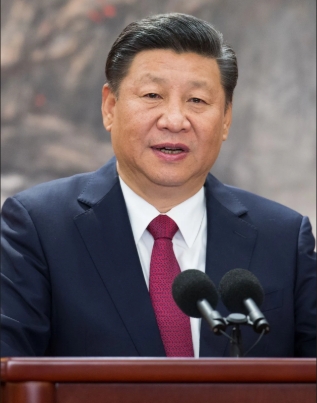
Chinese President Xi Jinping has pledged China’s “unwavering support” for North Korea during a rare high-profile visit to Pyongyang, signaling a renewed push to strengthen one of Asia’s most closely watched strategic alliances amid rising global tensions.
Xi arrived in North Korea on Monday for a two-day state visit his first in seven years where he was greeted by North Korean leader Kim Jong Un in a ceremony marked by military honors, a 21-gun salute, and large public displays of solidarity in the capital.
A message of strategic solidarity
During talks with Kim, Xi emphasized that China will not “waver” in its commitment to safeguarding shared interests with North Korea, according to official summaries of the meeting.
He called for deeper strategic cooperation between the two countries and stressed the need to “firmly protect sovereignty, security, and development interests,” as both nations face increasing pressure from Western powers.
Xi also described the relationship between Beijing and Pyongyang as being rooted in “shared ideals and beliefs,” reinforcing what Chinese officials say is a historically stable partnership built on political trust and regional coordination.
Kim Jong Un, in response, welcomed Xi’s visit as proof of an “unbreakable” relationship and described closer cooperation as a strategic necessity for North Korea’s future development and security.
Rare visit amid shifting alliances
Xi’s trip marks one of his most significant diplomatic moves in years and comes at a time of shifting geopolitical alignments in Northeast Asia.
North Korea has deepened military and economic cooperation with Russia in recent years, while maintaining a tense and largely stalled relationship with the United States. Analysts say Beijing is seeking to reassert its influence over Pyongyang amid concerns that it could drift further into Moscow’s orbit.
The visit also follows increased regional militarization and ongoing disputes over nuclear weapons development on the Korean Peninsula.
Economic and military cooperation on the agenda
Beyond political messaging, the two leaders are expected to expand cooperation in areas including trade, agriculture, construction, science, and technology.
China remains North Korea’s most important economic partner, providing vital trade links and diplomatic backing, particularly as international sanctions continue to restrict Pyongyang’s access to global markets.
The summit is also seen as an opportunity to revive cross-border exchanges that slowed during the pandemic, including transport routes and limited economic activity.
Regional and global implications
Xi’s visit is being closely monitored by Washington, Seoul, and Tokyo, which view closer China–North Korea alignment as a significant geopolitical development.
While China officially supports a “denuclearized Korean Peninsula,” its immediate priority appears to be regional stability and preventing escalation that could destabilize its northeastern border.
Experts say the meeting underscores Beijing’s broader strategy of maintaining influence over North Korea while balancing its relations with other global powers.
Outlook
As Xi’s visit continues, both sides are expected to reaffirm long-term cooperation frameworks and signal continued unity in the face of external pressure.
However, analysts warn that despite the diplomatic warmth, underlying tensions remain particularly over North Korea’s nuclear ambitions and its growing strategic ties with Russia.
For now, the Pyongyang summit sends a clear message: the China–North Korea alliance remains firmly intact, and both sides are willing to project unity in an increasingly fragmented global order.
________________________________________________________________________________________________________________