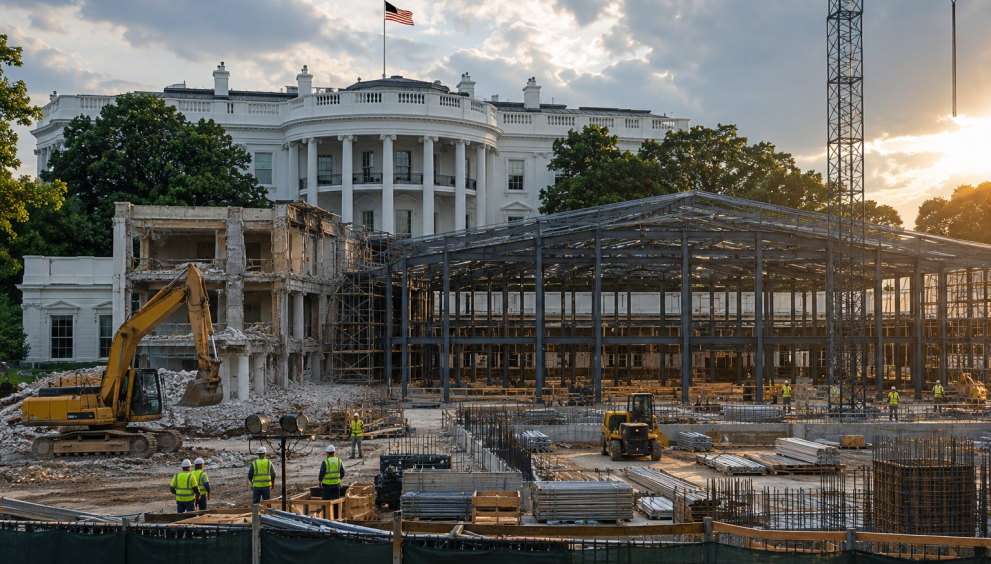
U.S. President Donald Trump says private donors and companies will finance the construction of a new $400 million ballroom at the White House, insisting that taxpayers will not bear the stated cost of the project.
The planned 90,000-square-foot facility is being built on the site of the demolished East Wing and is intended to provide a permanent venue for state dinners, diplomatic receptions and other major presidential events. Trump has repeatedly argued that the White House needs a larger indoor space for high-profile gatherings.
The project has, however, become the subject of a major legal and political dispute. The Trump administration has argued that private contributions are funding the ballroom, with companies including Amazon, Microsoft and Lockheed Martin among those reported to have contributed. Court records indicate that the donations were collected through a nonprofit organization before being transferred to the National Park Service and ultimately placed into an account controlled by the president for White House maintenance.
Questions have also emerged over the project’s final cost. While the administration continues to cite a $400 million figure, other reporting has put the cost considerably higher, with estimates reaching about $600 million for the ballroom and related construction. Broader construction and renovation projects on the White House grounds could push the overall spending close to or above $900 million.
Supreme Court Allows Construction to Continue
The legal battle intensified this week after the U.S. Supreme Court temporarily allowed construction to continue. Chief Justice John Roberts issued an administrative stay on August 21, pausing a lower-court order that would have stopped above-ground work while the administration appeals the case.
The dispute centers on whether Trump had the authority to demolish the East Wing and proceed with construction without obtaining approval from Congress. The National Trust for Historic Preservation has challenged the project, arguing that such a major alteration to the White House complex requires congressional authorization.
The administration maintains that the ballroom is part of a broader security and military-related complex and argues that delays could create national-security risks. Officials have said the project is already about 65% complete.
For now, construction can proceed while the Supreme Court considers the broader legal questions. The case is likely to remain a major test of presidential authority over the White House grounds, as well as the role of private donors in financing major projects involving the seat of the U.S. presidency.
________________________________________________________________________________________________________________