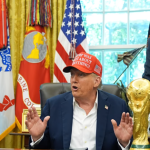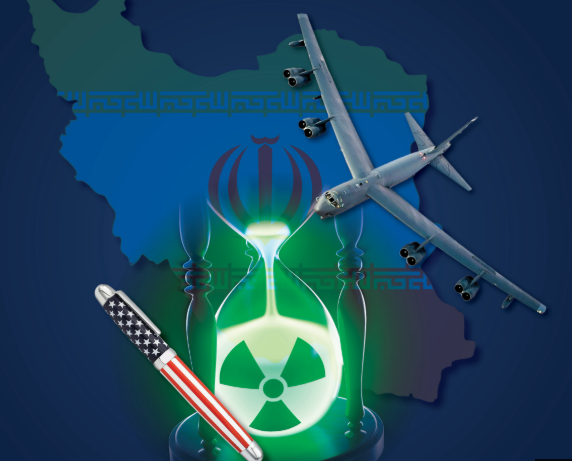
U.S. President Donald Trump has defended U.S. military action against Iran, saying the operation was necessary to prevent Tehran from obtaining a nuclear weapon and insisting that he has no regrets over the decision.
Trump said the United States took action to address what he described as a serious nuclear threat from Iran, while acknowledging that military operations always carry risks.
The president’s comments come as his administration continues to emphasize the need to prevent Iran from developing nuclear weapons and to limit the country’s ability to threaten U.S. interests and regional security.
TRUMP SAYS HE MADE THE RIGHT DECISION
Defending the strikes, Trump argued that allowing Iran to obtain a nuclear weapon would have posed a far greater danger.
He maintained that the operation was justified despite the risks involved in military action.
Trump’s comments underline his long-standing position that Iran must not be allowed to acquire a nuclear weapon and that the United States should be prepared to use military force when necessary to prevent that outcome.
The remarks have also intensified debate over the balance between military deterrence and diplomatic efforts to address Iran’s nuclear ambitions.
PRESIDENT RENEWS CALL FOR UKRAINE PEACE
Trump also renewed his call for an end to the Russia-Ukraine war, saying both sides continue to suffer heavy military losses.
The president argued that the prolonged conflict has resulted in significant casualties and destruction while emphasizing his preference for a negotiated settlement.
Trump has repeatedly made ending the war a foreign-policy priority, calling on Russia and Ukraine to reach an agreement that would bring the fighting to an end.
“THEY HATE EACH OTHER”
Addressing the difficulty of reaching a peace agreement, Trump pointed to the deeply strained relationship between Russian President Vladimir Putin and Ukrainian President Volodymyr Zelenskyy.
“They hate each other,” Trump said, describing the hostility between the two leaders as one of the obstacles standing in the way of a settlement.
Trump’s comments reflect the challenge facing any negotiations, with Moscow and Kyiv continuing to disagree over territory, security guarantees and the terms of a potential peace agreement.
TWO MAJOR FOREIGN-POLICY CHALLENGES
Trump’s remarks place two major international security issues Iran’s nuclear ambitions and the Russia-Ukraine war at the centre of his foreign policy agenda.
On Iran, the president continues to argue that military action was necessary to prevent a nuclear threat from emerging.
On Ukraine, he is pushing for diplomacy and an end to a conflict that has continued to cause significant human and economic costs.
The contrasting approaches highlight the administration’s broader emphasis on U.S. national security while seeking to reduce the duration and costs of major overseas conflicts.
As diplomatic efforts continue, attention will remain focused on whether Washington can translate Trump’s calls for peace in Ukraine into a durable agreement, while simultaneously preventing further escalation in the Middle East.