Seoul Reviews Possible Military Role
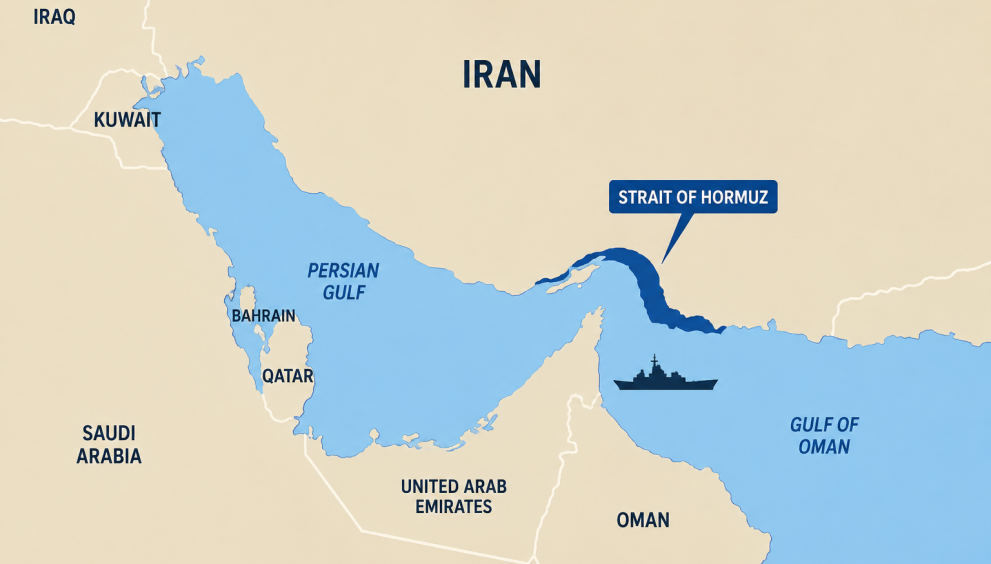
South Korea is considering whether to make a military contribution to international efforts to protect freedom of navigation through the strategically important Strait of Hormuz, but officials stress that no final decision has been made.
The presidential office said Seoul is examining both military and non-military options, while emphasizing that any contribution would have to avoid undermining South Korea’s defense readiness.
Reports indicate that potential options could include maritime patrol aircraft, a logistics or combat-support vessel and other specialized military personnel. A reported plan involving roughly 150 personnel has also emerged, although the government has not formally confirmed a deployment.
Legal and Parliamentary Obstacles
One of the biggest hurdles is South Korea’s domestic legal process. An overseas military deployment would generally require consideration by the National Assembly, particularly if personnel could become involved in combat operations.
The issue is especially sensitive because South Korea’s existing Cheonghae naval unit has previously operated in the wider region. In 2020, Seoul expanded the unit’s operational area to include the Strait of Hormuz amid heightened tensions between the United States and Iran.
Lawmakers are now questioning whether existing authorization would be sufficient for a substantially different mission in the current conflict.
Balancing Washington and Tehran
The potential deployment also presents a difficult diplomatic choice for President Lee Jae Myung’s government.
Washington has been pressing allies to contribute to efforts to keep the Strait of Hormuz open, while Seoul wants to maintain its security relationship with the United States without becoming directly involved in the conflict with Iran. South Korea has also sought to protect its economic interests and maintain room for diplomacy with Tehran.
Energy Security Adds Pressure
The Strait of Hormuz is particularly important to South Korea because the country relies heavily on Middle Eastern energy supplies. Any prolonged disruption to shipping through the waterway could raise energy costs and place additional pressure on South Korea’s economy.
The strategic waterway has already experienced severe disruption during the wider U.S.-Iran conflict, with restrictions on shipping contributing to international concerns over oil and gas supplies.
Domestic Opposition
A military deployment could also face significant public and political opposition. Recent polling cited by Reuters indicated that 55% of South Koreans opposed sending a warship to the region. Critics argue that participation could expose South Korean personnel and commercial interests to retaliation from Iran.
For Seoul, the challenge is therefore to support international maritime security while avoiding an open-ended military commitment.
Decision Still Pending
South Korea’s government has not committed to sending troops or naval forces to the Strait of Hormuz. Officials say discussions remain ongoing and that any decision will have to consider national security, legal requirements, military readiness, relations with Washington and the safety of South Korean citizens and commercial vessels.
With tensions around the waterway continuing, Seoul faces a difficult balancing act between its alliance with the United States, its economic dependence on Middle Eastern energy and the risks of becoming more directly involved in the Iran conflict.
________________________________________________________________________________________________________________