MILLIONS OF LIVELIHOODS AT RISK AS THE REGION MOVES TOWARD “PEAK WATER”
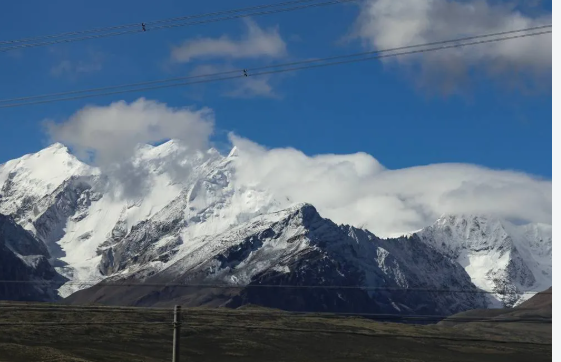
The Himalayas are approaching a critical tipping point as glaciers continue to lose ice at an accelerating rate, raising growing concerns over water security and the livelihoods of millions of people across Asia.
A study released this month warns that glacier loss across the Hindu Kush-Himalaya region is occurring faster than it was a decade ago. Researchers say the region could approach “peak water” by the middle of the century the point at which glacier-fed river flows reach their maximum before beginning to decline.
The Hindu Kush-Himalaya stretches across eight countries, from Afghanistan to Myanmar, and acts as a crucial source of freshwater for communities, agriculture, energy production and ecosystems across the region.
GLACIER MELT AND WATER SECURITY
Glaciers provide an important buffer for river systems by storing water as ice and releasing it gradually.
As temperatures rise and glaciers retreat, water availability can initially increase because of accelerated melting. But once glaciers shrink beyond a critical point, the amount of meltwater entering rivers begins to fall.
Scientists refer to this turning point as peak water.
Research published earlier this year has also documented accelerating glacier wastage across the Himalaya. Long-term monitoring indicates that glacier mass loss has increased substantially since 2000, reinforcing concerns about the region’s future water supplies.
MILLIONS DEPEND ON THE HIMALAYAN WATER SYSTEM
The consequences extend far beyond the mountains.
The Hindu Kush-Himalaya system supports major populations and economies across South and Central Asia. Changes in the timing and volume of meltwater could affect agriculture, hydropower, drinking-water supplies and downstream communities.
The region is already experiencing changes in how rainfall and snowmelt are converted into river discharge. A September study published in Scientific Reports found that, across many Central Himalayan watersheds, rainfall and snowmelt are taking longer to translate into downstream river flow, with researchers linking the changes to warming, vegetation growth and shifts in water storage.
RISING RISK OF GLACIAL DISASTERS
The retreat of glaciers is also creating new hazards.
As glaciers shrink, they can leave behind unstable glacial lakes capable of releasing sudden and destructive floods. In India alone, nearly 200 glacial lakes have been classified as high risk, including 56 considered at very high risk.
A devastating glacier collapse near the Nepal-Tibet border in August underscored those concerns. The resulting floods and landslides caused more than 1,300 deaths and left thousands missing, according to Reuters.
A REGION WITH LIMITED MONITORING
Scientists also face a major challenge in tracking the changes.
The study found that only 21 of an estimated 40,000 glaciers in the wider region are being monitored on the ground, leaving significant gaps in understanding how individual glaciers are changing and how quickly risks are developing.
Researchers say stronger monitoring, early-warning systems and cooperation across national borders will be essential as the region faces increasing water and climate pressures.
THE WIDER GLOBAL WARNING
The Himalayas are often described as Asia’s “water tower” because of their importance to freshwater systems across the continent.
The accelerating loss of ice is therefore more than an environmental issue. It is becoming an economic, humanitarian and security concern for countries that depend on Himalayan river systems.
With the region moving closer to peak water, scientists and policymakers face a narrowing window to prepare communities, strengthen water management and improve early-warning systems before declining glacier-fed flows create deeper pressure on food, energy and water security.
The future of the Himalayas is increasingly tied to the future of millions of people living downstream.