OMAN MAINTAINS FLEXIBLE DIPLOMATIC POSITION AS BRICS SUMMIT DISCUSSES COOPERATION, SOVEREIGNTY AND REGIONAL STABILITY
Oman says any decision to join BRICS remains a sovereign choice for the country, as the Gulf state continues to balance economic cooperation with its independent foreign-policy priorities.
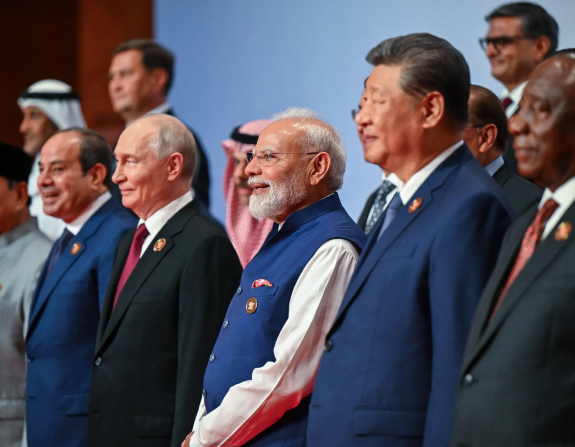
Speaking on the sidelines of the 18th BRICS Summit in New Delhi, Oman’s Ambassador to India, Issa Saleh Abdullah Alshibani, said Oman is not currently a member of the expanded BRICS grouping but closely follows its discussions and outcomes. He also highlighted the importance of dialogue and cooperation in addressing global and regional crises.
Oman’s position comes as the summit places renewed emphasis on sovereign equality, mutual respect, cooperation and diplomacy. India’s BRICS Chairship has been guided by the theme, “Building for Resilience, Innovation, Cooperation and Sustainability.” The New Delhi Declaration also reaffirmed the bloc’s commitment to sovereign equality and cooperation.
OMAN WATCHES BRICS FROM OUTSIDE THE BLOC
While Oman has not joined the expanded 11 member BRICS grouping, Muscat remains engaged with many of the economic and diplomatic issues being discussed within the forum.
The BRICS expansion has brought together countries with different geopolitical positions, including Iran, Saudi Arabia and the United Arab Emirates. The grouping’s discussions increasingly cover trade, investment, energy security, technology, development and the broader role of emerging economies in global affairs.
For Oman, maintaining the ability to determine its own foreign-policy direction remains central to its approach.
HORMUZ DIPLOMACY ADDS TO THE SIGNIFICANCE
The ambassador’s remarks come against the backdrop of heightened tensions surrounding the Strait of Hormuz, one of the world’s most strategically important maritime routes.
Oman has played a key diplomatic role in efforts to facilitate dialogue over the management and security of the waterway.
However, a planned meeting between Iran and Gulf states in Oman to discuss arrangements concerning the Strait of Hormuz was postponed indefinitely. Omani Foreign Minister Badr Albusaidi said the meeting had been delayed, with no new date immediately announced.
The postponement comes amid disagreements over proposed arrangements and growing concerns about maritime security and regional stability.
DIPLOMACY AMID REGIONAL DIVISIONS
The developments also highlight the delicate diplomatic environment surrounding the expanded BRICS grouping.
At the New Delhi Summit, BRICS members adopted a declaration calling for maximum restraint amid escalating conflict in the Middle East and emphasizing dialogue, diplomacy and respect for sovereignty. Reaching consensus was particularly challenging given the presence of countries with differing positions on the regional conflict.
Oman, meanwhile, continues to maintain relationships across different sides of the region, positioning itself as a diplomatic intermediary while protecting its own national interests.
A SOVEREIGN CHOICE
For Muscat, the question of BRICS membership therefore extends beyond economic opportunity.
Joining an international grouping can create new avenues for trade, investment and cooperation, but Oman has indicated that such a decision must ultimately be determined by its own national priorities.
That approach reflects a broader theme emerging from the BRICS discussions: countries are seeking stronger economic partnerships while retaining the sovereignty to decide how and with whom they cooperate.
As BRICS continues to expand its role in global economic and diplomatic affairs, Oman’s position illustrates how countries outside the bloc can engage with its initiatives without necessarily becoming full members.
With the Strait of Hormuz remaining at the centre of regional security concerns, Oman’s role as a diplomatic bridge could become increasingly significant in efforts to keep dialogue open.