Government Acknowledges Pressures Facing Teachers and Learners
Namibia’s Ministry of Education, Innovation, Youth, Sport, Arts and Culture has pledged to tackle persistent systemic challenges affecting teachers, learners and the delivery of quality education across the country.
Education Minister Sanet Steenkamp, speaking on World Teachers’ Day, acknowledged challenges including shortages of specialised teachers, inadequate housing, unreliable electricity and connectivity, heavy workloads and large class sizes.
The minister said addressing these issues is essential to improving teachers’ working conditions and ensuring better learning outcomes for Namibian children.
Strategic Plan Targets Education Quality
The ministry’s 2025–2030 Strategic Plan places excellence in teaching and learning at the centre of its priorities. The plan includes increased investment in teacher education and continuous professional development, as well as stronger mentorship and peer-to-peer coaching programmes.
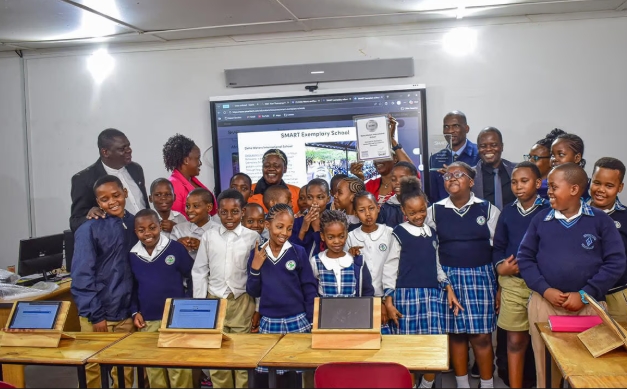
The ministry is also working to strengthen digital education. Deputy Education Minister Dino Ballotti recently acknowledged that a digital divide remains, particularly in rural and remote schools, where connectivity, ICT infrastructure and reliable electricity remain challenges.
The government plans to expand connectivity, computer laboratories, smart classrooms and digital services while developing an integrated digital hub for educational data, e-learning and administrative services.
Infrastructure and Access Remain Concerns
Namibia’s education system is also under pressure from population growth and shortages of classroom space. Earlier this year, more than 1,000 pupils were reportedly without school places, with shortages particularly pronounced in densely populated areas such as Khomas.
The ministry has also introduced new Norms and Standards for Schools and minimum standards for hostels, covering areas including infrastructure, resources, teaching and learning, school leadership, learner welfare and community involvement.
Focus on Keeping Learners in School
Despite Namibia’s substantial investment in education, retaining learners beyond primary school remains a challenge. The 2026 Global Education Monitoring Report highlighted the country’s high public spending on education but noted continued difficulties with secondary-school participation and completion.
The ministry says its broader reforms are aimed at ensuring that investment translates into improved educational outcomes and greater opportunities for learners.
Commitment to Teachers and Learners
Steenkamp said teachers must remain central to efforts to strengthen Namibia’s education system. The ministry has set a goal of ensuring that every learner is taught by a qualified teacher by 2030, while calling for greater cooperation between government, teachers, parents, unions and communities.
The pledge comes as Namibia seeks to address longstanding infrastructure, staffing, digital-access and learning-outcome challenges while preparing its education system for a rapidly changing technological and economic environment.
________________________________________________________________________________________________________________