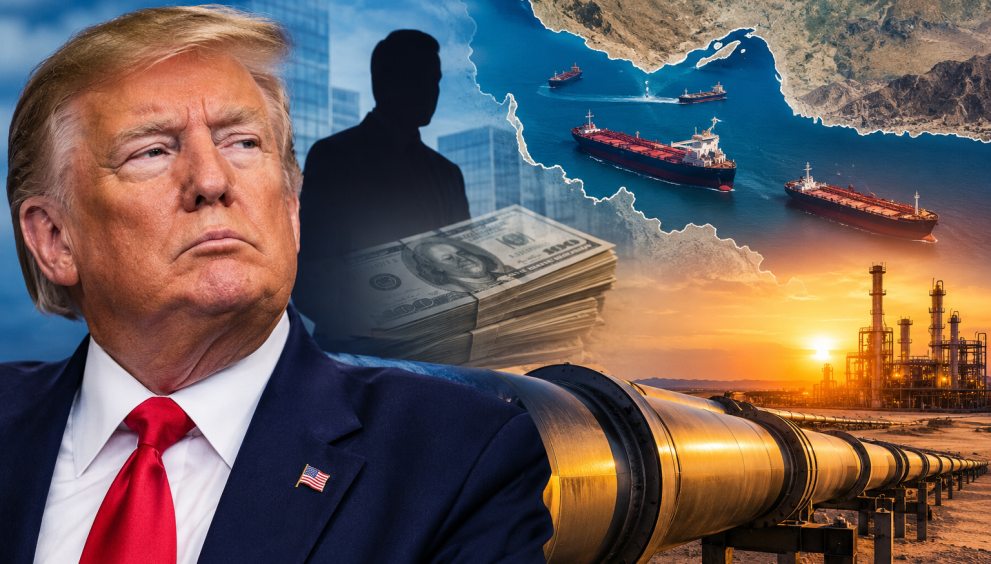
Thomas Barrack, a senior US diplomatic envoy under President Donald Trump, maintained financial ties to a real-estate venture managed by an investment firm he reportedly advocated for a $15 billion oil pipeline project designed to bypass the strategically vital Strait of Hormuz, according to a Reuters investigation.
Barrack, who serves as the US special envoy to Iraq and Syria and as ambassador to Turkey, reportedly supported the involvement of California-based investment group TI Capital in plans to rehabilitate an oil pipeline linking Iraq and Syria. The project aims to provide an alternative route for transporting oil amid security threats and disruptions affecting the Strait of Hormuz.
Potential Conflict of Interest Raises Questions
The investigation found that Barrack had a longstanding business relationship with TI Capital founder Ziad Ghandour. In a financial disclosure filed in March 2025, Barrack declared an equity interest in a real-estate venture managed by the firm, entitling him to as much as 20% of its profits once an established earnings threshold was reached.
Three people familiar with the matter told Reuters that Barrack advocated for TI Capital’s participation in the pipeline project. Ethics experts questioned whether his involvement was consistent with federal rules governing potential conflicts of interest, particularly given his continuing financial connection to a venture managed by the company.
Barrack’s financial disclosure did not establish that he would directly profit from the pipeline project. However, the circumstances have raised concerns about whether his diplomatic position could benefit a business associate. <Cite refs={[“turn291373news1”]}/>
US Government Defends Envoy
The US State Department said Barrack’s public comments on the pipeline reflected the longstanding US policy objective of promoting regional energy integration. The department also maintained that he had been certified as compliant with applicable ethics requirements.
Reuters reported that no conflict-of-interest waiver had been filed, while questions remained over whether Barrack’s involvement aligned with his earlier commitment to recuse himself from matters involving the real-estate venture.
Pipeline Seeks Alternative to Strait of Hormuz
In July 2026, Iraq and Syria signed memorandums of understanding with a consortium comprising TI Capital, Chevron and Qatar’s UCC Holding to conduct technical and financial studies for rehabilitating the pipeline.
The proposed route could help reduce reliance on the Strait of Hormuz, a critical passage for global oil shipments that has been threatened by the conflict involving Iran. Any alternative export route could carry significant implications for regional energy security and international oil markets.
The project highlights the intersection of energy security, investment and diplomacy, while the questions surrounding Barrack’s business relationships place renewed attention on the ethical responsibilities of senior government officials.
________________________________________________________________________________________________________________