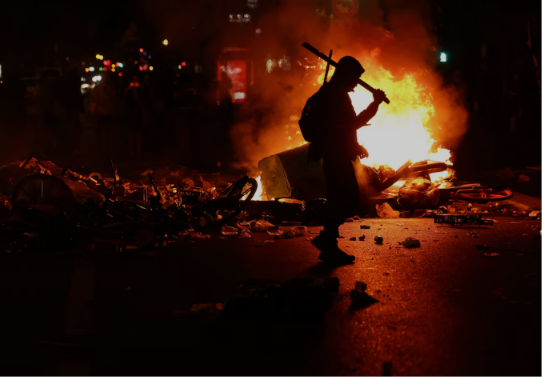
French authorities have introduced targeted nighttime curfews in parts of Paris and several other cities following a weekend of violent protests, looting and damage to public buildings and businesses.
The measures come as the government of President Emmanuel Macron faces mounting pressure to restore public order after demonstrations over rising living costs, school conditions and broader economic grievances escalated into some of France’s most serious unrest in recent years.
Curfews Target Key Areas of Paris
Paris police imposed an overnight curfew from 11 p.m. on Monday, October 19, until 6 a.m. on Tuesday, October 20, covering the Place de la République and the Les Halles shopping district. Demonstrations were also prohibited in designated areas from 8 p.m. Authorities said the restrictions were intended to prevent further violence and protect residents and businesses.
Similar measures were introduced in other locations, including restrictions on minors in parts of Lille, Douai, Wattignies and Denain, as well as areas of Nice. Other cities have taken steps to limit gatherings in response to the unrest.
Prime Minister Sébastien Lecornu called for localised and partial curfews, stressing that the government was determined to restore order. He ruled out imposing a blanket curfew across the whole of Paris, saying restrictions should remain targeted.
Thousands Arrested as Damage Mounts
The unrest followed weeks of student-led demonstrations that expanded into broader protests against the cost of living and government policies. Although many demonstrations began peacefully, some descended into clashes with police, vandalism and widespread looting.
Authorities reported approximately 2,400 arrests and damage to nearly 3,000 businesses across the country. Public buildings, including town halls, were also targeted, while shopkeepers began assessing substantial losses.
The scale of the violence has raised questions about police preparedness and intelligence gathering. Interior Minister Laurent Nuñez offered to resign following criticism of the security response, but Macron rejected his resignation and called for greater transparency and improvements in policing.
Political Pressure Mounts
The unrest has intensified political tensions ahead of France’s next presidential election, expected in 2027. Opposition figures have criticised the government’s handling of the crisis, while officials have blamed organised groups and looters for exploiting public demonstrations to commit violence.
The government now faces the challenge of restoring security without undermining the right to peaceful protest. Further demonstrations remain a concern, and authorities are expected to maintain heightened security measures as they assess the situation.
The coming days will test whether targeted curfews and increased police deployments can prevent renewed violence while addressing the economic and social frustrations driving public discontent.
________________________________________________________________________________________________________________