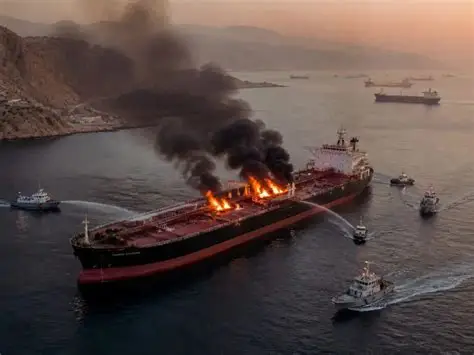
A Panama-flagged oil tanker has been struck by two explosive devices attached to its hull in the Strait of Hormuz, triggering a fire in its engine room and raising fresh concerns over the safety of commercial shipping in one of the world’s most strategically important waterways.
According to maritime security sources cited by Reuters, the vessel, identified as the Louise 1, was attacked on Thursday, October 29, approximately 25 nautical miles northeast of Khasab, Oman. The explosives, believed to be limpet mines, were reportedly attached to the tanker by individuals operating from a small boat.
The explosion caused a fire in the engine room, temporarily disabling the vessel. However, the crew managed to extinguish the fire, and all crew members were reported safe. No environmental damage was recorded, and the tanker was able to resume its journey towards its next port of call.
The identity of those responsible for the attack remains unknown, and no group has officially claimed responsibility for the incident.
The attack marks the first known successful limpet-mine strike in the Strait of Hormuz since the United States-Iran war began in February 2026. It follows an unsuccessful attempt in September and comes amid a broader series of maritime security incidents affecting commercial vessels in the region.
Iran has separately claimed that three oil tankers caught fire after striking naval mines while attempting to navigate what Tehran describes as an unauthorised southern shipping route. Those claims have not been independently verified.
The Strait of Hormuz is a critical international shipping corridor connecting the Persian Gulf to the Gulf of Oman and the wider Arabian Sea. A substantial share of the world’s seaborne oil trade passes through the narrow waterway, making any disruption a major concern for global energy markets.
The latest attack has intensified fears that escalating regional hostilities could threaten oil supplies, increase shipping insurance costs and push international energy prices higher.
With responsibility for the latest incident still unconfirmed, maritime security agencies are urging vessels operating in the area to exercise heightened caution as tensions continue to threaten commercial navigation through the strategic passage.
________________________________________________________________________________________________________________