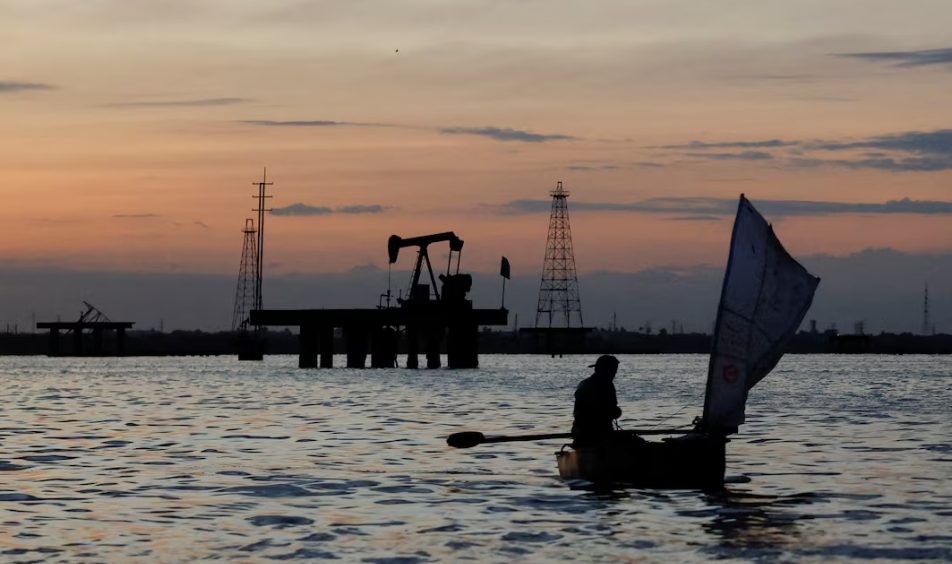
US President Donald Trump’s ambitious oil agreement involving Venezuela is facing significant operational, financial and legal challenges, raising questions about whether the administration’s promise of a historic energy breakthrough can be achieved.
Trump previously described the arrangement as the “biggest oil deal in world history”, promoting it as a major opportunity to expand American access to Venezuela’s vast petroleum reserves and strengthen US energy security.
The agreement gives North American Blue Energy Partners (NABEP) control over 17 Venezuelan oilfields, with an ambitious target of increasing production from approximately 224,000 barrels per day to more than one million barrels per day.
However, a Reuters investigation published on Friday, October 30, found that the project is encountering serious difficulties on the ground. Interviews with workers, contractors and industry experts point to unpaid suppliers, difficulties recruiting skilled workers, deteriorating infrastructure, limited drilling equipment and challenges securing the financing needed to expand operations.
NABEP has defended the project, saying it has invested approximately $1 billion, is expanding its workforce and equipment capacity, and remains on track with its development plans. The White House has also maintained that the agreement is already delivering results.
Despite these assurances, energy experts warn that significantly increasing Venezuelan oil production will require substantial investment, infrastructure rehabilitation and years of sustained work. Reuters reports that reaching the administration’s production target could take six to seven years.
The agreement has also attracted scrutiny over its financial and legal structure. Questions have emerged about the actual value of Venezuela’s recoverable oil reserves, the transparency of the partnership and the long-term rights granted to the participating company.
Although Trump has highlighted Venezuela’s estimated 64 billion barrels of oil reserves, experts caution that only around 10 billion barrels may be economically developable within the agreement’s 25-year legal term, even under favourable conditions.
The deal has also raised concerns over the role of private investors and the extent to which Venezuela itself will benefit from the arrangement.
The development comes as Washington seeks to strengthen its influence over Venezuela’s energy sector and secure greater access to its petroleum resources following the dramatic political changes in the country.
While the agreement represents an ambitious attempt to reshape Venezuela’s oil industry and expand US energy interests, the growing operational obstacles suggest that turning Trump’s headline-making announcement into a sustainable production success will be considerably more difficult than initially presented.
________________________________________________________________________________________________________________