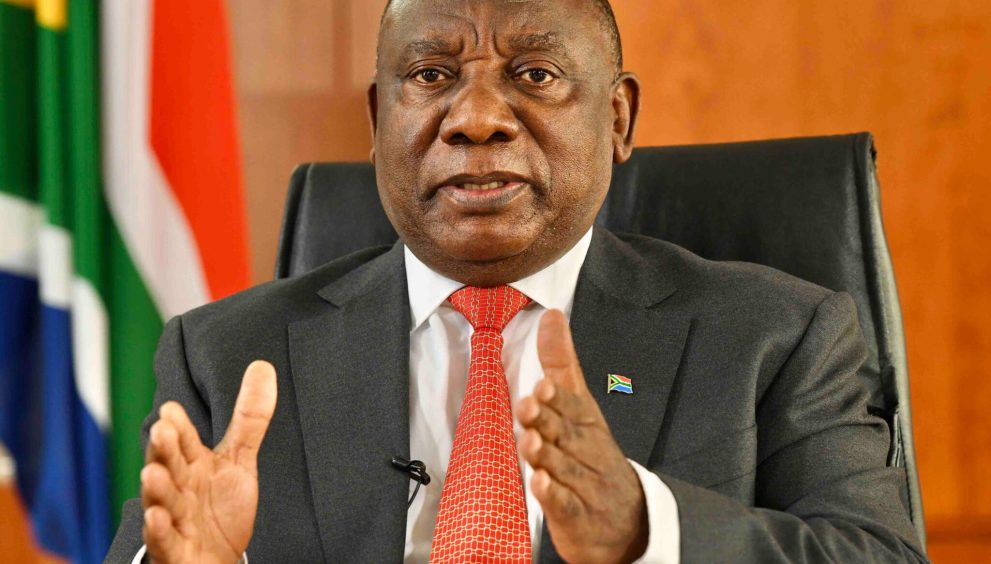
South African President Cyril Ramaphosa has described the outcome of the 2026 United States midterm elections as a potential turning point for international relations, expressing hope that the political shift in Washington could open the door to renewed diplomatic engagement and stronger cooperation between nations.
Speaking to reporters in Johannesburg on Wednesday, November 4, after casting his vote in South Africa’s municipal elections, Ramaphosa acknowledged the Democrats’ victory in both the U.S. Senate and House of Representatives, saying the American electorate had sent a significant political message.
“We have seen that the Democrats have taken control of the Senate and of the House, and the people of America have spoken,” Ramaphosa said, adding that the results could introduce “a new era in world relations.”
The election outcome is particularly significant for South Africa, which has experienced increasingly strained relations with the Trump administration over trade, foreign policy and diplomatic disagreements.
Washington recently announced plans to remove South Africa from the African Growth and Opportunity Act (AGOA), which provides eligible African countries with preferential access to the U.S. market. The suspension, expected to take effect in January 2027, represents a significant setback for South African exporters.
Ramaphosa acknowledged the economic implications of the decision but stressed that South Africa remained committed to maintaining constructive relations with the United States. He called for greater focus on negotiating a bilateral trade agreement that would allow both countries to address their economic interests through direct engagement.
The president also emphasised South Africa’s efforts to diversify its export markets and strengthen international economic partnerships, noting that trade relations between the two countries would continue despite the AGOA setback.
The Democrats’ control of both chambers of Congress could also reshape the political environment during the remaining two years of President Donald Trump’s administration, potentially influencing legislative priorities, trade discussions and Washington’s broader international engagement.
However, the election results do not automatically guarantee changes in U.S. foreign policy, as the president retains significant authority over diplomatic and international affairs.
Ramaphosa expressed optimism that the political developments could create opportunities for improved dialogue, particularly between Pretoria and Washington, while reaffirming South Africa’s commitment to protecting its sovereignty and advancing its national interests.
The outcome is being closely watched by governments worldwide as leaders assess its potential implications for global diplomacy, international trade, security and geopolitical cooperation.
_______________________________________________________________________________________________________________