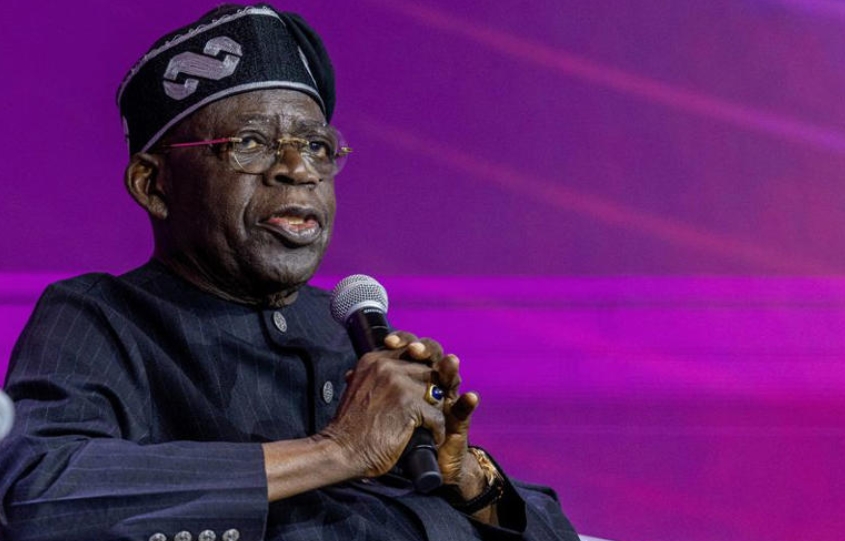
Nigerian President Bola Tinubu has submitted a revised request seeking legislative approval for approximately $7.7 billion in external borrowing, replacing an earlier proposal to secure $20.52 billion and €1.045 billion in foreign loans.
The revised borrowing plan is intended to help finance Nigeria’s 2026 federal budget deficit and support key government projects under Tinubu’s economic reform programme.
The request, contained in a presidential letter dated October 26, was presented to the Senate by Senate President Godswill Akpabio during Wednesday’s plenary session. The proposed $7.7 billion facility is equivalent to approximately 10.79 trillion naira, calculated using the government’s budget exchange rate of 1,400 naira to the dollar.
Funds to Support Key Economic Sectors
According to Tinubu, the proposed borrowing will finance projects and programmes included in the 2026 Appropriation Act, with priority given to:
- Defence and national security.
- Transportation and infrastructure.
- Agriculture and food production.
- Electricity and power development.
- Healthcare services.
- Education and human capital development.
The president also argued that the foreign currency proceeds would strengthen Nigeria’s external reserves, potentially providing additional support for the naira and the country’s foreign exchange position.
Government Plans to Explore Multiple Funding Sources
The Nigerian government intends to explore several financing options, including Eurobond issuance, commercial and concessional loans from international institutions, bilateral financing arrangements and other international credit facilities.
Tinubu indicated that greater emphasis would be placed on Eurobonds because they can be arranged relatively quickly and may allow the government to raise substantial funds.
However, the final interest rates, repayment periods and borrowing conditions will depend on prevailing international financial market conditions when the agreements are concluded.
Senate Begins Scrutiny Amid Debt Concerns
Senate President Godswill Akpabio indicated that the revised proposal effectively supersedes the previous $20.52 billion borrowing request, explaining that the new arrangement provides greater clarity and flexibility regarding the sources of financing.
The request has been referred to the Senate Committee on Local and Foreign Debts for detailed consideration, with lawmakers expected to examine the proposed financing arrangements before further legislative action.
The development comes amid growing concerns about Nigeria’s public debt and the increasing cost of servicing government loans. Although the Tinubu administration maintains that borrowing is necessary to address infrastructure gaps and finance development priorities, questions remain about the country’s long-term ability to manage additional external obligations.
Nigeria’s 2026 budget provides for approximately 29.2 trillion naira in new borrowing, comprising 18.4 trillion naira in domestic financing and 10.79 trillion naira in external borrowing, to help finance a projected budget deficit of about 31.4 trillion naira.
The revised proposal therefore represents a significant adjustment to Nigeria’s external financing strategy, as the government seeks to balance its development ambitions with the growing financial obligations facing Africa’s largest economy.
________________________________________________________________________________________________________________