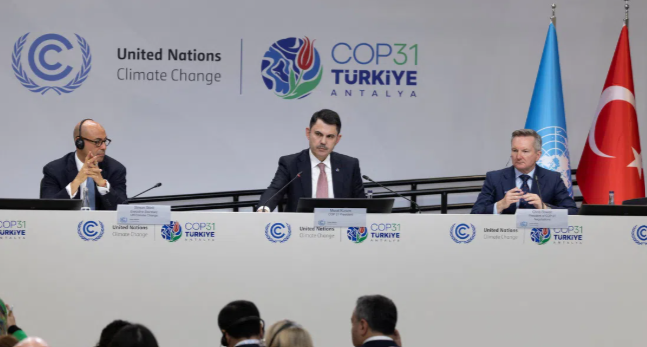
Opposition leaders are demanding the resignation of Climate and Energy Minister Chris Bowen after the UN climate summit in Türkiye ended without a final agreement, despite Australia’s role in leading negotiations.
Australian Prime Minister Anthony Albanese is facing growing political pressure following the collapse of climate negotiations at the COP31 summit in Antalya, Türkiye, with opposition figures accusing his government of a costly diplomatic failure.
The conference ended on Sunday, November 22, without an overall agreement after countries failed to bridge divisions over the inclusion of commitments to transition away from fossil fuels and other key climate measures.
Australia shared responsibility for leading the summit alongside Türkiye, with Australian Climate and Energy Minister Chris Bowen serving as president of negotiations. Following the breakdown, opposition politicians turned their criticism towards Bowen, calling for him to step down.
Opposition leader Angus Taylor said Bowen was responsible for the outcome and should resign. Opposition energy spokesperson Dan Tehan also demanded his immediate departure, arguing that Australia had failed to deliver an agreement despite spending approximately 150 million Australian dollars on the summit.
The negotiations were particularly contentious over whether the final agreement should explicitly reference the need to transition away from coal, oil and gas. The European Union and several other countries rejected a proposed text that did not directly mention fossil fuels, while Saudi Arabia and other oil-producing nations opposed stronger language on the issue.
Bowen defended Australia’s efforts, saying the negotiations were affected by deeply entrenched positions among participating countries that proved impossible to reconcile. He described the outcome as disappointing but maintained that Australia had worked to secure consensus.
Prime Minister Albanese also defended his government’s approach, pointing to the difficult geopolitical environment surrounding the negotiations and Australia’s engagement with Pacific island nations on climate issues.
The collapse has also drawn strong reactions from vulnerable Pacific countries, which face rising sea levels and increasingly severe climate-related threats. The Marshall Islands said the nations most exposed to climate change had been let down, while Tuvalu criticised the lack of transparency and commitment during the final stages of negotiations.
More than 190 countries participated in the summit, which extended beyond its scheduled conclusion as negotiators attempted to reach a compromise.
The failure to secure an overarching agreement marks the first time since the 2009 Copenhagen climate conference that a COP summit has ended without a final consensus deal, raising renewed questions about the ability of international climate negotiations to deliver collective commitments.