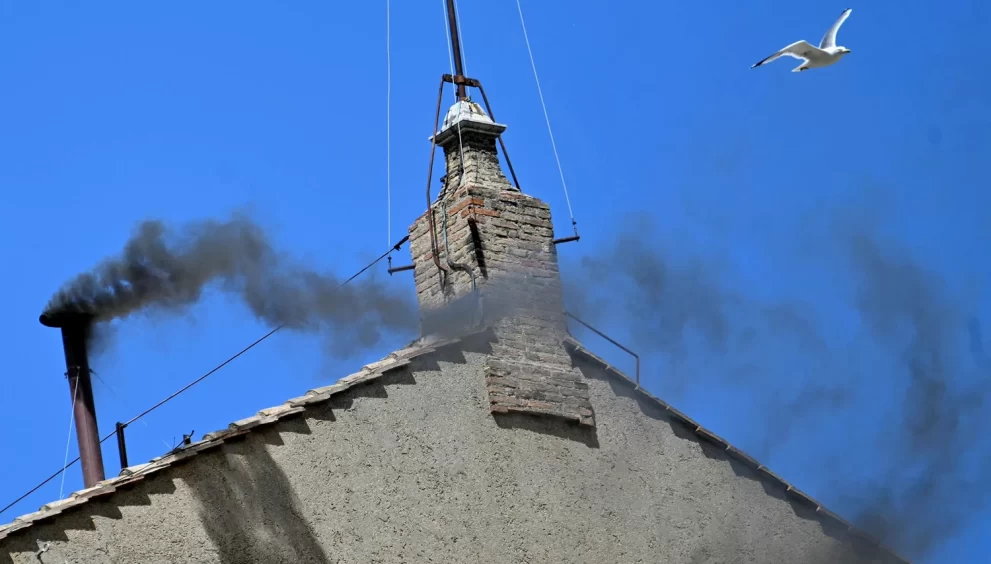
Cardinals once again failed to elect a successor to Pope Francis on Thursday morning, as two more rounds of conclave voting concluded with no clear winner. The result sent black smoke rising from the Sistine Chapel chimney, signaling that no candidate had secured the required two-thirds majority, or 89 votes, needed to become the next pope.
After the inconclusive voting, the 133 cardinals took a break for lunch before returning to the chapel for the afternoon session, where two additional ballots were scheduled. Despite the setback, many remained optimistic that a decision could be reached soon, with some hoping that a pope might be elected by the end of Thursday’s voting.
“I hope by this evening, when I return to Rome, I’ll see white smoke,” said Cardinal Giovanni Battista Re, the 91-year-old dean of the College of Cardinals, who presided over the Mass before the conclave but is not eligible to vote. Re expressed confidence that the cardinals would elect “the pope that the Church and the world need today.”
For the public, the outcome of each vote is signaled by the color of the smoke from the Sistine Chapel’s chimney. White smoke means a new pope has been elected, while black smoke indicates no decision has been made. Onlookers in St. Peter’s Square, including large school groups and pilgrims, anxiously awaited the result.
On Thursday morning, black smoke billowed from the chimney again after the second round of voting, confirming that the cardinals had not yet selected a new leader of the Catholic Church. Thousands filled St. Peter’s Square, eager for the next smoke signal. Although the delay seemed to test the patience of many, it was not entirely unexpected—such delays occurred during the 2013 conclave that led to the election of Pope Francis.
As the conclave progresses, speculation continues about the next pope. The cardinals are divided on the direction the Church should take, with some favoring a continuation of Pope Francis’ reformist legacy, while others advocate for a return to traditional practices. Many are looking for a stable, conventional papacy to guide the Church in its current challenges.
Cardinal Giovanni Battista Re, in his pre-conclave sermon, urged the electors to focus on the Church’s mission and human welfare, emphasizing the need for unity despite the diversity of views within the Church.
There is still no frontrunner, though several names are being floated as potential candidates, including Italian Cardinal Pietro Parolin, Filipino Cardinal Luis Antonio Tagle, French Cardinal Jean-Marc Aveline, Hungarian Cardinal Peter Erdo, and American Cardinal Robert Prevost. The question of whether the next pope will come from the Global South, as Pope Francis did, or from Europe or America, remains an important consideration.
The conclave has been marked by its global representation, with cardinals from 70 different nations, a reflection of Pope Francis’ worldwide impact. As deliberations continue, support for various candidates is expected to shift, with informal conversations during breaks possibly influencing the final choice.
While the outcome of the conclave remains uncertain, many are hopeful that a new pope will be elected soon, bringing clarity and leadership to the Catholic Church in the wake of Pope Francis’ passing.