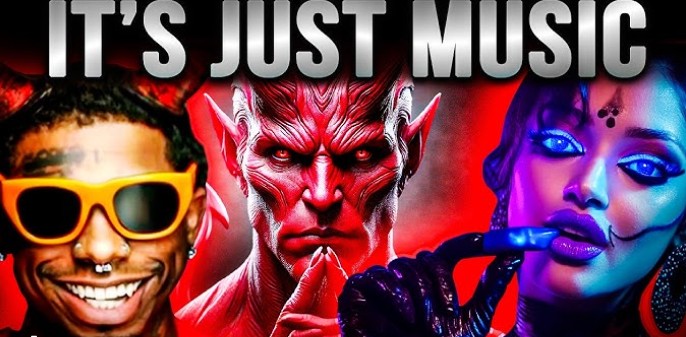
The flow of money in the music industry is a complex web that channels funds toward content that promotes values contrary to biblical teachings, embracing themes that are demonic or ritualistic. Certain segments of the industry, driven by profit and cultural influence, amplify messages that clash with Christian morality, prioritizing commercial success over spiritual integrity.
The music industry generates billions annually through streams, album sales, concerts, merchandise, and licensing deals. Major record labels, streaming platforms like Spotify, and media conglomerates dominate this ecosystem, funnelling money to artists, producers, and promoters. Artists often sign contracts that provide upfront advances but require them to repay costs through royalties, tying their creative output to corporate agendas. Labels invest heavily in artists who promise high returns, often prioritizing marketability over content quality or moral alignment.
This profit driven model incentivizes the production of music that glorifies rebellion, sensuality, or occult themes, as these tend to attract attention and sales in a culture drawn to shock value. For instance, genres like heavy metal, hip-hop, and pop have been incorporating imagery—pentagrams, inverted crosses, or lyrics invoking spiritual darkness which are demonic or anti-Christian. Artists like Doja Cat, who has referenced “666” or demonic imagery in songs like “Paint the Town Red,” or Lil Nas X, with his provocative “Montero” video, are examples of this trend. These choices, while being labelled as artistic or satirical, is aligning with a broader cultural shift away from Christian values, funded by an industry chasing trends and revenue. former Satanist John Todd reveals how witches would summon demons to be plugged into each music tape.
Demonic Influence in the Music Industry
In the documentary the “Sound Trap” played by the President of Loveworld Incorporated during the July Global Communion Services, Boyzone’s Shane Lynch, revealed that the industry engages in deliberate spiritual manipulation, that albums are “prayed over demonically” before release to influence listeners. This is the industry’s embrace of occult symbolism—seen in artists like Beyoncé referencing Yoruba idols or Sam Smith’s provocative Grammy performances. It’s more than mere aesthetics. The industry’s financial backing of such content reflects a deeper agenda to normalize anti-Christian ideologies, with money flowing from record labels to artists who push these boundaries.
The concern extends to the Contemporary Christian Music (CCM) industry, which, despite its faith-based roots, has been co-opted by secular interests. Artists controlled by major labels, prioritizes profit over preaching, rarely confronting issues like salvation or sin to appeal to a broader audience. This commercialization contradicts the gospel, with artists straddling secular and Christian markets, potentially leading fans toward worldly influences rather than Christ.
Cultural and Spiritual Impact of the Music Industry
Concerts, music videos, and marketing campaigns amplify messages of hedonism or spiritual evil, which open “portals” to demonic influence. The financial success of these artists, driven by fan consumption and corporate investment, creates a feedback loop where provocative or anti-Christian content is rewarded, while explicitly biblical messages struggle to compete in the mainstream. So why would you sponsor that?
Financial support (through streaming, ticket sales, or merchandise) directly funds artists and labels promoting this. Ronnie James talks about how he and the band “contacted a spirit named Baal” during the making of the album Long Live Rock ‘n’ Roll.
Lady Gaga performed at this year’s Coachella with another Satanic ritualistic style performance to appeal to the younger generation, to make it seem cool, hip, and the new trend that they’re obviously trying to normalize. This is no accident and goes hand in hand with the overall agenda.
From dangerous body-mutilating ideologies, grooming, and the sexualization of children being pushed to the front of the agenda in Hollywood, all over the media, in schools, which now have an after schools Satan group, starting for children in KINDERGARTEN. Yes this is the goal. They’re either worshiping Satan in theistic Satanism or are Luciferians and want to be gods themselves. And the sexualization of children, the Sex Magic that involves children, and the blood rituals and everything else you hear about goes with it. It’s all connected. Members in government and intelligence agencies were also highly involved in Satanism and even started some of their own Satanic temples, like in 1975, Michael Aquino who started the Satanic Temple of Set. Aquino was also a part of psychological warfare operations and highly decorated and an open Satanist. The CIA is also deeply involved, going back to when they got caught kidnapping children and satanically ritualistically abusing them for mind control operations, known as, “The Finders Cult.”
People, Satanism and these operations go hand in hand with mind control operations and techniques. They started decades ago and are still happening today. Why do you think all these celebrities turn out the same way? They go in normal like, Sam Smith, Taylor Swift, Lady Gaga, Brittney Spears, Beyonce, Lil Nas X etc., and they come out Satanic as a demon pushing Satanism to the masses. It’s all connected because this is who they pay homage to and worship. This is the only way you get famous, you have to join the club. It’s so obvious and out in the open anymore. I feel bad for the people who are still asleep. It’s time to wake up.
How Individual Participation Fuels the Industry
Every time someone streams a song on platforms like Spotify or Apple Music, or buys an album or single, a portion of that revenue (typically via royalties) goes to the artist, record label, and associated entities. For example, streaming platforms pay artists roughly $0.003-$0.005 per stream, meaning millions of streams for these artists generate substantial income. These funds enable artists and labels to produce more content, doubling down on glorifying sin or spiritual darkness, contrary to what is true, noble, right, pure. Buying tickets to concerts or merchandise (e.g., t-shirts, posters) directly supports artists and their teams. Concerts, a major revenue source (global live music revenue was $31 billion in 2024), often amplify controversial imagery—such as Sam Smith’s Grammy performances with satanic aesthetics or Beyoncé’s shows invoking spiritual themes that are occult. By attending, fans financially empower artists to continue these acts. Liking, sharing, or promoting music on platforms like X or TikTok boosts an artist’s visibility, driving more streams and sales. This engagement fuels algorithms that prioritize trending content, indirectly funnelling more money to artists and labels via increased exposure. Individual consumption normalizes and sustains demand for these things
WWritten By Tatenda Belle Panashe