

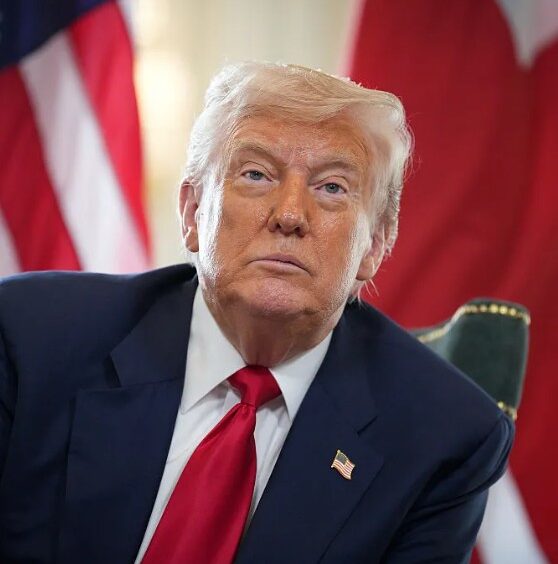
The Executive Order titled “Guaranteeing Fair Banking for All Americans,”
President Donald Trump has signed an executive order, “Guaranteeing Fair Banking for All Americans,” on August 7, 2025, which actively prohibits financial institutions from denying or restricting access to banking services based on individuals’ or businesses’ political affiliations, religious beliefs, or lawful business activities, a practice commonly known as “debanking.” This move directly addresses concerns surrounding past government-influenced programs, such as “Operation Chokepoint,” where regulators allegedly pressured banks to limit services to specific industries or groups without conducting objective risk assessments, targeting those associated with conservative views, firearms sales, or digital assets. The order explicitly highlights instances where banks, under the influence of federal regulators, have restricted services to law-abiding customers, including flagging transactions involving terms like “Trump” or “MAGA,” or purchases from retailers like Bass Pro Shop or Cabela’s, without any evidence of wrongdoing. It asserts that such practices actively violate principles of free expression, erode trust in the banking system, and potentially contravene laws like the Equal Credit Opportunity Act. The order mandates that banking decisions must be based solely on individualized, objective, and risk-based analyses, rather than political or ideological biases, to ensure fair and unbiased access to banking services for all Americans.
The Executive Order titled “Guaranteeing Fair Banking for All Americans,”
The administration is taking decisive action to combat financial discrimination, building on previous initiatives such as dismantling “Operation Chokepoint 2.0” and launching task forces like the DOJ-Virginia Equal Access to Banking Task Force. Citing concrete examples of banks unfairly denying services to Republican events, conservative groups, and cryptocurrency firms – including those owned by former President Trump – the order sends a clear message. Regulators, including the OCC and FDIC, are actively affirming their commitment to ensuring fair access to financial services, leaving financial institutions on notice that they will face intense scrutiny. Institutions that have engaged in debanking practices may now face investigations, penalties, or referrals to the DOJ, and will be required to prioritize reinstating services to previously denied clients. This move is poised to benefit industries such as cryptocurrencies, firearms, and conservative causes by reducing discriminatory practices, although some critics argue that it may limit the ability of financial institutions to manage risk. Conservatives and crypto enthusiasts are widely hailing the order as a major victory against censorship and “woke” banking practices, with many noting its potential to curb the ability of payment processors like Visa and Mastercard to pressure platforms over content. Alliance Defending Freedom’s Ryan Bangert discussed the new executive order on debanking.
Main Directives of Executive Order Banning Political Debanking
Federal agencies are now required to eradicate debanking practices
Federal agencies are now required to take immediate action to eradicate debanking practices, and they must do so in a swift and efficient manner. All federal banking regulators, including the Office of the Comptroller of the Currency, the Federal Deposit Insurance Corporation, and the Consumer Financial Protection Bureau, are ordered to take the following steps within 180 days: remove any language related to “reputation risk” from their guidance, manuals, and materials, excluding regulations that require notice and comment, as this could be used to justify debanking practices. They must also issue formal guidance to examiners and consider rescinding or amending existing regulations to ensure that assessments are based on risk and are apolitical in nature.
Marc Andreesen spoke on Elizabeth Warrens agency Consumer Financial Protection Bureau which has spent the last 4 years terrorizing people via debanking. Consumer Complaints to CFPB from 2023–2024 were over 8,000. Complaints documented improper account closures without explanation.
The Small Business Administration has been given a deadline of 60 days to provide notice and 120 days to take action, and during this time, they must notify all institutions under their jurisdiction to identify and reinstate any clients who were debanked unlawfully, notify potential clients who were previously denied services and offer them renewed access, and specifically address any instances of payment processing denials.
All federal banking regulators have been given 120 days to review financial institutions for any past or current policies that may have promoted debanking, and if any violations of laws such as the Federal Trade Commission Act or the Consumer Financial Protection Act are found, they must impose remedies, including fines, consent decrees, or disciplinary actions. Within 180 days, all federal banking regulators must examine supervisory and complaint data to identify any instances of debanking based on religion, and if any violations of the Equal Credit Opportunity Act are found, they must refer these cases to the Attorney General for potential civil action. The Secretary of the Treasury, in conjunction with the Economic Policy Advisor, has been given 180 days to develop a comprehensive strategy to combat debanking, including exploring legislative or regulatory options to prevent this practice from occurring in the future.
Debanking: a form of lawfare and censorship
Some notable recent examples from 2023–2025 highlight patterns involving major banks like JPMorgan Chase, Bank of America, and Wells Fargo, as well as crypto-related cases. In 2024, Marc Andreessen, a Billionaire Investor, prominent venture capitalist and Trump supporter involved in crypto, was debanked by an unspecified bank. He described it as a form of “lawfare and censorship” targeting those exposing corruption or opposing narratives, making it a rallying cry among crypto advocates. 30 Tech Founders were secretly debanked in late 2024 with no warning, explanation, or appeals, described as “pure, silent government power” destroying companies. Cryptocurrency Companies were also targeted. In early 2023, federal regulators (Fed, FDIC, OCC) issued a joint statement on heightened risks from crypto, leading to debanking of related firms. This built on a 2022 FDIC memo pausing services, with ongoing impacts into 2025. Additionally, in May 2025, Montana’s DOJ demanded answers from Wells Fargo for debanking practices tied to Biden-era net-zero goals.
The despicable workings of Operation Chokepoint
Marc Andreessen introduced the topic of Operation Chokepoint. Let’s delve into it. Back in 2013, under the Obama administration, the Department of Justice (DOJ) launched this thing called Operation Chokepoint. Officially, it was sold as a crackdown on fraud and money laundering by going after “high-risk” businesses that banks were servicing. The idea? Pressure banks and payment processors to cut off accounts for industries the feds didn’t like, effectively “choking” them out of the financial system without ever proving any wrongdoing in court. The DOJ teamed up with regulators like the FDIC (Federal Deposit Insurance Corporation) to label these businesses as “reputational risks” for banks. If a bank kept serving them, they’d face extra scrutiny, audits, or even threats to their own operations. No due process, no trials—just backroom arm-twisting. It was classic big government overreach, using the financial system as a weapon to enforce policy without Congress’s say-so. Small businesses got crushed, jobs lost, all while the feds played judge and jury. By 2014, Congress caught wind and investigated. House reports slammed it as an abuse of power, saying it “choked out” companies the administration just didn’t favor. Lawsuits piled up, and in 2017, under President Trump, the DOJ officially shut it down, calling it unfair and ineffective. Good riddance, right? But like a zombie, it never really died—it just morphed. Enter Chokepoint 2.0 in the Biden years, and this time aimed at the crypto industry.
Regulators like the FDIC and OCC (Office of the Comptroller of the Currency) started whispering to banks about “risks” in digital assets, leading to mass debanking of crypto firms. Accounts closed overnight, no explanations, just because they dealt in Bitcoin or blockchain tech. It was the same playbook: Use vague “reputational risk” to scare banks away from innovative sectors that threaten the status quo.
Written By Tatenda Belle Panashe

