

As Iran navigates one of the most tumultuous moments in its history, the new supreme leader faces not only a broader military confrontation with the United States and Israel but also deepening doubts within the country’s own support base, raising questions about the future survival of the Islamic Republic of Iran itself.
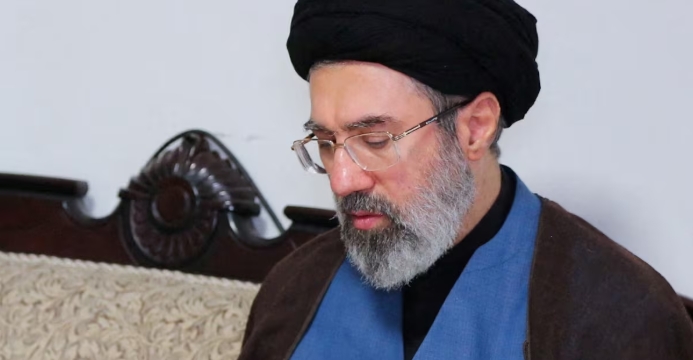
Last week, Ayatollah Mojtaba Khamenei the son of the late Ayatollah Ali Khamenei was appointed Iran’s supreme leader by a hardline clerical council after his father was killed in a U.S. and Israeli airstrike. While Mojtaba inherits formal authority and strong ties to the Islamic Revolutionary Guard Corps, analysts and interviews with insiders suggest his loyalist base is markedly narrower and weaker than that of previous leaders.
Shrinking Support Among Hardliners
Experts say Iran’s hardline ideological base once bolstered by decades of state patronage, revolutionary zeal and mass mobilization has eroded significantly due to long-term economic stagnation, political repression and growing public frustration. “The strategy in choosing a hardliner as the new leader would be to consolidate the base,” said Ali Ansari, a history professor at the University of St Andrews. “But they’re ending up with an increasingly small circle of supporters. And the longer this goes on, the more it will all fray at the edges.”
Interviews with members of the Basij the volunteer militia long seen as a backbone of revolutionary support show deepening uncertainty even among staunch loyalists. Some Basij members still express readiness to defend the regime at all costs, but others acknowledge that privileges once enjoyed by regime supporters, such as preferential university spots and job opportunities, are vanishing amid economic collapse.
Core Loyalists vs. Wider Public Skepticism
While a core of diehard supporters remains those who consistently back the ideological system and actively participate in suppressing opposition their numbers appear diminished compared with earlier decades. In Iran’s last national election, hardline candidates garnered much smaller vote totals relative to the eligible voting population, reflecting broader public disengagement or disapproval.
Ordinary Iranians interviewed for recent reports say they feel alienated by the regime’s long record of corruption, economic mismanagement and political repression leaving many skeptical about pledging unwavering loyalty to a leader chosen in extraordinary wartime conditions. “We need to be realistic,” said one Basij member from Mashhad, pointing to continued U.S. pressure and the ruinous effects of airstrikes. “How are they going to rebuild this economy?”
Impact on the Islamic Republic’s Future
The Islamic Republic was created in the aftermath of the 1979 revolution with broad grassroots support. Over decades, it built powerful institutions including the Revolutionary Guard and Basij that helped it endure both internal dissent and external pressures. However, the current combination of a devastating regional war, economic collapse and shrinking popular support has stretched that system to its limits.
Despite ongoing state-organized mourning ceremonies and public displays of loyalty, analysts caution that the regime’s traditional sources of legitimacy and stability are increasingly fraying. That fragility could shape Iran’s domestic politics for years, influence how the country pursues the ongoing conflict, and affect how both allies and adversaries engage with Tehran moving forward.
________________________________________________________________________________________________________________

