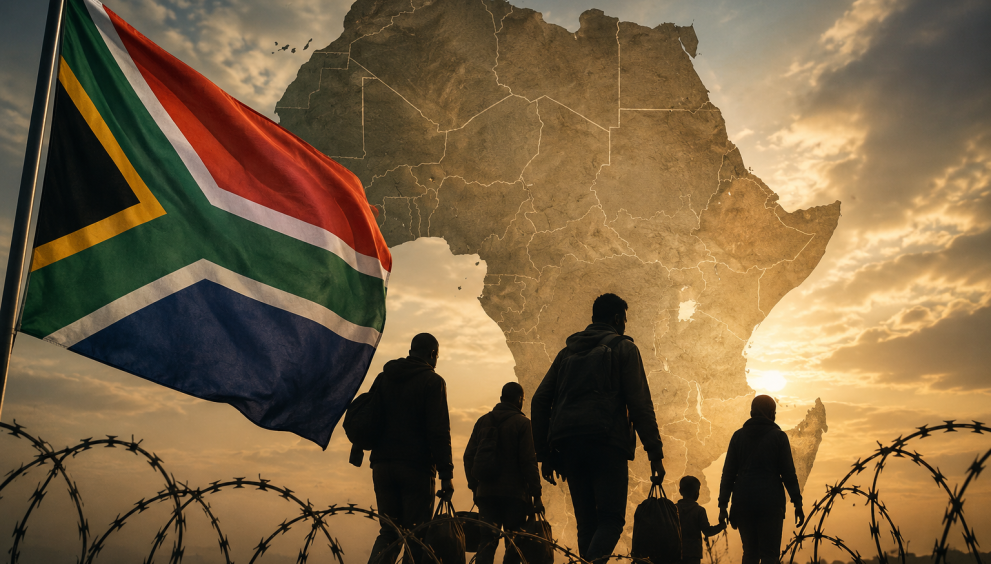
Pretoria Calls for Continental Cooperation on Migration Pressures
South Africa has urged African nations to take greater responsibility for addressing internal instability, conflict, and governance challenges that it says are driving increased migration flows across the continent.
The statement comes amid rising diplomatic tensions following recent anti-immigrant protests in South Africa and growing concern from countries such as Nigeria and Ghana over the safety of their nationals.
Speaking to reporters in Pretoria on Wednesday, presidential spokesperson Vincent Magwenya said African countries must work collectively to address the “root causes” of migration rather than focusing solely on destination countries.
________________________________________________________________________________________________________________
“Instability and Misgovernance Driving Migration”
Magwenya said the continent is experiencing rising movement of people due to a combination of factors including:
- Armed conflicts and insecurity
- Political instability in several regions
- Weak governance and economic decline
- Limited opportunities in countries of origin
He stressed that these pressures are contributing to large-scale migration into more stable economies such as South Africa.
“These are continental challenges. Issues of instability and governance failures in some parts of Africa are among the key drivers of migration,” he said.
His remarks followed discussions between South African President Cyril Ramaphosa and Mozambican President Daniel Chapo, where both leaders agreed that African states must collaborate more effectively to manage migration dynamics across the continent.
Rising Anti-Migrant Sentiment in South Africa
The comments come at a time of heightened tension within South Africa, where a series of protests targeting undocumented migrants have taken place in several cities.
Demonstrators have called for stricter immigration enforcement, citing pressure on:
- Jobs and small businesses
- Public healthcare services
- Housing and local infrastructure
Some protests have also seen demands for undocumented migrants to be excluded from public services, raising concern among human rights organisations.
Authorities, however, have insisted that South Africans are not broadly xenophobic, describing the unrest as “localized protests within a constitutional framework.”
Diplomatic Concerns from African Neighbours
Nigeria and Ghana have expressed concern over reports of harassment and violence targeting their citizens in South Africa.
Nigeria has already initiated emergency repatriation support for affected nationals, while also calling for investigations into reported attacks and greater protection for foreign residents.
The situation has prompted diplomatic engagement between Pretoria and several African capitals as governments seek to de-escalate tensions.
South Africa Pushes Back on Xenophobia Claims
The South African government has rejected accusations that the country is broadly xenophobic, arguing that such labels oversimplify a complex issue.
Officials say framing the situation solely as xenophobia ignores deeper structural drivers, including:
- Regional inequality
- Economic migration pressures
- Weak border enforcement
- Broader continental instability
Instead, Pretoria is urging African governments to coordinate on long-term solutions that address both migration flows and domestic economic challenges.
Calls for Continental Policy Coordination
South African officials have also pointed to the need for stronger African Union-level cooperation on migration governance.
Discussions between regional leaders have increasingly focused on:
- Conflict resolution and peacebuilding
- Economic development in high-emigration countries
- Strengthening governance and institutions
- Managing cross-border migration frameworks
Analysts say the debate highlights a growing divide between destination countries and countries of origin over responsibility-sharing.
Outlook
With migration pressures expected to remain high, South Africa’s latest remarks are likely to intensify continental debate over how Africa manages internal displacement and mobility.
While Pretoria continues to call for collective responsibility, affected countries are demanding stronger protections for their citizens abroad setting the stage for ongoing diplomatic negotiations across the region.
________________________________________________________________________________________________________________