Taiwan has expressed openness to direct talks between U.S. President Donald Trump and Taiwanese President Lai Ching-te following growing concern in Taipei over comments made during Trump’s high-profile summit with Chinese President Xi Jinping in Beijing.
The remarks came after Trump and Xi held extensive discussions last week on trade, regional security and Taiwan, an issue that remains the most sensitive flashpoint in U.S.-China relations. During the summit, Xi reportedly warned that mishandling the Taiwan issue could lead to “clashes and even conflicts,” while Trump suggested he was undecided on a major pending U.S. arms package for Taiwan.
Taiwanese officials are now seeking reassurance that Washington’s long-standing support for the self-governed island remains intact.
Taipei Welcomes Possible Trump-Lai Conversation
Deputy Foreign Minister Chen Ming-chi said Taiwan would welcome a direct conversation between Trump and Lai if the U.S. president wished to pursue one. A direct exchange between a sitting U.S. president and a Taiwanese leader has not taken place since Washington switched diplomatic recognition from Taipei to Beijing in 1979.
The comments followed uncertainty triggered by Trump’s statements after the Beijing summit, where he said the United States was “not looking to have somebody say: ‘Let’s go independent’” regarding Taiwan. Trump also indicated that future U.S. weapons sales to Taiwan were still under consideration.
Taipei has sought to calm fears that Taiwan could become a bargaining chip in broader U.S.-China negotiations involving trade and geopolitical stability.
Lai Says Taiwan “Will Not Be Sacrificed”
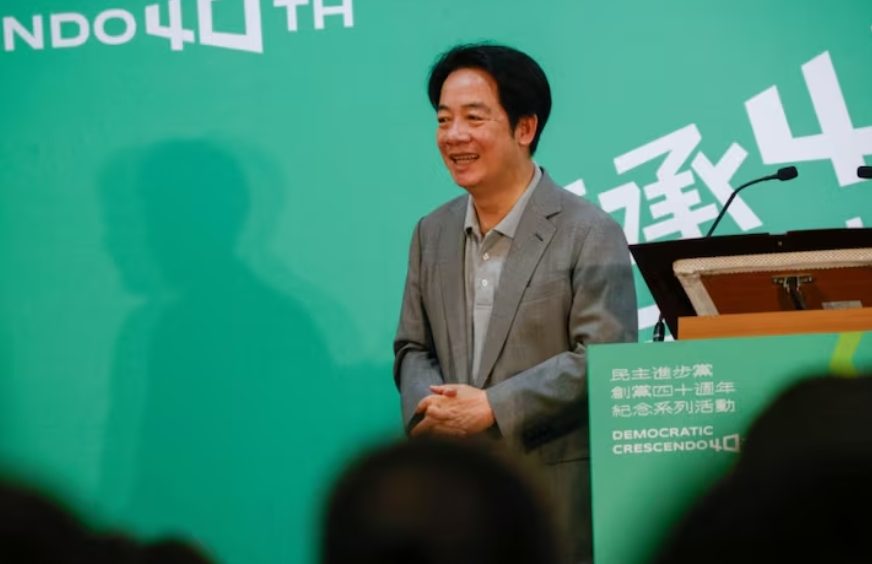
In his first major response to the Beijing summit, Lai insisted Taiwan would not be “sacrificed or traded” in negotiations between major powers and reaffirmed the island’s democratic identity and sovereignty.
Lai emphasized that U.S. arms sales to Taiwan are based on the Taiwan Relations Act, the American law that governs unofficial relations with Taiwan and provides the legal basis for U.S. defense support.
“Taiwan will absolutely not be sacrificed or traded,” Lai wrote in a public statement, while stressing that Taiwan would not provoke conflict with China but also would not surrender its democratic system under pressure.
The Taiwanese president also reiterated that the Republic of China Taiwan’s formal name is already a sovereign and independent country, rejecting Beijing’s claim that the island is part of China.
Beijing Reasserts Taiwan Claim
China’s government has intensified its rhetoric following the summit, once again insisting that Taiwan is a core national interest and warning against foreign interference in what Beijing considers an internal matter.
The Chinese Communist Party views Taiwan as Chinese territory and has never ruled out using force to bring the island under Beijing’s control. Taiwan, however, operates with its own democratic government, military and economic system.
Xi reportedly told Trump during their talks that Taiwan remains the “most important” issue in relations between Beijing and Washington.
Chinese officials have also repeatedly opposed U.S. arms sales to Taiwan and criticized increasing diplomatic engagement between American and Taiwanese leaders.
Questions Over U.S. Support
Trump’s comments about delaying or reconsidering a proposed $14 billion weapons package for Taiwan have generated bipartisan concern in Washington. Several U.S. lawmakers and analysts warned against treating Taiwan’s security as leverage in negotiations with China.
Despite the controversy, the United States Department of State has maintained that official U.S. policy toward Taiwan remains unchanged.
Secretary of State Marco Rubio reaffirmed support for stability in the Taiwan Strait and warned against any attempt to change the status quo through force.
Taiwan’s government has continued to stress that maintaining peace in the Taiwan Strait is in the shared interest of democratic countries around the world.
Global Markets Watching Closely
The developments have also drawn attention from investors and international businesses because Taiwan plays a critical role in the global semiconductor industry. Analysts say any escalation involving Taiwan could disrupt global supply chains and deepen geopolitical instability across Asia.
While the Trump-Xi summit was widely viewed as an effort to stabilize relations between the world’s two largest economies, uncertainty surrounding Taiwan continues to cast a shadow over diplomatic progress.
For now, Taipei appears eager to secure direct communication with Washington and prevent fears from growing that Taiwan’s future could become entangled in broader U.S.-China negotiations.
________________________________________________________________________________________________________________