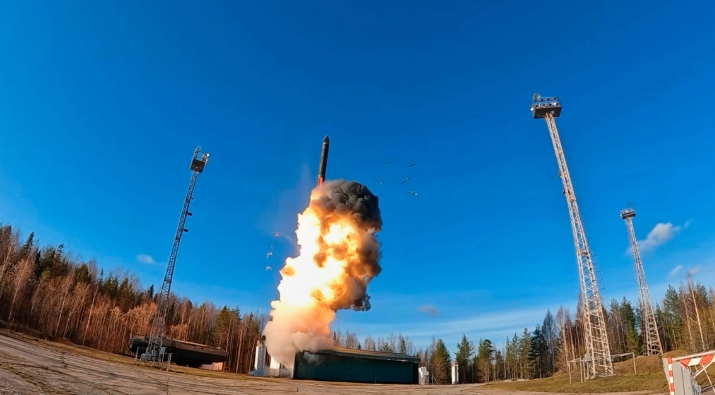
Russia has begun large-scale nuclear exercises involving strategic missile forces, submarines, warships and long-range aviation in one of the country’s most significant military drills in recent months, according to the Russian Defense Ministry.
The exercises come amid continued tensions between Russia and NATO over the war in Ukraine, growing military activity in Eastern Europe, and the recent expiration of the New START nuclear arms control treaty earlier this year.
According to Russian officials, the drills involve more than 200 missile launchers, 140 aircraft, 73 warships and 13 submarines, including eight strategic nuclear submarines capable of launching ballistic missiles. Units from Russia’s Strategic Rocket Forces, the Northern Fleet, the Pacific Fleet and long-range aviation commands are participating.
The Russian Defense Ministry said the exercises are designed to test the readiness and coordination of the country’s nuclear deterrence forces. The drills reportedly include simulated launches, command-and-control operations and deployment exercises across multiple regions of Russia.
A significant aspect of the operation involves Belarus, which is hosting Russian tactical nuclear weapons under agreements signed between Moscow and Minsk. Belarusian military units are also participating in exercises focused on the delivery and preparation of nuclear weapons.
Belarus’ Defense Ministry stated that the drills are not directed against any particular country and are intended to improve combat readiness and interoperability between Russian and Belarusian forces. However, Western governments and security analysts are expected to closely monitor the exercises due to heightened regional tensions and Russia’s increasingly assertive nuclear signaling since the invasion of Ukraine in 2022.
Russia has repeatedly emphasized the strength of its nuclear arsenal in recent years, particularly as relations with the West have deteriorated. Earlier this month, President Vladimir Putin announced that Russia plans to deploy its new Sarmat intercontinental ballistic missile system before the end of 2026. Russian officials claim the missile can evade existing missile defense systems and carry multiple nuclear warheads.
Military analysts say the latest drills are part of Moscow’s broader effort to demonstrate strategic deterrence capabilities at a time when NATO countries are expanding military cooperation near Russia’s borders. Recent exercises by NATO members, including France and Poland, have also included simulations related to nuclear deterrence scenarios.
The exercises additionally underscore the growing military integration between Russia and Belarus. Since 2023, Russia has transferred tactical nuclear weapons systems to Belarus while maintaining operational control over the arsenal. Under Russia’s updated nuclear doctrine, Belarus now falls under Moscow’s nuclear umbrella.
The Kremlin has maintained that its nuclear posture is defensive and intended to deter external threats. However, critics in Europe and the United States argue that repeated nuclear exercises and rhetoric increase the risk of escalation and miscalculation during the ongoing conflict in Ukraine.
________________________________________________________________________________________________________________