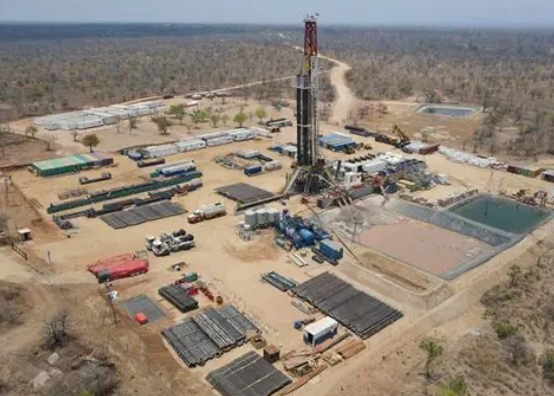
Australian energy company Invictus Energy has signed a major petroleum production sharing agreement (PPSA) with the Zimbabwean government, marking a significant milestone in the development of the Cabora Bassa gas project in northern Zimbabwe.
The agreement is expected to accelerate exploration, appraisal, and future production activities at the project, which is considered one of southern Africa’s most promising emerging gas developments.
The deal was formally signed in Harare between the Zimbabwean government and Geo Associates, an Invictus Energy subsidiary that operates the Cabora Bassa project. Senior government officials, including Finance Minister Mthuli Ncube and energy sector representatives, attended the ceremony.
Major Step for Zimbabwe’s Energy Sector
The new agreement establishes the legal and commercial framework governing future exploration, development, and revenue sharing for the project.
Invictus Energy Chief Executive Scott Macmillan described the PPSA as a “critical enabler” for moving the project toward commercial development and attracting further investment into Zimbabwe’s energy sector.
Under the hybrid production-sharing model, Zimbabwe will have the option of receiving either a share of profits or a portion of future gas production once commercial extraction begins.
Zimbabwean officials have promoted the agreement as a key part of the country’s broader strategy to improve energy security, attract foreign investment, and reduce reliance on imported fuel and electricity.
Cabora Bassa Seen as High-Potential Gas Basin
The Cabora Bassa Basin, located in northern Zimbabwe near the Mozambique border, has long been viewed as a potentially significant hydrocarbon region.
Invictus Energy says the basin contains large untapped gas and condensate resources, particularly at the Mukuyu gas field, where the company announced major gas-condensate discoveries during drilling campaigns in 2022 and 2023.
According to company estimates, the Mukuyu structure could contain as much as 20 trillion cubic feet of gas and approximately 845 million barrels of condensate.
Industry research firm Wood Mackenzie previously ranked the Mukuyu discovery among the largest hydrocarbon finds in sub-Saharan Africa in 2023.
Exploration and Drilling to Expand
Invictus is now preparing for additional drilling activity aimed at expanding resource estimates and identifying new exploration targets.
The company plans to drill the Musuma-1 exploration well during the second half of 2026. The prospect is believed to hold substantial additional gas resources, with estimates of up to 1.2 trillion cubic feet of gas and 73 million barrels of condensate.
Preparations for drilling operations are already underway, and the company is reportedly finalizing rig contracts for the next exploration phase.
Invictus has also continued seismic surveys and appraisal work across its extensive 360,000-hectare license area in the basin.
Zimbabwe Eyes Energy Security Benefits
Zimbabwe has struggled for years with electricity shortages, aging infrastructure, and high fuel import costs.
Government officials believe domestic gas production could eventually help stabilize electricity supply, support industrial development, and reduce pressure on energy imports.
The Cabora Bassa project has already been granted National Project Status by Zimbabwean authorities, giving it access to fiscal incentives, faster permitting processes, and infrastructure support.
Plans are also being discussed for gas-to-power projects that could supply electricity directly to mining operations and the national grid.
One proposed pilot project would provide gas supply to the Eureka Gold Mine, while longer-term proposals include a dedicated Cabora Bassa power station.
Financing and Investor Interest
The project has attracted growing international investor attention as interest in African natural gas developments increases.
Although a previously proposed financing arrangement with Qatar-based Al Mansour Holdings later faced complications, Invictus continues pursuing funding and strategic partnerships to support commercial development.
The company has also raised additional capital in recent months to fund exploration drilling and appraisal programs.
Energy analysts say the project could become one of southern Africa’s most important onshore gas developments if commercial production targets are achieved.
Regional Importance Growing
The Cabora Bassa development comes as African countries increasingly seek to monetize natural gas resources amid rising global demand for transitional energy supplies.
Natural gas is viewed by many African governments as a key bridge fuel capable of supporting industrialization while generating export revenues and improving domestic power generation.
For Zimbabwe, successful commercialization of the project could mark the emergence of a new domestic petroleum industry.
The signing of the production-sharing agreement is therefore being viewed not only as a commercial breakthrough for Invictus Energy, but also as a potentially transformative development for Zimbabwe’s broader economy and energy sector.
________________________________________________________________________________________________________________