

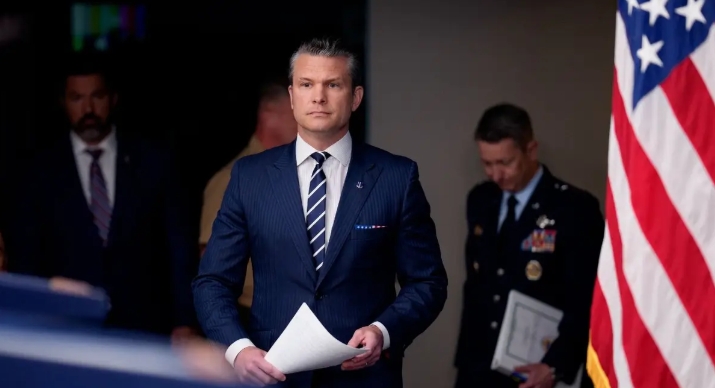
U.S. Defense Chief Pushes for Greater Military Commitments
U.S. Defense Secretary Pete Hegseth has called on America’s allies to significantly increase their defense spending as global security tensions continue to rise across Europe, the Middle East and the Indo-Pacific region.
Speaking during high-level meetings with NATO and allied officials, Hegseth stressed that the United States cannot continue carrying what he described as a disproportionate share of the burden for global security. He urged partner nations to modernize their militaries, strengthen readiness and invest more aggressively in defense capabilities.
His remarks come as NATO countries face mounting pressure to respond to Russia’s ongoing war in Ukraine, growing instability in the Middle East and increasing military competition involving China in the Asia-Pacific region.
Pressure on NATO Members Intensifies
Hegseth reiterated long-standing U.S. concerns that several NATO members still fail to meet the alliance’s defense spending target of 2% of gross domestic product (GDP).
He argued that stronger military investment is essential to maintaining deterrence against potential adversaries and ensuring the alliance remains prepared for future crises.
“Shared security requires shared responsibility,” Hegseth reportedly told allied officials, emphasizing that collective defense commitments must be matched by financial and military contributions.
The issue of defense spending has become one of the most sensitive topics within NATO, particularly as the alliance expands military support for Ukraine and strengthens forces along its eastern flank.
Russia-Ukraine War Continues to Shape Security Priorities
The war in Ukraine remains a central factor driving Western defense discussions. NATO governments have dramatically increased military aid, weapons production and troop deployments since Russia launched its full-scale invasion in 2022.
Hegseth warned that Russia continues to pose a serious threat to European security and argued that allied nations must prepare for a prolonged period of geopolitical instability.
Several European governments have already announced new military spending plans in recent years, including investments in missile defense systems, fighter aircraft, cyber defense and ammunition production.
Analysts say the Ukraine war has fundamentally reshaped NATO’s security posture and revived concerns about conventional warfare in Europe.
Growing Focus on China and Indo-Pacific Security
In addition to Europe, Hegseth highlighted rising tensions involving China, particularly in the South China Sea and around Taiwan.
The Pentagon has increasingly urged allies in Asia and Europe to coordinate more closely in response to Beijing’s expanding military influence and technological capabilities.
Hegseth stated that global security challenges are now deeply interconnected and warned that adversaries often cooperate across regions to challenge Western interests.
The United States has strengthened defense cooperation in recent years with countries including Japan, South Korea, Australia and the Philippines as part of broader efforts to reinforce Indo-Pacific security alliances.
Allies Face Economic and Political Challenges
Despite growing pressure from Washington, many allied governments face domestic economic constraints and political divisions over increased military spending.
Higher defense budgets have become controversial in several countries where governments are simultaneously dealing with inflation, public debt and demands for increased social spending.
Critics in some European nations argue that rapid military expansion could place additional strain on already pressured economies. Others maintain that stronger defense capabilities are necessary given the increasingly unstable global environment.
Security experts note that public support for military spending tends to rise during periods of heightened international conflict, particularly following Russia’s invasion of Ukraine.
Trump Administration Maintains Tough Stance on Burden Sharing
Hegseth’s comments align with the broader defense and foreign policy approach of President Donald Trump’s administration, which has repeatedly demanded that allies contribute more to collective security arrangements.
Trump has frequently criticized NATO members for relying too heavily on American military power and has warned that the United States expects fairer burden sharing from its partners.
The administration argues that stronger allied militaries would improve global stability while allowing the U.S. to better focus resources on strategic competition with China and emerging technological threats.
NATO Faces Defining Period
As global conflicts and geopolitical rivalries continue to intensify, NATO and allied nations are entering what many analysts describe as a defining moment for international security cooperation.
Hegseth’s latest push for higher defense spending underscores growing concerns in Washington that the current global security environment requires faster military modernization, greater readiness and stronger coordination among allied nations.
With wars, regional tensions and strategic rivalries expanding across multiple regions, defense spending is expected to remain at the center of international political and military discussions in the months ahead.
________________________________________________________________________________________________________________

