

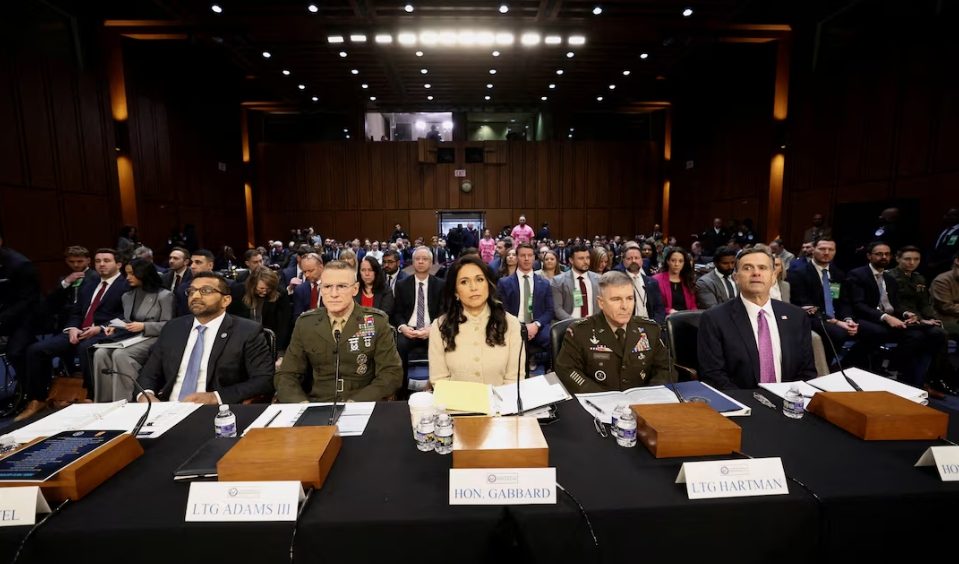
CIA and ODNI Clash as National Security Challenges Intensify
A deepening dispute between two of America’s most powerful intelligence institutions has exposed growing tensions within the U.S. national security apparatus, raising concerns about the effectiveness of intelligence coordination during a period of heightened global instability.
The conflict, which has reportedly been unfolding for more than a year, pits the Central Intelligence Agency (CIA) against the Office of the Director of National Intelligence (ODNI), the agency responsible for overseeing the broader U.S. intelligence community. The feud centers on disagreements over authority, intelligence-sharing practices, and competing visions for how the nation’s intelligence system should operate.
According to officials familiar with the matter, the dispute has become serious enough that the CIA has reduced its participation in some intelligence assessments coordinated by the ODNI, including analyses related to ongoing U.S. military operations and geopolitical developments involving Iran.
Roots of the Conflict
The tensions reportedly intensified after former Director of National Intelligence Tulsi Gabbard took office in early 2025 and sought to expand oversight of intelligence products traditionally managed by the CIA.
One of the major flashpoints was the creation of the Director’s Initiatives Group (DIG), a special unit established within the ODNI to investigate alleged politicization within the intelligence community and review intelligence-related processes. Critics within the CIA argued that the group bypassed established procedures governing intelligence sharing, classification reviews, and interagency coordination.
The disagreement widened as ODNI asserted greater influence over the Presidential Daily Brief, the highly classified intelligence summary delivered to the U.S. president each day. Historically, the CIA has played a leading role in preparing this document.
Intelligence Assessments Affected
Sources familiar with the dispute say the CIA has scaled back contributions to certain National Intelligence Council assessments coordinated through ODNI.
The National Intelligence Council serves as one of the U.S. government’s premier analytical bodies, producing intelligence estimates that inform decisions by senior policymakers and military leaders. These assessments are particularly important during periods of military conflict and diplomatic crises.
Officials indicate that some reports concerning Iran have been affected, with intelligence analysts from the two organizations increasingly working in parallel rather than collaboratively. Such developments have raised concerns among current and former intelligence officials who view cooperation as essential to producing comprehensive and accurate intelligence assessments.
Why Coordination Matters
The dispute strikes at the heart of reforms implemented after the September 11, 2001 terrorist attacks.
Following the findings of the 9/11 Commission, the U.S. government created the Office of the Director of National Intelligence in 2004 to improve coordination among the country’s various intelligence agencies. The goal was to reduce information silos and prevent intelligence failures caused by poor communication between agencies.
The ODNI now oversees a network of intelligence organizations that includes the CIA, the National Security Agency (NSA), the Defense Intelligence Agency (DIA), the Federal Bureau of Investigation’s intelligence division, and several other specialized agencies.
Experts warn that prolonged institutional rivalry could undermine one of the central objectives of those reforms: ensuring that intelligence from multiple agencies is integrated into a unified assessment for policymakers.
Leadership Changes Add Uncertainty
The situation has been further complicated by leadership changes at the top of the intelligence community.
Gabbard recently announced that she would step down as Director of National Intelligence, citing personal reasons. In response, President Donald Trump named Bill Pulte as acting DNI, placing him in charge of overseeing the intelligence community during a sensitive period.
Meanwhile, CIA Director John Ratcliffe remains one of the administration’s most influential national security figures and has played a prominent role in foreign policy discussions involving Iran and other geopolitical hotspots.
Congressional Scrutiny Growing
Lawmakers are paying increasing attention to the dispute amid concerns that political tensions and bureaucratic rivalries could affect intelligence quality and decision-making.
Reports indicate that congressional committees and intelligence oversight bodies have examined aspects of the disagreement, including questions surrounding personnel decisions, intelligence review procedures, and the operation of special initiatives within the ODNI.
While ODNI officials maintain that intelligence agencies continue to collaborate effectively and that policymakers are receiving high-quality intelligence, the reported breakdown in cooperation has fueled concerns among former intelligence officials and national security experts.
Broader Implications for U.S. National Security
The feud highlights a longstanding challenge within the intelligence world: balancing centralized oversight with agency independence.
Historically, intelligence organizations have often competed over authority, resources, and operational responsibilities. However, modern security threats including military conflicts, cyberattacks, terrorism and strategic competition with rivals such as China and Russia require unprecedented levels of coordination.
As global tensions continue to rise, the ability of America’s intelligence agencies to cooperate effectively may prove as important as the intelligence they collect. Whether new leadership can ease the friction between the CIA and ODNI will likely shape the future effectiveness of the U.S. intelligence community and its ability to respond to emerging threats.
________________________________________________________________________________________________________________

