

White House Moves Quickly Following Tulsi Gabbard’s Departure
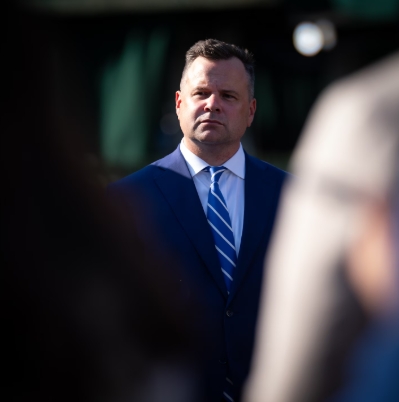
President Donald Trump has appointed longtime ally Bill Pulte as Acting Director of National Intelligence (DNI), placing a trusted supporter in charge of the U.S. intelligence community during a period marked by geopolitical tensions, ongoing military conflicts, and growing debates over the future direction of America’s intelligence agencies.
The appointment follows the resignation of Director of National Intelligence Tulsi Gabbard, who stepped down after serving less than two years in the role. The White House announced that Pulte would immediately assume leadership of the Office of the Director of National Intelligence (ODNI), overseeing the nation’s 18 intelligence agencies until a permanent replacement is nominated and confirmed.
The move places a prominent Trump loyalist at the center of one of Washington’s most influential national security positions, a role responsible for coordinating intelligence assessments and advising the president on threats facing the United States.
Who Is Bill Pulte?
Bill Pulte is best known as a businessman, philanthropist, and social media personality. He is the grandson of the late William Pulte, founder of homebuilding giant PulteGroup, one of the largest residential construction companies in the United States.
In recent years, Pulte emerged as a vocal supporter of President Trump and became increasingly involved in political and public policy discussions. He gained national attention through large-scale charitable campaigns conducted through social media platforms and later expanded his influence within conservative political circles.
Before being named acting DNI, Pulte served in senior government-related positions and maintained close ties to key figures within the Trump administration.
His appointment is viewed by many observers as another example of Trump’s preference for trusted allies in critical government positions, particularly those involving national security and intelligence.
A Critical Role in U.S. National Security
As Acting Director of National Intelligence, Pulte will oversee a vast intelligence network that includes the Central Intelligence Agency (CIA), National Security Agency (NSA), Defense Intelligence Agency (DIA), National Geospatial-Intelligence Agency (NGA), and intelligence divisions within the Federal Bureau of Investigation (FBI) and Department of Homeland Security.
The DNI is responsible for coordinating intelligence collection, analysis, and information sharing across agencies. The office was created following recommendations from the 9/11 Commission to improve cooperation among intelligence organizations and prevent communication failures that contributed to the September 11, 2001 terrorist attacks.
The director also supervises the production of the Presidential Daily Brief, one of the government’s most sensitive intelligence documents, which provides the president with assessments on global security threats, military developments, terrorism, cyber risks, and foreign political activity.
Appointment Comes Amid Intelligence Community Tensions
Pulte assumes leadership at a time when reports have highlighted growing tensions between the Office of the Director of National Intelligence and the CIA.
Recent disputes reportedly centered on questions of authority, intelligence oversight, and control over key intelligence products. Some reports suggested disagreements over the preparation of intelligence assessments and the management of strategic reviews concerning international conflicts, including developments involving Iran.
While officials have emphasized that intelligence operations continue uninterrupted, analysts say new leadership could play a key role in restoring cooperation between agencies and reducing bureaucratic friction.
The incoming acting director is expected to face immediate pressure to strengthen coordination across the intelligence community while maintaining confidence among both intelligence professionals and policymakers.
Trump Seeks Greater Alignment with Intelligence Agencies
Throughout both of his presidencies, Trump has frequently criticized elements of the intelligence community, arguing that some agencies became overly politicized and insufficiently accountable.
His administration has repeatedly called for reforms aimed at increasing transparency, streamlining intelligence operations, and reducing what officials describe as institutional bias within government agencies.
Supporters of Pulte’s appointment argue that his close relationship with the president could improve communication between intelligence agencies and the White House. They contend that stronger alignment could help accelerate decision-making on critical national security issues.
Critics, however, have raised concerns about placing a political ally in charge of intelligence coordination, arguing that intelligence leadership should remain independent from partisan considerations. Several lawmakers have called for close congressional oversight during the transition period.
Key Challenges Ahead
Pulte enters the position at a particularly sensitive moment for U.S. national security.
The intelligence community continues to monitor conflicts in the Middle East, tensions involving China and Taiwan, Russia’s ongoing military activities, cyber threats targeting critical infrastructure, and global terrorism concerns.
In addition, intelligence agencies face growing challenges associated with artificial intelligence, disinformation campaigns, cyber espionage, and emerging technologies that are reshaping modern security threats.
Experts say the next DNI will need to balance intelligence independence with presidential priorities while ensuring accurate and objective analysis reaches policymakers.
Congressional Reaction
Members of Congress from both parties are expected to scrutinize Pulte’s performance closely.
Republican lawmakers largely welcomed the appointment, citing the need for trusted leadership and institutional reform. Some Democrats, meanwhile, questioned whether the appointment could further politicize intelligence operations and called for transparency regarding future leadership plans.
Because Pulte is serving in an acting capacity, attention is already turning to whether the White House intends to nominate him permanently or select another candidate for Senate confirmation.
Looking Ahead
The appointment of Bill Pulte signals President Trump’s determination to place trusted allies in key positions throughout his administration while continuing efforts to reshape the federal bureaucracy.
As acting Director of National Intelligence, Pulte now faces the challenge of managing one of the world’s largest intelligence networks amid rising global instability and increasing scrutiny from Congress, intelligence professionals, and international allies.
His success in navigating agency rivalries, maintaining intelligence credibility, and responding to evolving security threats will likely influence both the future of the intelligence community and the broader national security agenda of the Trump administration.
________________________________________________________________________________________________________________

