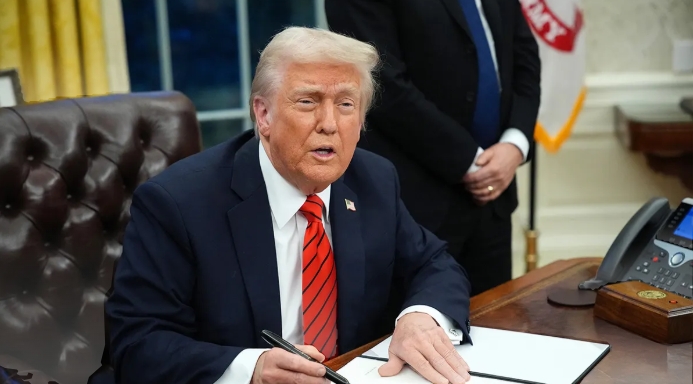
U.S. President Donald Trump signed a series of new executive orders during a ceremony at the White House on Thursday, using the occasion to highlight key policy priorities ranging from national security and economic growth to government reform and international affairs.
The signing ceremony, attended by senior administration officials, lawmakers, business leaders and members of the media, marked the latest effort by the Trump administration to advance its agenda through executive action as it seeks to implement policy goals across multiple sectors.
While details of some measures are still being reviewed by federal agencies, Trump said the orders are designed to strengthen America’s economic competitiveness, improve government efficiency and enhance national security.
White House Highlights Policy Agenda
Speaking from the White House, Trump described the executive orders as part of a broader strategy to deliver on campaign promises and accelerate policy implementation.
“We are taking action to protect American interests, create opportunities for workers and ensure that government serves the people effectively,” the president said during remarks before signing the orders.
Administration officials indicated that the measures cover several areas, including federal agency operations, regulatory oversight, trade and investment priorities and national security initiatives.
The White House stated that the executive actions are intended to complement ongoing legislative efforts while allowing federal departments to move more quickly on administration priorities.
Economic Growth Remains a Central Focus
Economic policy remains one of the administration’s key areas of focus. White House officials said several provisions are aimed at encouraging investment, reducing regulatory burdens and supporting domestic industries.
Trump has repeatedly emphasized the importance of strengthening U.S. manufacturing, increasing energy production and expanding economic opportunities. During the ceremony, he argued that the administration’s policies are helping to boost business confidence and position the country for long-term growth.
Economic analysts note that executive orders can influence regulatory frameworks and government operations, although major fiscal and tax policies generally require congressional approval.
National Security and Foreign Policy Issues
The president also addressed ongoing international challenges, including tensions in the Middle East, competition with global rivals and broader security concerns.
Trump reiterated his administration’s commitment to maintaining a strong national defense and protecting U.S. interests abroad. He stressed that diplomatic engagement would continue where possible but emphasized that the United States remains prepared to respond to threats against its security and allies.
His comments come amid continued diplomatic efforts involving Iran, regional security concerns in the Middle East, and discussions with international partners on trade and defense cooperation.
Government Efficiency Measures
Several executive actions are expected to focus on government operations and federal agency performance.
According to administration officials, the orders seek to streamline decision-making processes, improve accountability, and reduce bureaucratic delays that can affect the delivery of public services.
Supporters argue that such reforms could improve efficiency and reduce costs, while critics have called for careful oversight to ensure that changes do not weaken protections or reduce transparency.
Mixed Political Reactions
The executive orders quickly drew reactions from both supporters and critics in Washington.
Republican lawmakers largely welcomed the measures, describing them as necessary steps to advance administration priorities and address issues that have faced delays in Congress.
Democratic lawmakers, meanwhile, questioned whether some actions could exceed executive authority and called for closer scrutiny of their implementation.
Political analysts note that executive orders have become an increasingly common tool used by presidents of both parties to advance policy goals, particularly when legislative progress proves difficult.
What Happens Next?
Federal agencies are expected to begin implementing the directives immediately, with some measures taking effect at once and others requiring regulatory reviews or additional guidance.
Legal experts say certain orders could face court challenges depending on their scope and impact, a common occurrence for major executive actions in recent administrations.
As the Trump administration continues to pursue its domestic and foreign policy objectives, the newly signed executive orders are likely to play an important role in shaping government priorities and influencing policy debates in the months ahead.
The White House has indicated that additional executive actions may be announced in the coming weeks as the administration seeks to further advance its agenda and respond to evolving national and international challenges.
________________________________________________________________________________________________________________