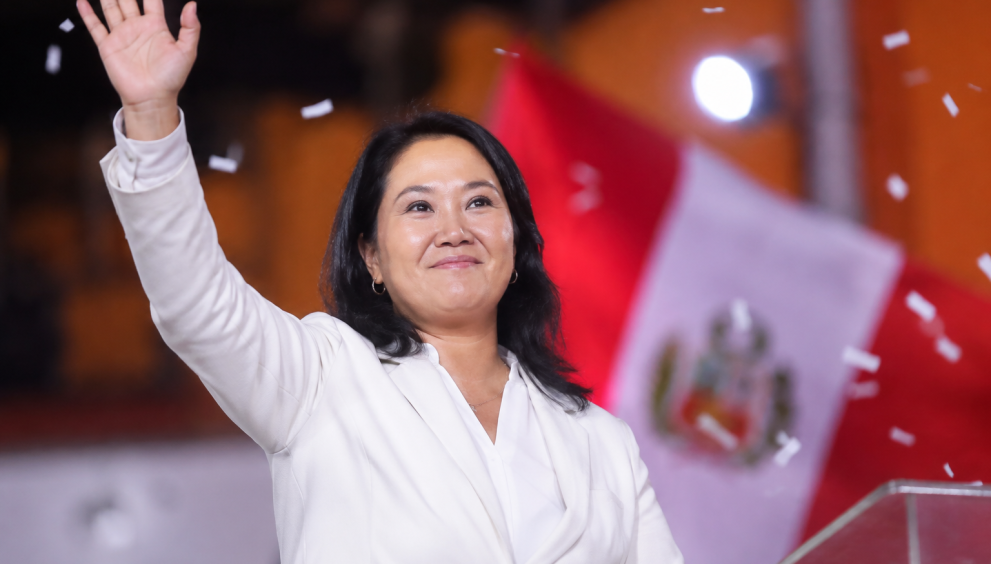
Conservative leader Keiko Fujimori has officially secured victory in Peru’s presidential election, completing a dramatic political comeback after three previous unsuccessful presidential bids and returning the influential Fujimori political dynasty to power.
Peru’s electoral authorities formally declared Fujimori the winner following weeks of ballot reviews and legal challenges after one of the closest presidential races in the country’s modern history. She defeated left-wing rival Roberto Sánchez by fewer than 50,000 votes, ending months of intense campaigning and political uncertainty.
A Narrow Victory
According to Peru’s National Office of Electoral Processes (ONPE) and the National Elections Jury (JNE), Fujimori received 50.135% of the valid vote, while Sánchez secured 49.865%, with approximately 18 million ballots cast in the runoff election.
The razor-thin margin triggered recount requests, fraud allegations from political groups, and weeks of scrutiny before electoral authorities finalized the results. International election observers said there was no evidence of widespread fraud affecting the outcome.
Official Recognition
This week, Peru’s electoral authorities formally presented Fujimori with her official presidential credentials during a ceremony in Lima, confirming her as the country’s president-elect ahead of her inauguration on July 28.
The event was attended by interim President José María Balcázar, senior electoral officials, members of Congress, and Fujimori’s supporters.
Promise to Unite a Divided Nation
Following her victory, Fujimori acknowledged that Peru remains deeply politically divided and pledged to govern for all Peruvians.
She promised to prioritize economic recovery, strengthen public security, combat organized crime, improve healthcare and education, and restore investor confidence after years of political instability that saw multiple presidents removed or investigated.
Fujimori also vowed to promote national unity, describing Peru as a country “split in two” after the fiercely contested election.
Economic Agenda
Markets have largely welcomed Fujimori’s election, with investors expecting policy continuity, fiscal discipline, and a more business-friendly administration.
Ratings agency Moody’s has said her government is likely to strengthen investor confidence while maintaining macroeconomic stability.
Her administration is expected to encourage private investment, particularly in Peru’s mining sector, which remains one of the country’s largest sources of export revenue.
Challenges Ahead
Despite optimism from financial markets, Fujimori faces significant challenges upon taking office.
Peru continues to struggle with rising crime, political polarization, slowing economic growth in some sectors, and increasing public frustration over corruption.
Her plans to accelerate mining investment have already drawn criticism from environmental organizations and community groups, who warn that expanding major mining projects without addressing local concerns could trigger renewed protests in resource-rich regions.
At the same time, the incoming government must prepare for the potential impacts of an expected El Niño weather event, which threatens flooding, agricultural losses, and infrastructure damage across large parts of the country.
To support the transition, Peru’s Congress has approved a $2.8 billion budget increase aimed at funding infrastructure projects, emergency preparedness, crime prevention, and public services ahead of Fujimori’s inauguration.
A Historic Return
Fujimori’s election marks the return of one of Peru’s most influential and controversial political families.
She is the daughter of former President Alberto Fujimori, whose presidency remains deeply divisive due to economic reforms that stabilized Peru’s economy but were overshadowed by corruption convictions and human rights abuses.
After losing presidential runoffs in 2011 and 2021, and another unsuccessful campaign before this year’s election, Fujimori’s fourth attempt has finally delivered the presidency.
Her administration will now be closely watched both domestically and internationally as Peru seeks greater political stability, economic growth, and renewed public confidence after years of institutional turmoil.
________________________________________________________________________________________________________________