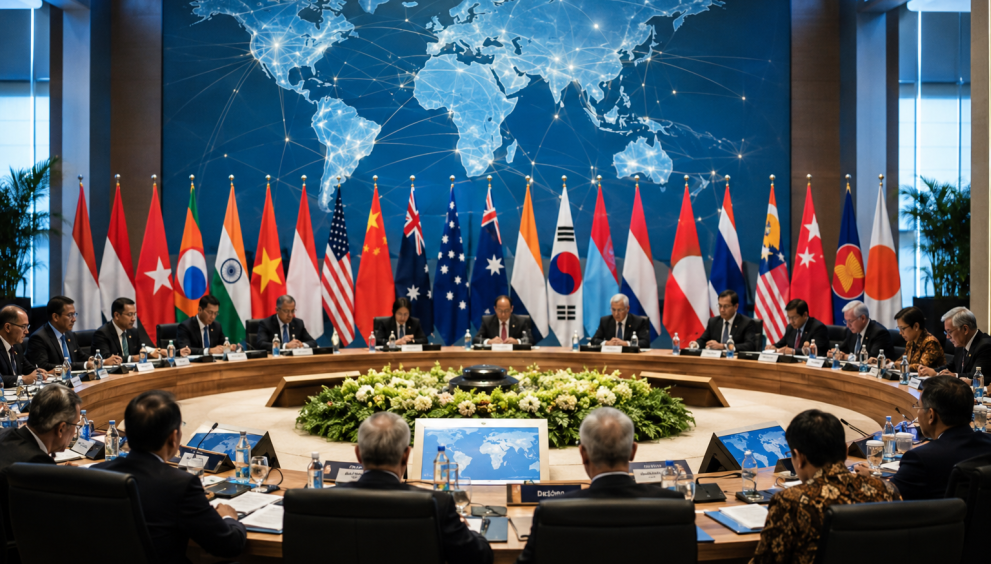
Leaders from across the Indo-Pacific have begun a week-long series of high-level meetings aimed at strengthening regional security, expanding economic cooperation, and addressing growing geopolitical challenges, as governments seek to reinforce stability in one of the world’s most strategically important regions.
The discussions bring together heads of government, foreign ministers, defence officials, and senior diplomats from countries across Asia and the Pacific. The agenda is expected to focus on maritime security, trade resilience, supply chain diversification, technological innovation, climate cooperation, and regional peace amid increasing strategic competition.
Security Takes Centre Stage
Security remains one of the dominant themes of the meetings as regional leaders confront a rapidly evolving strategic landscape.
Officials are expected to discuss freedom of navigation, maritime disputes, cybersecurity threats, counterterrorism cooperation, and the need to maintain peace across the Indo-Pacific. The talks also come amid continued concerns over military activity in disputed waters, tensions surrounding Taiwan, and broader competition between major global powers.
Several participating nations have reiterated the importance of resolving disputes peacefully through international law while strengthening cooperation between regional security partners.
Defence ministers are also expected to exchange views on improving intelligence sharing, joint military exercises, humanitarian assistance, disaster response capabilities, and maritime surveillance.
Expanding Trade and Economic Cooperation
Economic growth and regional trade are another major priority during the week-long meetings.
Leaders are expected to discuss measures to strengthen supply chains that were disrupted by recent global crises, improve regional connectivity, and encourage investment in strategic industries including semiconductors, clean energy, digital infrastructure, and advanced manufacturing.
The meetings also provide an opportunity to explore ways of reducing barriers to trade while promoting greater economic integration across the Indo-Pacific.
Several governments have emphasized that deeper economic partnerships are essential to improving resilience against global economic uncertainty and protecting long-term growth.
Focus on Supply Chains
Supply chain resilience continues to be a key concern for many economies that remain vulnerable to disruptions caused by geopolitical tensions, natural disasters, and shifting global manufacturing patterns.
Officials are expected to examine strategies to diversify production networks, secure critical minerals, improve transportation infrastructure, and strengthen cooperation in strategic sectors such as pharmaceuticals, food security, and energy.
The discussions are expected to encourage greater collaboration between governments and the private sector to reduce dependence on single-source suppliers.
Indo-Pacific Cooperation Remains a Strategic Priority
The Indo-Pacific has become one of the world’s most strategically significant regions, accounting for a substantial share of global trade and economic activity.
Regional leaders are expected to reaffirm their commitment to an open, inclusive, and rules-based Indo-Pacific while promoting dialogue instead of confrontation.
Many participating countries continue to advocate for stronger regional institutions capable of managing security challenges while supporting sustainable economic development.
Diplomatic cooperation is also expected to include discussions on disaster preparedness, illegal fishing, transnational crime, cyber resilience, and infrastructure investment.
Climate and Energy Security
Climate change and energy security feature prominently on the agenda.
Leaders are expected to explore opportunities to accelerate renewable energy projects, strengthen regional electricity networks, improve disaster resilience, and expand financing for climate adaptation initiatives.
Several countries are seeking increased cooperation on reducing emissions while balancing energy security and economic development.
The meetings may also encourage investment in green technologies, hydrogen projects, and critical minerals needed for the global energy transition.
Technology and Digital Cooperation
The digital economy is another important topic during the regional discussions.
Officials are expected to explore collaboration on artificial intelligence governance, digital trade standards, cybersecurity, telecommunications infrastructure, and cross-border data flows.
Governments are increasingly recognising that technological cooperation will play a central role in maintaining economic competitiveness while protecting national security.
Geopolitical Challenges
The talks take place against a backdrop of heightened geopolitical tensions, including ongoing conflicts in Europe and the Middle East, growing strategic rivalry in the Indo-Pacific, and uncertainty surrounding global trade policies.
Regional leaders are expected to stress the importance of diplomacy, multilateral cooperation, and respect for international law as essential pillars of regional stability.
Analysts note that while countries hold differing views on several strategic issues, there remains broad agreement on maintaining open sea lanes, protecting economic growth, and avoiding conflict.
Looking Ahead
The outcomes of the week-long meetings are expected to shape regional cooperation over the coming months through new agreements, joint statements, and expanded partnerships in defence, trade, technology, and climate action.
Observers will be watching closely for announcements on economic initiatives, security cooperation frameworks, infrastructure investment, and measures aimed at strengthening resilience across the Indo-Pacific.
While significant policy differences remain among participating nations, the meetings underscore a shared commitment to dialogue, practical cooperation, and maintaining peace and prosperity across one of the world’s most dynamic regions.
As the discussions continue, regional leaders are expected to seek common ground on the complex challenges facing the Indo-Pacific, reinforcing the region’s growing role in shaping the future of global security and economic development.
________________________________________________________________________________________________________________