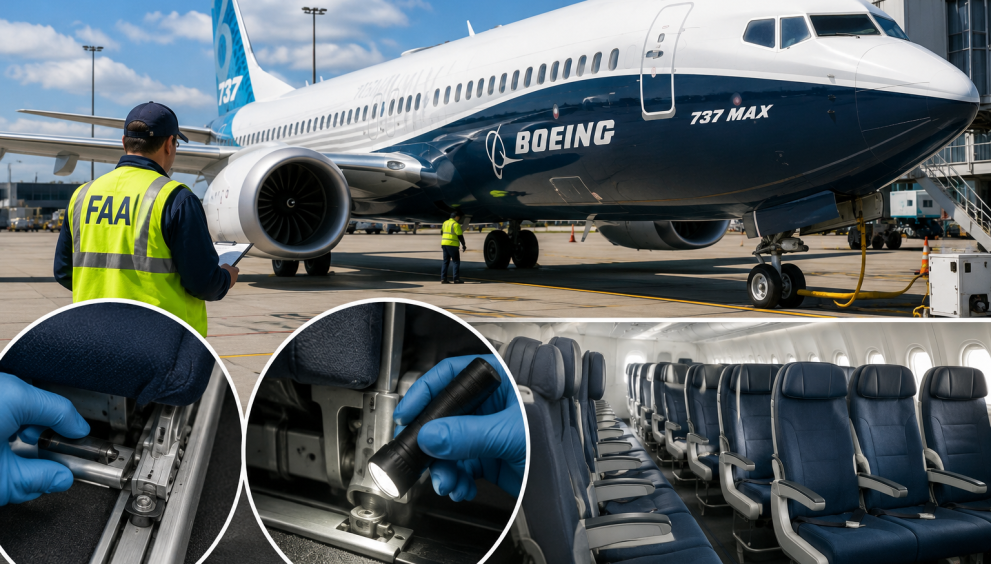
The U.S. Federal Aviation Administration (FAA) has announced that seats installed on hundreds of Boeing 737 MAX aircraft may require inspections after reports identified a potential issue involving seat locking mechanisms.
The agency said it is proposing a new airworthiness directive that would affect certain Boeing 737 MAX 8 and MAX 9 aircraft operated by airlines in the United States and abroad. The proposed directive follows findings that some passenger seat assemblies may have components that were improperly manufactured or installed, raising concerns that the seats could fail to remain securely locked in place during certain phases of flight.
FAA Reviewing Safety Risk
According to the FAA, the issue was identified through service difficulty reports and information provided by seat manufacturers and operators. While the agency emphasized that it has not received reports of injuries related to the problem, it said inspections are necessary to ensure continued airworthiness and passenger safety.
The proposed directive would require airlines to inspect affected seat tracks, locking pins, and associated hardware for signs of incorrect assembly, excessive wear, or damage. If problems are found, operators would be required to repair or replace the affected components before the aircraft can continue normal service.
Hundreds of Aircraft Potentially Affected
Industry estimates indicate that several hundred Boeing 737 MAX aircraft worldwide could fall within the scope of the FAA’s proposal, although the exact number will depend on aircraft configuration and the specific seat models installed.
The FAA has opened a public comment period before issuing a final directive. Airlines would then be given a specified timeframe to complete the inspections and any necessary corrective actions.
Boeing Responds
Boeing said it is working closely with the FAA, seat suppliers, and airline customers to address the matter. The company stated that the issue does not involve the structural design of the 737 MAX airframe itself and that operators have been provided with guidance on identifying potentially affected seat installations.
In a statement, Boeing said:
“Safety is our highest priority. We are supporting the FAA and our customers in reviewing the affected seat assemblies and implementing any required inspections or corrective actions.”
Additional Scrutiny for the 737 MAX Program
The latest development adds to ongoing regulatory scrutiny surrounding the Boeing 737 MAX program, which has faced intense oversight since the aircraft’s global grounding following two fatal crashes in 2018 and 2019.
Although the current issue is unrelated to the flight-control systems involved in those accidents, aviation analysts say any new FAA directive affecting the MAX fleet is likely to attract significant attention from airlines, investors, and passengers.
Impact on Airlines
Major U.S. carriers that operate large 737 MAX fleets, including Southwest Airlines, United Airlines, Alaska Airlines, and American Airlines, may need to review maintenance records to determine whether any of their aircraft are affected by the proposed directive.
Aviation experts say the inspections are expected to be relatively straightforward and are unlikely to cause widespread disruptions to flight schedules unless a significant number of seat assemblies require replacement.
Passenger Safety Remains the Priority
Regulators stressed that the proposal is a precautionary safety measure designed to identify and correct any potentially defective seat installations before they pose a risk during turbulence, takeoff, landing, or emergency situations.
The FAA said it will continue evaluating technical data from Boeing and seat manufacturers before deciding whether to issue a final mandatory inspection order for the affected Boeing 737 MAX aircraft.
The announcement comes as Boeing continues efforts to stabilize production, improve quality-control processes, and rebuild confidence among airlines and regulators worldwide.
________________________________________________________________________________________________________________