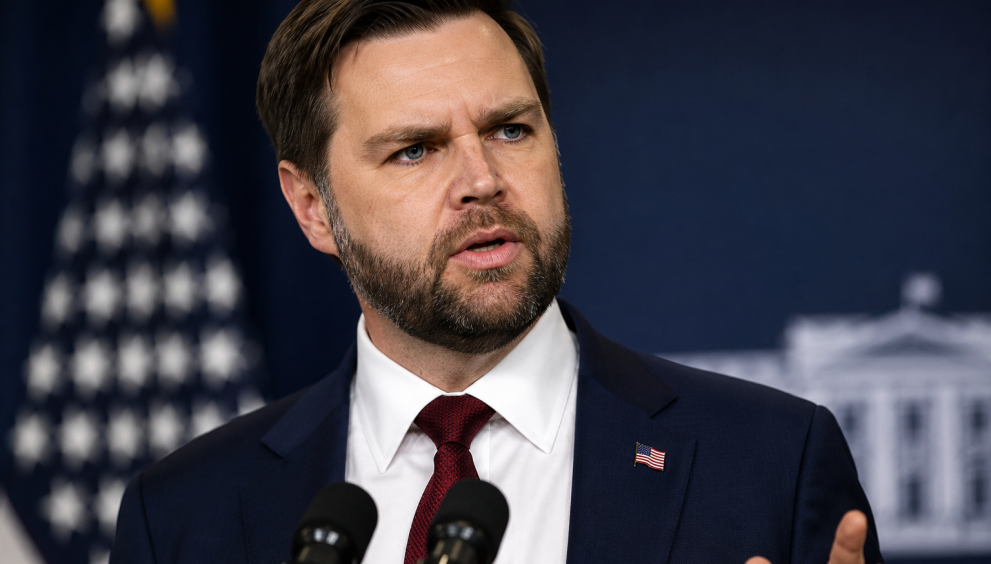
U.S. Vice President JD Vance has called on Congress to pass legislation that would permanently establish key elements of the Trump administration’s federal anti-fraud campaign, arguing that executive actions alone are not enough to sustain the effort across future administrations.
Speaking during a White House roundtable with Republican lawmakers and officials involved in the Task Force to Eliminate Fraud, Vance said the administration has identified $230 billion in suspected fraudulent activity involving taxpayer-funded benefit programs and has prevented an additional $56 billion in improper payments from being issued. The task force was created by President Donald Trump through a March 2026 executive order aimed at investigating fraud in federal welfare and healthcare programs.
“We’ve been able to stop billions from going to fraudsters rather than to the people who actually need these benefits,” Vance said, while stressing that lasting reform requires action from both the House of Representatives and the Senate.
Proposed legislative changes
According to officials and participants at the meeting, the administration is seeking legislation that would:
- Require broader data sharing between federal and state agencies to detect fraudulent claims.
- Increase civil and criminal penalties for large-scale fraud involving public benefits.
- Expand investigative resources for federal and state anti-fraud units.
- Strengthen verification systems used in programs such as SNAP, Medicaid, and other federal assistance programs.
Vance argued that without statutory backing, a future administration could reverse or weaken the task force’s enforcement measures. He specifically warned against allowing the initiative to depend solely on presidential authority.
Focus on benefit-program fraud
The vice president cited the Minnesota “Feeding Our Future” scandal, in which prosecutors alleged that approximately $250 million intended for child nutrition programs was fraudulently obtained, as an example of why stronger federal safeguards are needed. The administration has repeatedly pointed to that case as evidence that existing oversight mechanisms failed to prevent major losses of taxpayer funds.
The White House has also linked the broader anti-fraud initiative to recent actions involving Medicaid oversight, healthcare-provider audits, and enhanced enforcement coordination with the Justice Department. A separate executive order issued in March directed federal agencies to develop strategies for combating cybercrime, fraud, and predatory schemes targeting Americans.
Political debate intensifies
Democrats and some policy analysts have questioned whether the administration’s anti-fraud campaign could be used to target political opponents or disproportionately scrutinize Democratic-led states. Vance has previously accused Minnesota officials of failing to adequately address fraud in state social-service programs, while those officials have rejected the allegations as politically motivated and pointed to ongoing prosecutions already underway.
Supporters of the initiative contend that stronger oversight is necessary to protect public funds and restore confidence in federal assistance programs, while critics warn that overly aggressive enforcement could create administrative burdens for legitimate beneficiaries and service providers.
Congressional outlook uncertain
Congress is currently in recess, and it remains unclear whether the proposed anti-fraud provisions will be attached to upcoming appropriations or funding legislation when lawmakers return to Washington. Any permanent changes would require approval by both chambers of Congress before being signed into law.
For now, Vance’s push represents the administration’s clearest effort yet to transform its executive anti-fraud campaign into a durable legislative framework, setting up what is likely to become a significant policy debate over the balance between fraud prevention, federal oversight, and access to public assistance programs.
________________________________________________________________________________________________________________