

Washington signals tougher sanctions while Gulf shipping risks deepen
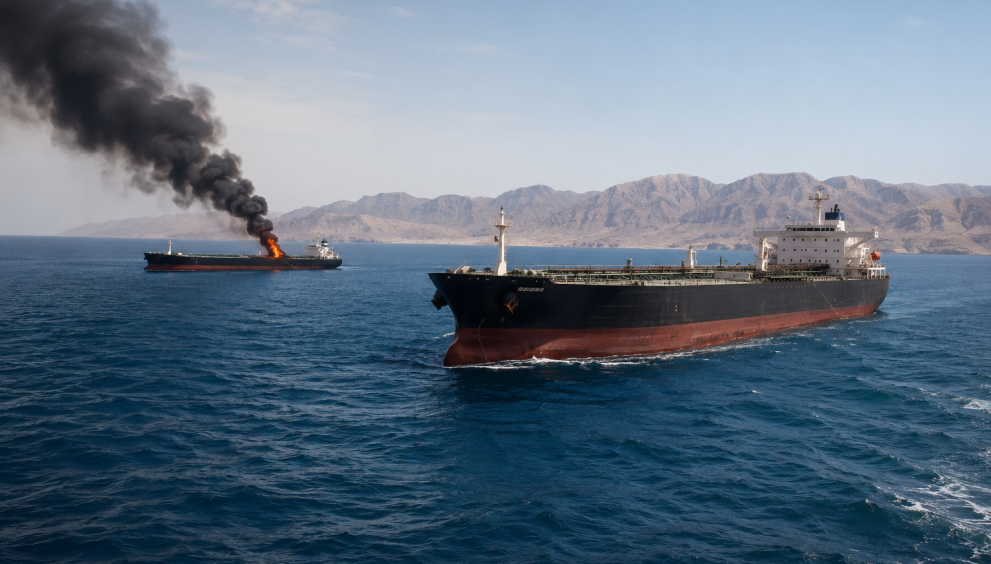
The United States has warned Iran that it is preparing to significantly increase economic pressure after two additional oil tankers were attacked while transiting the Strait of Hormuz, escalating fears of a wider regional confrontation and renewed disruption to global energy supplies.
The latest incidents involved vessels owned by the United Arab Emirates’ Abu Dhabi National Oil Company (ADNOC). UAE officials blamed Iran for the attacks, which reportedly caused damage to the ships but did not result in casualties. The strikes have intensified concerns over the safety of commercial shipping through one of the world’s most important energy chokepoints. Reuters reported that traffic through the strait remains well below normal levels despite a slight increase in vessel movements on Thursday. Reuters reported that traffic through the strait remains well below normal levels despite a slight increase in vessel movements on Thursday.
US vows unprecedented economic measures
U.S. Treasury Secretary Scott Bessent said Washington is preparing measures against Iran that would amount to an unprecedented level of economic isolation. He indicated that additional sanctions targeting Iranian trade and financial networks could be announced in the coming days.
The warning comes as the United States continues efforts to enforce a naval blockade aimed at restricting Iranian shipping. Defense Secretary Pete Hegseth said the U.S. Navy could maintain the blockade indefinitely by rotating forces in and out of the region.
President Donald Trump has so far emphasized economic pressure rather than a major new military escalation, although Washington has kept additional military options on the table.
Strait of Hormuz remains at the center of the crisis
The Strait of Hormuz handles roughly one-fifth of global oil and liquefied natural gas trade, making any disruption a major threat to international energy markets.
According to ship-tracking data cited by Reuters, commodity vessel traffic through the strait remains significantly below the August average, with many ships choosing routes closer to Iranian-controlled waters. Maritime security agencies have also warned that some vessels may be operating with tracking transponders switched off, complicating monitoring efforts.
Iran has insisted that the waterway will not be fully reopened unless sanctions are lifted and Iranian assets frozen abroad are released.
Ceasefire talks collapse
The renewed maritime violence follows the apparent collapse of efforts to revive a ceasefire between Washington and Tehran. Diplomatic initiatives involving Oman, Pakistan, Qatar, and Turkey have so far failed to produce a breakthrough.
Iranian officials maintain that negotiations are continuing on technical arrangements for shipping routes with Oman, but they have rejected U.S. demands for unrestricted international navigation through the strait.
Oil markets react to renewed shipping attacks
Global oil prices rose sharply following the latest attacks, with traders increasingly concerned that prolonged instability could remove additional supplies from the market.
Analysts say the combination of reduced tanker traffic, higher insurance costs, and the threat of further Iranian retaliation is creating renewed upward pressure on energy prices, even as broader global demand growth remains relatively weak.
The situation has also prompted some Asian refiners to seek alternative crude supplies, including increased purchases from the United States and Russia, in order to reduce exposure to Gulf shipping disruptions.
International concern grows
The attacks have drawn renewed concern from Gulf states and international maritime organizations, which warn that continued strikes on commercial vessels could severely disrupt global trade and increase the risk of a broader military conflict in the Middle East.
With U.S.-Iran tensions rising, shipping traffic reduced, and oil markets increasingly volatile, the Strait of Hormuz is once again emerging as the focal point of one of the world’s most dangerous geopolitical crises.
________________________________________________________________________________________________________________

