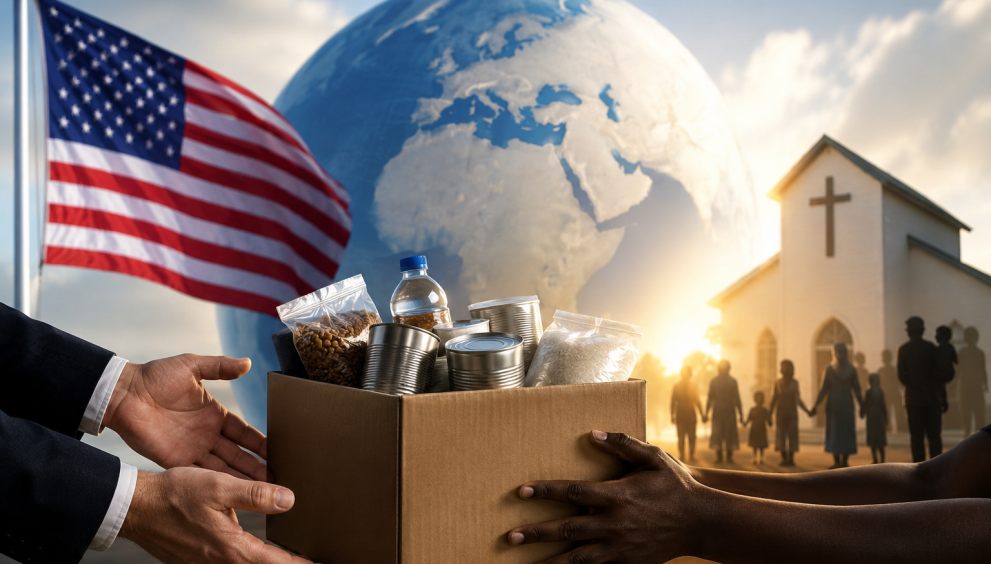
The Trump administration has announced nearly $2 billion in U.S. health and humanitarian assistance for faith-based and community organizations working overseas, marking the largest U.S. allocation of global health funding to faith-based groups in more than two decades.
Major Funding for Christian Aid Organizations
The funding includes partnerships with several major Christian humanitarian organizations, including World Vision, Compassion International and Samaritan’s Purse. World Vision will lead a consortium receiving up to $850 million over five years, subject to the availability of funds.
About $1.4 billion of the overall package is connected to the administration’s America First Global Health Strategy. The money is expected to support roughly 2,500 faith-based hospitals and clinics, as well as the training and employment of community health workers. A further $570 million is being directed through agreements with foreign governments to support faith- and community-based health facilities.
Shift in U.S. Foreign Aid
The announcement comes after the Trump administration dramatically reduced and reorganized U.S. foreign assistance and moved to dismantle USAID. The administration has argued that faith-based organizations can deliver health and humanitarian services efficiently and have extensive networks in communities where government infrastructure is limited.
The policy has also generated debate over the role of religious organizations in distributing U.S. taxpayer-funded assistance. Supporters say churches and faith-based groups are already deeply embedded in many health systems and can reach vulnerable populations, while critics have questioned whether the new aid strategy gives religious organizations an undue role in U.S. foreign assistance.
The administration says the funding will focus on practical health and humanitarian needs, including disease treatment, disaster response and community healthcare, as Washington reshapes its approach to international aid.
Key Takeaway
The nearly $2 billion package represents a significant shift in how the United States is delivering foreign assistance, placing faith-based and community organizations at the center of major global health and humanitarian programs following the restructuring of the U.S. aid system.
________________________________________________________________________________________________________________