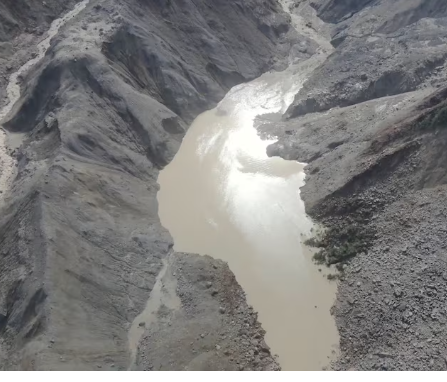
Satellite Images Show Water Slowly Flowing Out, Easing Fears of Further Flooding
The immediate risk of a potentially catastrophic lake burst near the China-Nepal border has eased, according to satellite imagery showing that water is slowly flowing out of the lake.
The development offers some relief to communities and rescue teams already dealing with the aftermath of devastating flooding in the Himalayan region.
The lake had raised concerns because a sudden release of its water could have sent another powerful surge downstream, threatening already damaged communities and complicating rescue operations.
Satellite Monitoring Provides Reassurance
Satellite images are now indicating that the lake’s water level is gradually decreasing as water escapes naturally.
The latest observations reduce the immediate threat of a sudden breach, although authorities and disaster-response teams are expected to continue monitoring the area closely.
The region remains extremely vulnerable following the earlier disaster, with roads, bridges and other infrastructure damaged and rescue operations continuing for those still missing.
Disaster Response Continues
The flooding near the China-Nepal border followed a major Himalayan disaster that swept large quantities of water, mud and debris through the region.
Rescue teams have been working under difficult conditions to locate survivors and account for missing people, while authorities have been delivering emergency assistance to affected communities.
The possibility of another lake burst had added a new layer of danger for rescue workers and residents downstream.
The latest satellite observations therefore provide an important measure of relief, but officials remain cautious.
Continued Monitoring Remains Critical
While the risk of a sudden lake burst appears to have diminished, changing weather conditions, unstable terrain and continuing water movement mean the situation remains closely watched.
Experts and authorities will continue using satellite imagery and other monitoring systems to assess the lake and surrounding terrain.
For communities already affected by the disaster, the gradual release of water is a positive development that could allow rescue and recovery operations to proceed with fewer immediate risks.
The situation remains fluid, however, and authorities are expected to maintain heightened monitoring until the threat has fully subsided.