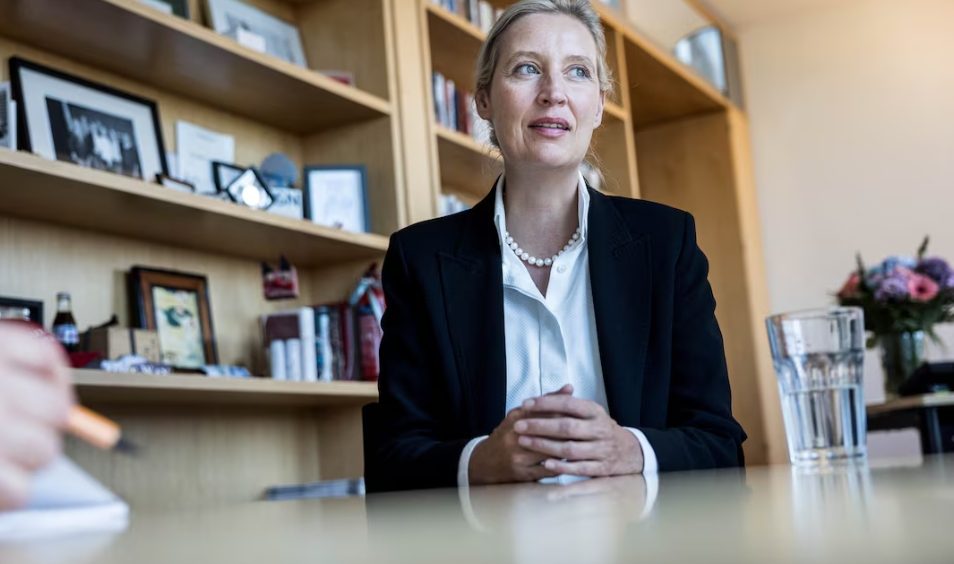
The leader of Germany’s right-wing Alternative for Germany (AfD), Alice Weidel, is renewing calls for Berlin to abandon sanctions against Russia, arguing that Germany should rebuild economic and political ties with Moscow.
Weidel has consistently opposed Germany’s sanctions policy and has called for the restoration of Russian energy supplies, including oil and gas. In an interview with Reuters in June, she said an AfD-led government would seek to restore imports of Russian energy, saying Germany’s previous access to relatively cheap Russian supplies had been important to its industrial economy.
AfD Pushes for Major Foreign-Policy Shift
The party’s position represents a significant departure from the policy of Chancellor Friedrich Merz’s government, which continues to support Ukraine and backs European efforts to maintain pressure on Moscow.
The AfD has also opposed further German military assistance to Ukraine and has advocated renewed dialogue with Russia. Its election platform has called for the removal of economic sanctions and a return to unrestricted trade with Russia.
Weidel’s position has gained renewed attention following the AfD’s strong performance in Germany’s recent Saxony-Anhalt state election, where the party won nearly 44% of the vote and emerged as the largest political force. The result has intensified debate over whether the party could eventually influence Germany’s national foreign-policy direction.
Merz Rejects AfD’s Russia Policy
Chancellor Friedrich Merz remains firmly opposed to the AfD’s approach. In parliament this week, he criticized the party’s position on Russia and Ukraine while defending Germany’s continued support for Kyiv.
The dispute comes as European governments continue to maintain sanctions against Russia over its war in Ukraine. A reversal by Germany would have major implications for the European Union’s sanctions policy, energy security and relations with Moscow.
For now, the AfD remains outside Germany’s federal government, meaning it cannot independently remove German or EU sanctions. However, its growing electoral support has made its Russia policy an increasingly important issue in Germany’s political debate.
________________________________________________________________________________________________________________